
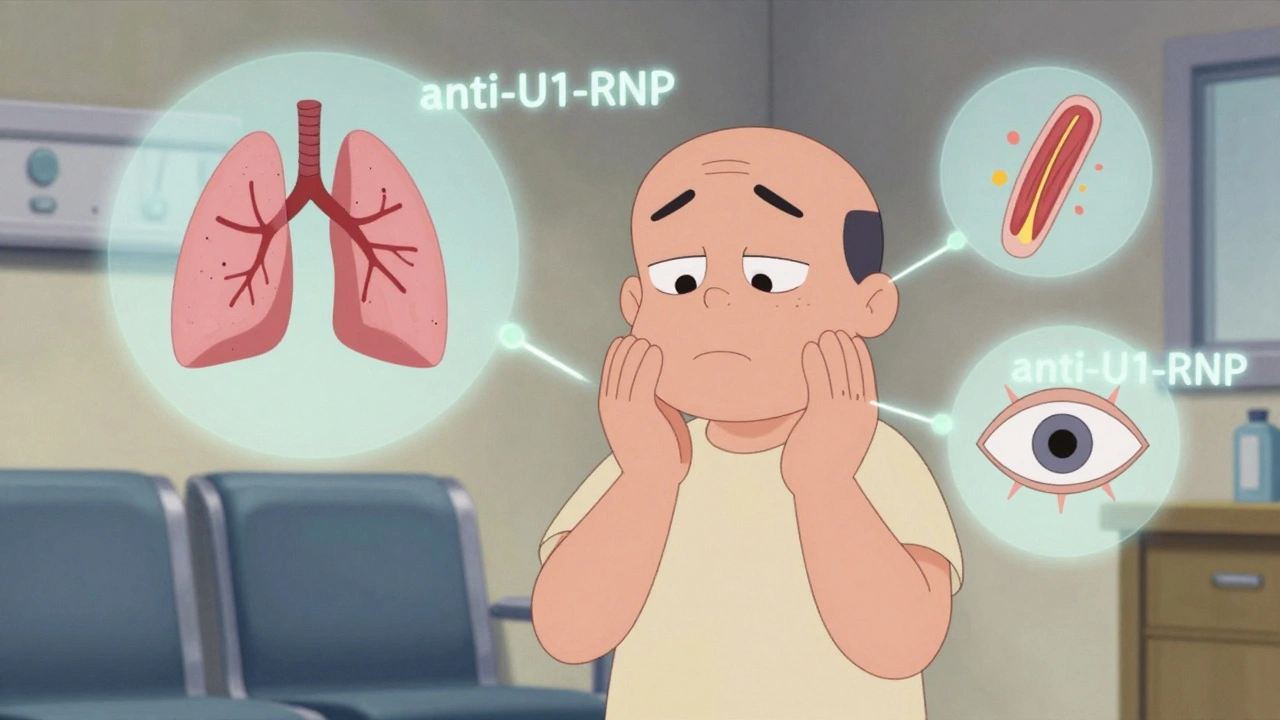
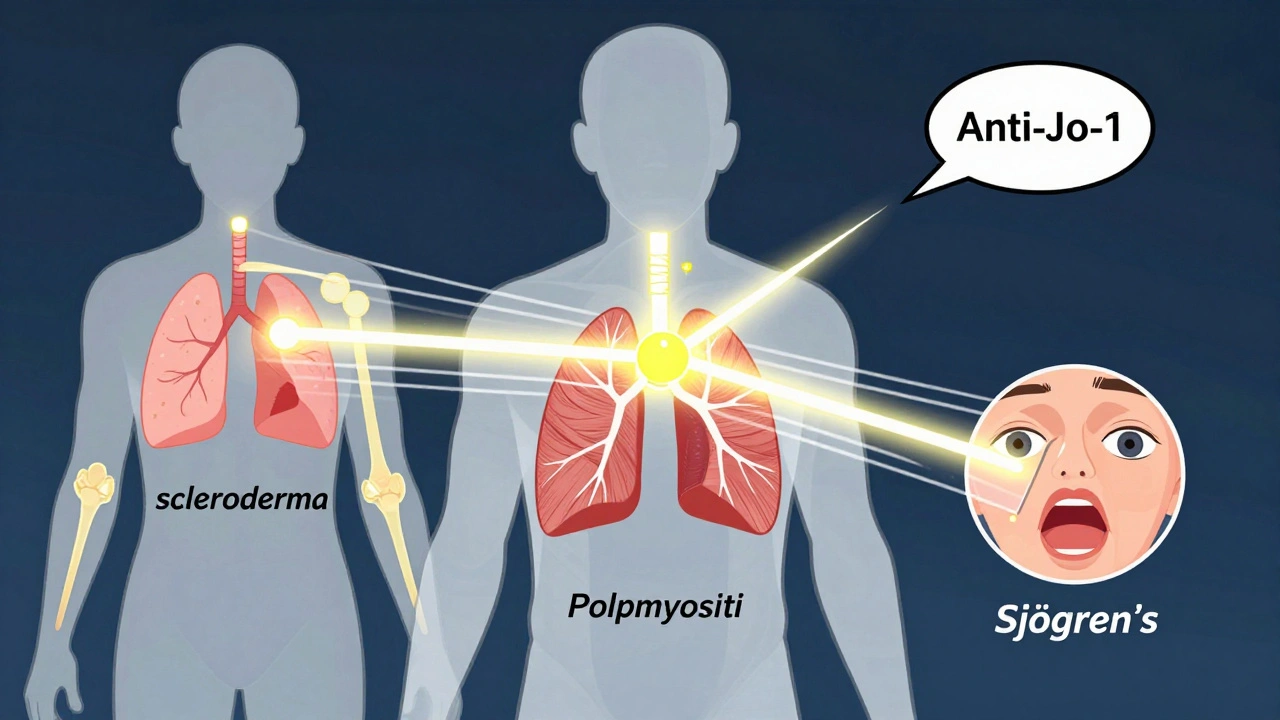
When your body starts attacking itself, things get complicated. Now imagine it’s attacking in two or three different ways at once. That’s what happens in autoimmune overlap syndromes - a confusing mix of symptoms that don’t fit neatly into one diagnosis. You might have stiff fingers like scleroderma, muscle weakness like polymyositis, and dry eyes like Sjögren’s - all at the same time. Doctors often miss this at first because each symptom looks like a separate disease. But when they stack up, they point to something more complex: an overlap syndrome.
What Exactly Is an Autoimmune Overlap Syndrome?
An autoimmune overlap syndrome isn’t just having two diseases. It’s when your immune system triggers features that meet the official criteria for two or more well-defined autoimmune conditions - usually from the group called connective tissue diseases. These include systemic lupus erythematosus (SLE), scleroderma, polymyositis, rheumatoid arthritis, and Sjögren’s syndrome. About 1 in 4 people with one of these diseases will develop signs of another within five to ten years. That’s not rare. It’s common enough that specialists now expect it.
Some overlap syndromes have clear names and markers. Mixed connective tissue disease (MCTD) is one of the most recognized. People with MCTD have high levels of anti-U1-RNP antibodies - often above 1:10,000 - along with symptoms like puffy hands, Raynaud’s phenomenon (fingers turning white or blue in cold), swollen joints, and sometimes lung problems. Another is antisynthetase syndrome, defined by antibodies like anti-Jo-1. These patients typically get muscle inflammation, scarring in the lungs, and a telltale rash on their fingers called mechanic’s hands. Then there’s PM/Scl overlap, where you see skin thickening from scleroderma mixed with muscle weakness from polymyositis.
When three or more autoimmune diseases show up together, it’s called Multiple Autoimmune Syndrome (MAS). Type 2 MAS, for example, often includes Sjögren’s, rheumatoid arthritis, and autoimmune thyroid disease. These combinations aren’t random. They follow patterns tied to specific antibodies and clinical histories.
Why Is Diagnosis So Hard?
There’s no single test for overlap syndromes. No checklist you can tick off. The American College of Rheumatology and European League Against Rheumatism have solid rules for diagnosing lupus or scleroderma alone - but not when they blur together. That’s why nearly 30-40% of people initially labeled with undifferentiated connective tissue disease (UCTD) end up being reclassified as having an overlap syndrome within five years.
Doctors often treat the loudest symptom first. If your hands are swollen, you get arthritis meds. If your lungs are scarred, you get steroids for interstitial lung disease. But if you have both, and no one connects the dots, you end up getting half the treatment you need. A 2022 study found that 45% of patients with overlap syndromes waited over 18 months for a correct diagnosis - nearly double the delay of single-disease cases.
Antibodies help. Anti-U1-RNP points strongly to MCTD. Anti-PM/Scl is nearly always linked to the polymyositis-scleroderma mix. Anti-Jo-1 is the hallmark of antisynthetase syndrome. But even these aren’t perfect. Some people have the antibody without full symptoms. Others have symptoms without the antibody. That’s why diagnosis relies on combining blood tests, physical exams, lung scans, and patient history - not just one piece of data.
What Do These Syndromes Actually Feel Like?
People with overlap syndromes don’t just have symptoms - they have layered, conflicting ones. Someone with MCTD might wake up with stiff, swollen fingers, then struggle to climb stairs because their muscles are weak, and later notice their lungs feel tight when they walk. A person with antisynthetase syndrome might have burning, itchy skin on their hands, difficulty breathing from lung scarring, and severe muscle pain that makes lifting a coffee cup feel impossible.
One patient on a myositis forum described it this way: “I had skin tightening like scleroderma, but no ulcers on my fingers. I had muscle weakness, but no elevated CK levels. My rheumatologist said I didn’t qualify for either diagnosis - so I got nothing.” That’s the gap overlap syndromes fall into. They’re not severe enough to meet full criteria for one disease, but too complex to be dismissed as “just UCTD.”
Interstitial lung disease (ILD) shows up in over 60% of antisynthetase cases and nearly half of PM/Scl patients. That’s not a side effect - it’s a core feature. Left untreated, ILD can permanently damage lung function. That’s why experts now recommend high-resolution CT scans and pulmonary function tests for anyone suspected of having an overlap syndrome - even if they don’t feel short of breath yet.
How Is It Treated?
Treatment doesn’t follow a one-size-fits-all recipe. It’s built around which symptoms are most active. The first step is usually low-to-moderate dose steroids like prednisone, combined with one immunosuppressant - methotrexate or mycophenolate mofetil. These calm the immune system without wiping it out completely.
But if lung disease is the main problem, things change. Rituximab - a drug that targets B-cells - has shown 60-70% success in stabilizing or improving lung function in antisynthetase syndrome over 12 months. In March 2023, the FDA approved tocilizumab specifically for ILD linked to antisynthetase syndrome, based on a trial showing a 55% drop in disease progression compared to placebo.
For skin and joint issues, hydroxychloroquine and low-dose steroids help. But here’s the catch: using too many drugs at once can be dangerous. A 2019 study found that 35% of patients with overlap syndromes were on three or more immunosuppressants - even though there’s little proof that stacking them works better than using one or two wisely. The risk? Serious infections. People on triple therapy get infections 28% of the time - nearly double the rate of those on dual therapy.
There’s no magic bullet. Treatment is about balance: enough to control symptoms, not so much that you risk pneumonia, sepsis, or cancer. That’s why specialists now focus on “treat-to-target” goals: keeping lung capacity above 80% of normal, skin thickness below a certain score, and joint pain under control. Progress is measured in numbers, not just how you feel.
The Real Problem: Care That Doesn’t Connect
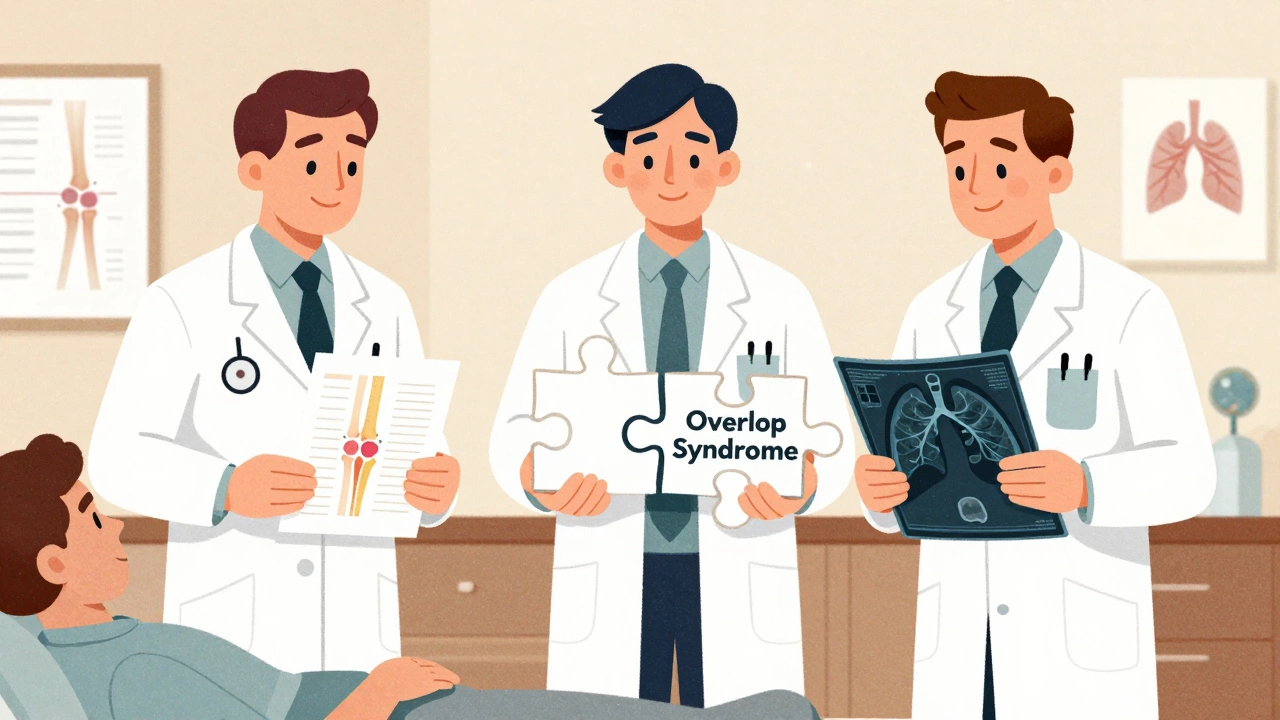
One rheumatologist sees your joints. A pulmonologist handles your lungs. A dermatologist treats your skin. But who’s looking at the whole picture? In most clinics, no one. That’s why patients with overlap syndromes report the worst care experiences.
A 2022 survey by the Sjögren’s Foundation found that 68% of people with Sjögren’s-lupus overlap struggled to get coordinated care - compared to just 42% of those with Sjögren’s alone. One Reddit user wrote: “I see five specialists. None of them talk to each other. I’m the one who has to remember what each one prescribed - and what they told me not to take together.”
That’s where care coordination makes the difference. Centers like Johns Hopkins, Mayo Clinic, and Hospital for Special Surgery now assign dedicated care coordinators - nurses or physician assistants who manage appointments, share records between specialists, and simplify medication schedules. At the Cleveland Clinic’s Overlap Syndrome Program, patients with a coordinator had 35% fewer hospital visits and 42% better medication adherence. That’s not just convenience. That’s survival.
What’s Changing Right Now?
The field is moving fast. In January 2023, the NIH launched a $15 million project called the Overlap Syndrome Biomarker Consortium. Their goal? Find blood markers that predict who will get worse - and which drugs will help them. That’s the future: not just treating symptoms, but predicting them.
AI is also stepping in. A 2022 study in Nature Medicine showed that machine learning could predict the development of an overlap syndrome 12 months before a doctor even noticed the pattern - by analyzing electronic health records for subtle shifts in lab values, symptoms, and medication use.
And new drugs are coming. Anifrolumab, approved for lupus, is now in phase 2 trials for MCTD. If it works, it could become the first drug specifically designed to target the immune pathways common to multiple overlap syndromes.
For now, the best advice is simple: if you have symptoms from more than one autoimmune disease - especially if you’ve been told you don’t fully qualify for any - ask for a referral to a rheumatology center that specializes in complex cases. Don’t settle for fragmented care. You deserve a team that sees you as a whole person, not a collection of symptoms.
What You Can Do Today
- Keep a symptom journal - note when your skin tightens, when your muscles ache, when you get short of breath.
- Ask for a full autoimmune antibody panel, including anti-U1-RNP, anti-Jo-1, and anti-PM/Scl.
- Request a pulmonary function test and high-resolution CT scan of your lungs - even if you feel fine.
- Ask your rheumatologist if they work with a coordinated care team or if they can refer you to one.
- Bring all your medications to every appointment. Many drug interactions go unnoticed.
Overlap syndromes aren’t rare. They’re misunderstood. And with better awareness, better testing, and better coordination, people with these conditions can live longer, healthier lives - without being lost in the system.
Can you have an autoimmune overlap syndrome without knowing it?
Yes. Many people have early signs - like mild joint pain, dry eyes, or occasional shortness of breath - that don’t seem serious enough to investigate. These can be the first signals of an overlap syndrome. Autoantibodies often show up years before symptoms become obvious. That’s why regular checkups and antibody testing matter, especially if you already have one autoimmune condition.
Is an overlap syndrome the same as having two separate autoimmune diseases?
No. Having two separate diseases means your immune system attacks two different targets independently. In an overlap syndrome, the same immune dysfunction triggers features of multiple diseases at once - often through shared pathways. That’s why treatments for overlap syndromes focus on broad immune suppression, not targeting each disease individually.
Can lifestyle changes help with overlap syndromes?
Lifestyle won’t cure it, but it can reduce flare-ups and protect your organs. Quitting smoking is critical - it worsens lung scarring. Eating anti-inflammatory foods, staying active within your limits, and managing stress help lower overall immune activation. Sun protection matters too, since UV light can trigger lupus-like flares. These steps support treatment - they don’t replace it.
Why do some doctors dismiss overlap syndromes?
Because they’re complex and don’t fit into neat boxes. Many doctors are trained to diagnose one disease at a time. When symptoms are mixed, they may assume it’s “just” one condition with complications - or blame the patient for “making up symptoms.” There’s also fear of overtreating. But research now shows that missing an overlap diagnosis leads to worse outcomes. It’s not laziness - it’s lack of exposure. That’s why specialized centers are becoming essential.
Are overlap syndromes hereditary?
They’re not directly inherited, but your genetic background plays a role. People with certain HLA gene variants are more likely to develop autoimmune diseases - and more likely to develop multiple ones. If a close family member has lupus, rheumatoid arthritis, or Sjögren’s, your risk of developing an overlap syndrome is higher. But environment - infections, stress, toxins - often triggers the actual onset.
Can you go into remission with an overlap syndrome?
Yes - but it’s not like curing a single disease. Remission means symptoms are under control, organ damage has stabilized, and you’re on the lowest effective dose of medication. Many patients reach this point with careful treatment and monitoring. But unlike some single autoimmune diseases, overlap syndromes rarely disappear completely. Lifelong monitoring is usually needed to catch flares early.


Write a comment