
What Is Bile Acid Diarrhea?
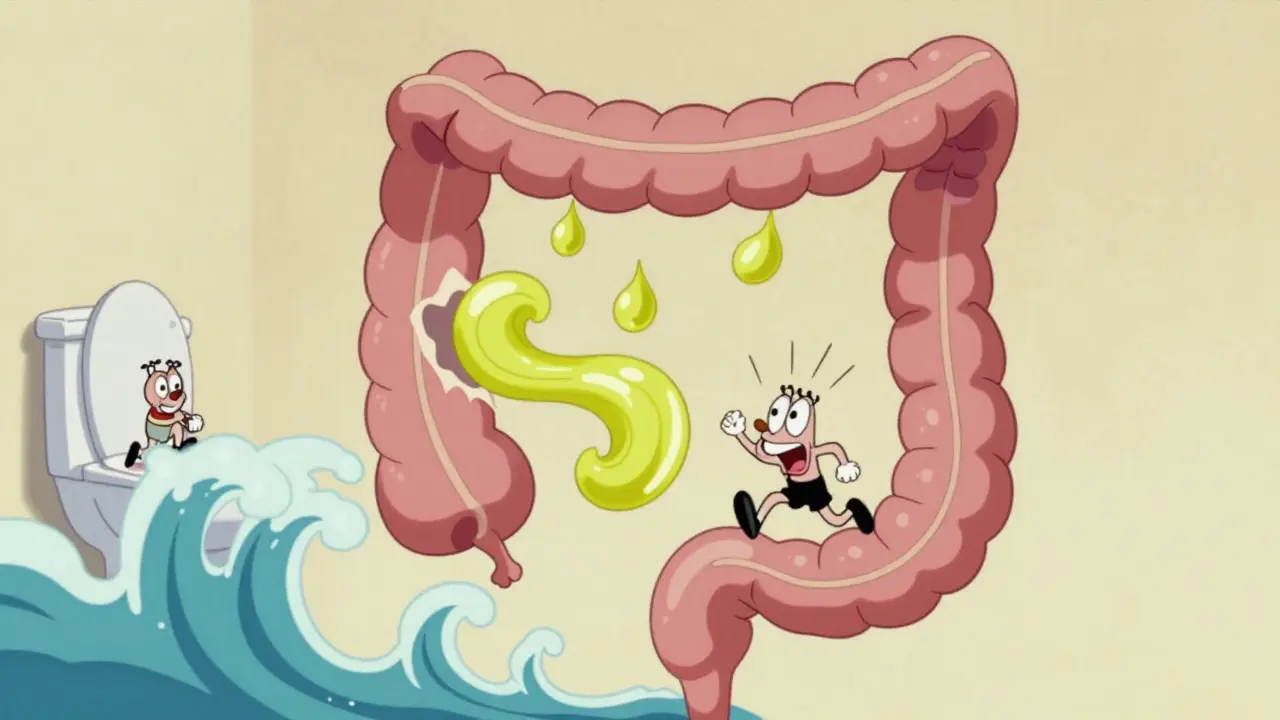
Bile acid diarrhea isn’t just another form of IBS. It’s a specific, treatable condition where too much bile acid reaches your colon, triggering watery, urgent diarrhea. Normally, your body reabsorbs 95% of bile acids in the lower part of your small intestine (the ileum). But when that system breaks down-whether from surgery, inflammation, or just unknown causes-those acids spill into your colon. There, they act like a laxative: pulling water into your gut, speeding up movement, and making you run to the bathroom often, sometimes with no warning.
It’s more common than you think. About 1 in 4 people told they have IBS-D (diarrhea-predominant) actually have bile acid diarrhea. Yet most doctors don’t test for it. That means thousands of people are stuck on IBS diets and meds that don’t touch the real problem. The good news? Once you know it’s BAD, you can fix it.
How Do You Know If You Have It?
There’s no single symptom that screams "bile acid diarrhea," but there are clues. If you’ve had chronic watery diarrhea for more than 4 weeks-with no blood in stool, no weight loss, and no obvious trigger like food poisoning-it’s worth asking about BAD. Many patients describe greasy, pale stools that are hard to flush. Others feel urgency right after eating, especially after fatty meals. Nighttime bowel movements are also common; about half of patients wake up needing to go at least three nights a week.
Diagnosing it isn’t easy, but it’s getting better. The gold standard is a 48-hour stool test that measures bile acid levels directly. But that’s not available everywhere. In places where it’s not, doctors use blood tests like C4 (7α-hydroxy-4-cholesten-3-one). If your C4 level is above 15.3 ng/mL, there’s a high chance you have BAD. Another option is checking your FGF19 levels-below 85 pg/mL suggests your body isn’t properly recycling bile acids. The SeHCAT test (a radioactive scan) is the most accurate, but it’s only offered in a few countries outside the U.S.
Here’s the kicker: if you’ve been told you have IBS-D and nothing’s worked, you might have BAD. Experts say you should get tested before accepting that label. Mayo Clinic now includes BAD screening in their standard IBS-D protocol because treating it correctly can cut unnecessary colonoscopies and meds by more than a third.
How Bile Acid Binders Work
Bile acid binders are the first-line treatment-and they work fast. These medications act like sponges in your gut, grabbing excess bile acids before they reach your colon. You don’t absorb them. You just pass them out. Most people see improvement within 2 to 3 days.
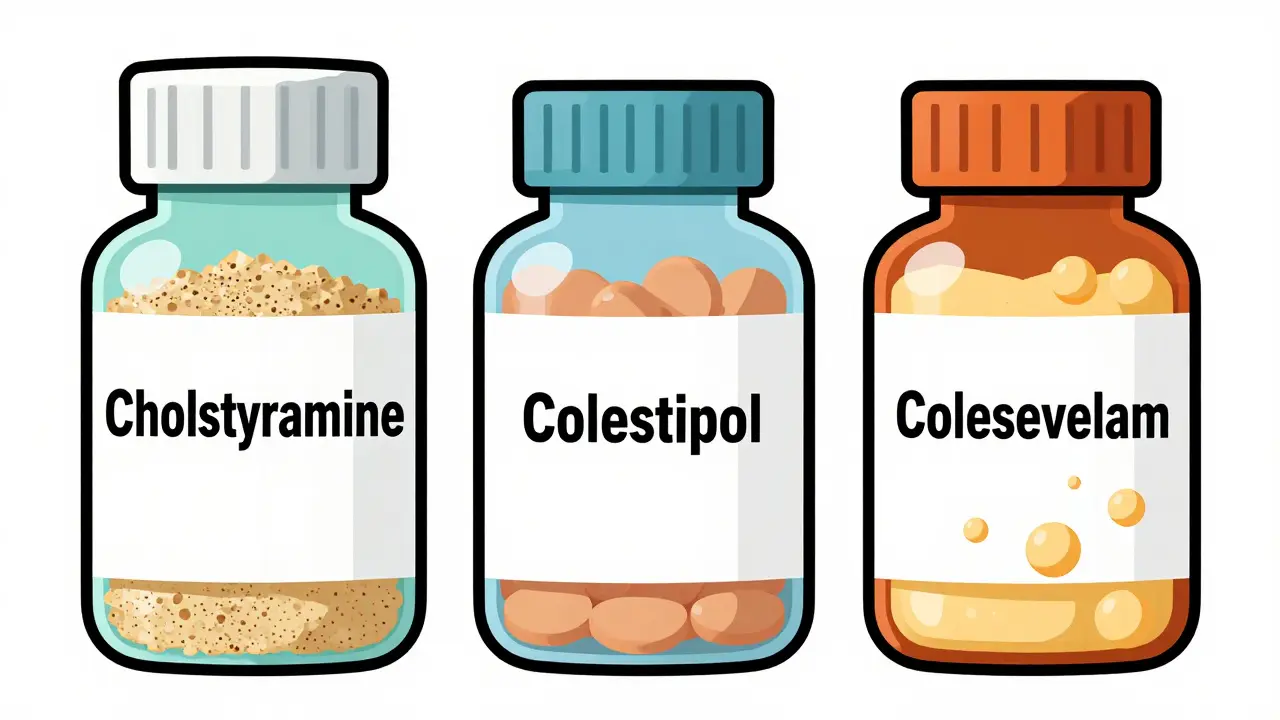
There are three main types:
- Cholestyramine (Questran): The oldest option. Dosed at 4 grams once or twice daily. It’s effective but has a reputation for being chalky and gritty. Many patients quit because of the texture or constipation.
- Colestipol (Colestid): Similar to cholestyramine but slightly better tolerated. Still comes as a powder you mix with water or juice.
- Colesevelam (Welchol): The newest and most tolerable. Comes in tablets, so no mixing. Only about 5% of users report constipation, compared to 20-30% with the older binders. Dose is 1.875 to 3.75 grams daily.
Studies show about 70% of people with confirmed BAD respond well to binders. But adherence is a problem. One survey found 35% stop within six months because of taste, texture, or side effects. If you’re struggling with cholestyramine, try switching to colesevelam. It’s more expensive, but many find it worth it.
Diet Tips That Actually Help
Medication alone isn’t always enough. Diet plays a huge role. The goal? Reduce the amount of bile acid your body needs to release in the first place.
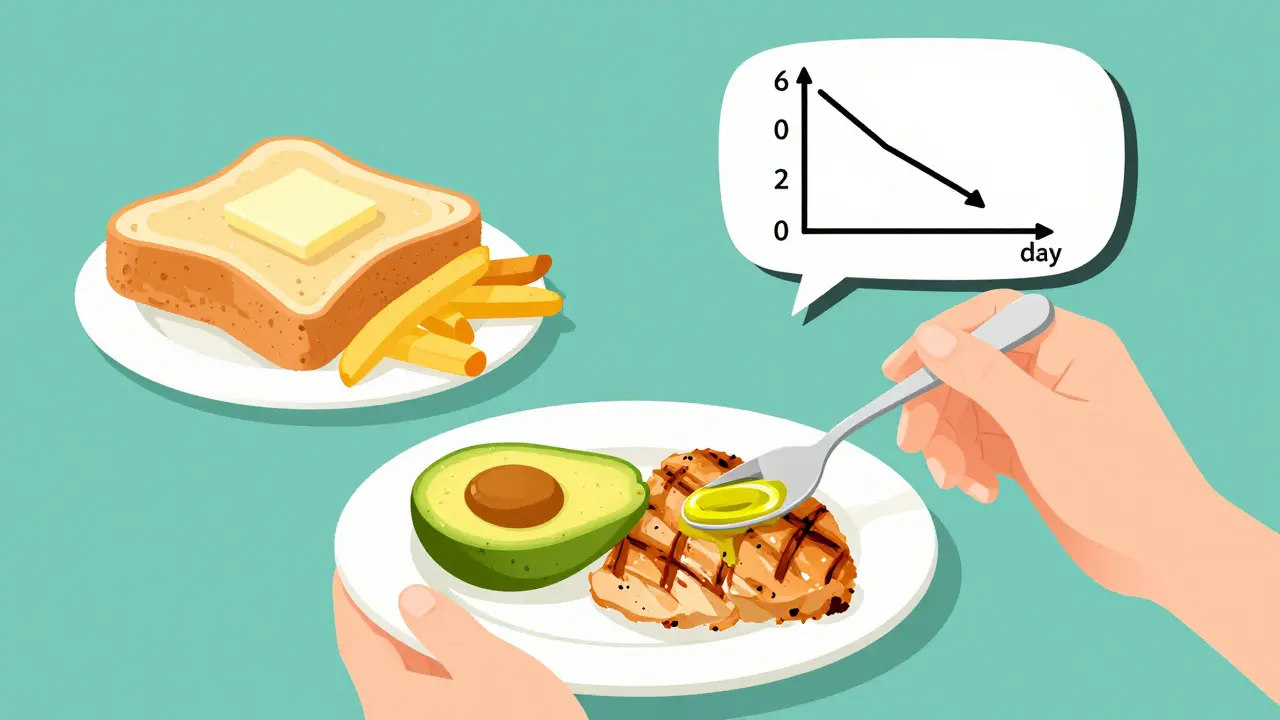
Start with fat. Fat triggers bile release. Cutting daily fat intake to 20-40 grams can reduce bowel movements by 40%. That doesn’t mean going zero-fat-it means avoiding fried foods, fatty cuts of meat, cream sauces, butter-heavy dishes, and full-fat dairy. A single order of fries can have 15 grams of fat. One tablespoon of olive oil? 14 grams. Track your intake for a week. You’ll be surprised how quickly it adds up.
Next, add soluble fiber. Psyllium husk (5-10 grams per day) binds bile acids naturally and firms up stool. Take it with water before meals. Clinical trials show this alone can cut daily bowel movements by 35%. It’s cheap, safe, and works well with binders.
Meal timing matters too. Instead of three big meals, eat five or six smaller ones. Large meals dump more bile into your gut at once, triggering urgency. Smaller portions spread the load. One Cleveland Clinic study showed this cut post-meal urgency by 25%.
Watch your triggers:
- Caffeine: Coffee, tea, energy drinks-they speed up colon movement by 15-20%.
- Artificial sweeteners: Sorbitol, mannitol, and xylitol pull water into the gut. Found in sugar-free gum, diet sodas, and sugar-free candies.
- Spicy foods: Not a direct cause, but they can worsen irritation in an already sensitive gut.
Some people find relief with the Specific Carbohydrate Diet (SCD), which cuts out complex carbs like grains and sugar. In one survey, 45% of BAD patients reported improvement on SCD. But it’s restrictive. Start with simple changes first: lower fat, add psyllium, avoid triggers. If that doesn’t help, explore SCD under a dietitian’s guidance.
What Doesn’t Work
Don’t waste time on things that won’t fix BAD. Probiotics? Some strains might help general gut health, but they don’t bind bile acids. Loperamide (Imodium)? It slows movement but doesn’t stop the bile acid irritation-so diarrhea often comes back worse. Antibiotics? Only if you have SIBO (small intestinal bacterial overgrowth), which can sometimes coexist with BAD, but not as a primary treatment.
Also, don’t assume your symptoms are "just IBS." That mindset delays real help. A 2022 study found the average time to diagnose BAD is six years. Most patients see five or six doctors before getting the right test. If your doctor won’t order a C4 test or refer you to a specialist, ask why. You deserve better.
Real-Life Success Stories
One patient, a 42-year-old teacher from Wellington, had diarrhea for seven years. She was diagnosed with IBS-D and tried elimination diets, peppermint oil, and stress management. Nothing stuck. After a C4 test came back at 18.2 ng/mL, she started colesevelam and cut her fat intake to under 30 grams a day. Within five days, her bowel movements dropped from six to two per day. She now keeps psyllium in her purse and avoids fried takeout. "I didn’t know it was treatable," she said. "I thought I was stuck." Another man, 58, had surgery for Crohn’s disease years ago and developed chronic diarrhea. His stool test confirmed Type I BAD. He switched from cholestyramine (which gave him constant constipation) to colesevelam and started eating five small meals. His quality of life improved overnight. "I can go on road trips again," he told his doctor.
What’s Next for BAD Treatment?
The future looks promising. Researchers are developing drugs that mimic FGF19, a hormone that tells your liver to slow bile acid production. Phase 3 trials of one such drug, A3384, showed 72% of patients had major symptom improvement in 12 weeks-far better than placebo. These aren’t available yet, but they’re coming.
Genetic testing is also on the horizon. Scientists have identified four genes linked to BAD susceptibility (TGR5, ASBT, FXR, and FGF19). In five years, a simple blood test could tell you if you’re genetically prone to it.
Meanwhile, digital tools are helping patients track their symptoms. Apps like BAD Tracker and BAD-Score let you log meals, meds, and bowel movements. AI analyzes patterns and predicts flare-ups. One user said it helped him spot that dairy wasn’t the issue-it was the butter on his toast.
Where to Get Help
If you suspect BAD:
- Ask your doctor for a serum C4 test. It’s the most accessible starting point.
- Request a referral to a gastroenterologist who specializes in functional gut disorders.
- Join the BAD Patient Support Group (over 1,200 members worldwide). They offer free meal plans and binder tips.
- Use the BAD Tracker app to log symptoms and share data with your doctor.
Don’t wait six years to feel better. Bile acid diarrhea is not your fault. It’s not "all in your head." It’s a real, measurable condition-and it has a solution.
Is bile acid diarrhea the same as IBS-D?
No. IBS-D is a diagnosis of exclusion-meaning it’s given when no other cause is found. Bile acid diarrhea is a specific biological condition caused by excess bile acids in the colon. About 25-30% of people diagnosed with IBS-D actually have BAD. Treating BAD with the right binders and diet can resolve symptoms completely, while IBS treatments often only offer partial relief.
Can I take bile acid binders long-term?
Yes. Bile acid binders like colesevelam are safe for long-term use. They’re not absorbed into your bloodstream, so they don’t affect your liver or kidneys. The main concern is nutrient absorption-especially fat-soluble vitamins (A, D, E, K). If you’re on binders long-term, ask your doctor to check your vitamin levels once a year. Taking a multivitamin at least 4 hours apart from your binder helps prevent deficiency.
Do I need to avoid all fats?
No. You don’t need to go fat-free. Your body needs some fat for hormone production and nutrient absorption. The goal is to limit fat to 20-40 grams per day. Choose healthy fats like avocado, nuts, and olive oil in small amounts. Avoid fried foods, fatty meats, cream, and butter-heavy sauces. A 3-ounce chicken breast with a teaspoon of olive oil is fine. A cheeseburger with fries? Not so much.
Why do some people get BAD after surgery?
Type I BAD happens when the terminal ileum-the part of the small intestine that reabsorbs bile acids-is damaged or removed. This can happen after surgery for Crohn’s disease, cancer, or even appendectomy in rare cases. Without that section, bile acids flow straight into the colon and cause diarrhea. If you’ve had bowel surgery and developed chronic diarrhea afterward, BAD should be tested for immediately.
Are there natural alternatives to bile acid binders?
Psyllium husk is the most effective natural option-it binds bile acids just like medication, but more gently. Other fibers like oat bran or flaxseed help a little, but not as reliably. Charcoal and bentonite clay are sometimes promoted, but there’s no good evidence they work for BAD, and they can interfere with medications. Stick with proven methods: binders, low-fat diet, and soluble fiber. Don’t gamble with untested supplements.


Write a comment