

One in four women will experience a yeast infection at some point this year. It’s not rare. It’s not shameful. But it’s often misunderstood. If you’re dealing with intense itching, thick white discharge, or burning during urination, you might be tempted to grab the first OTC yeast infection treatment you see on the shelf. But here’s the thing: yeast infection symptoms can look a lot like other infections - and treating the wrong one can make things worse.
What Candida Vaginitis Really Feels Like
Candida vaginitis, also called vulvovaginal candidiasis, isn’t just "a little itch." It’s a full-body discomfort that can make sitting, walking, or having sex painful. The most common sign? Unrelenting vulvar itching - reported in 97% of cases. That itch doesn’t come and go. It lingers, often worse at night. You might notice a change in discharge. It’s usually thick, white, and clumpy - like cottage cheese. Sometimes it’s watery or pale yellow. It doesn’t smell fishy like bacterial vaginosis. If there’s a strong odor, that’s a red flag. Yeast infections typically don’t cause a foul smell. Other signs include:- Red, swollen vulva
- Burning during urination (especially if urine touches irritated skin)
- Pain during sex
- Small cracks or fissures on the vulva in severe cases
What Causes a Yeast Infection?
Your vagina isn’t supposed to be sterile. It’s home to good bacteria - mostly Lactobacillus - that keep yeast like Candida albicans in check. When that balance breaks, yeast overgrows. Here’s what commonly tips the scales:- Antibiotics: Even a short course can wipe out good bacteria. Around half of all yeast infections happen after antibiotics.
- Pregnancy: Hormones change the vaginal environment. One in five pregnant women gets a yeast infection.
- Uncontrolled diabetes: High blood sugar feeds yeast. If your HbA1c is above 7%, your risk jumps by more than double.
- Tight clothing, damp swimsuits, or synthetic underwear: Moisture creates the perfect breeding ground.
- Birth control pills or hormone therapy: Higher estrogen levels can encourage yeast growth.
Over-the-Counter Options That Actually Work
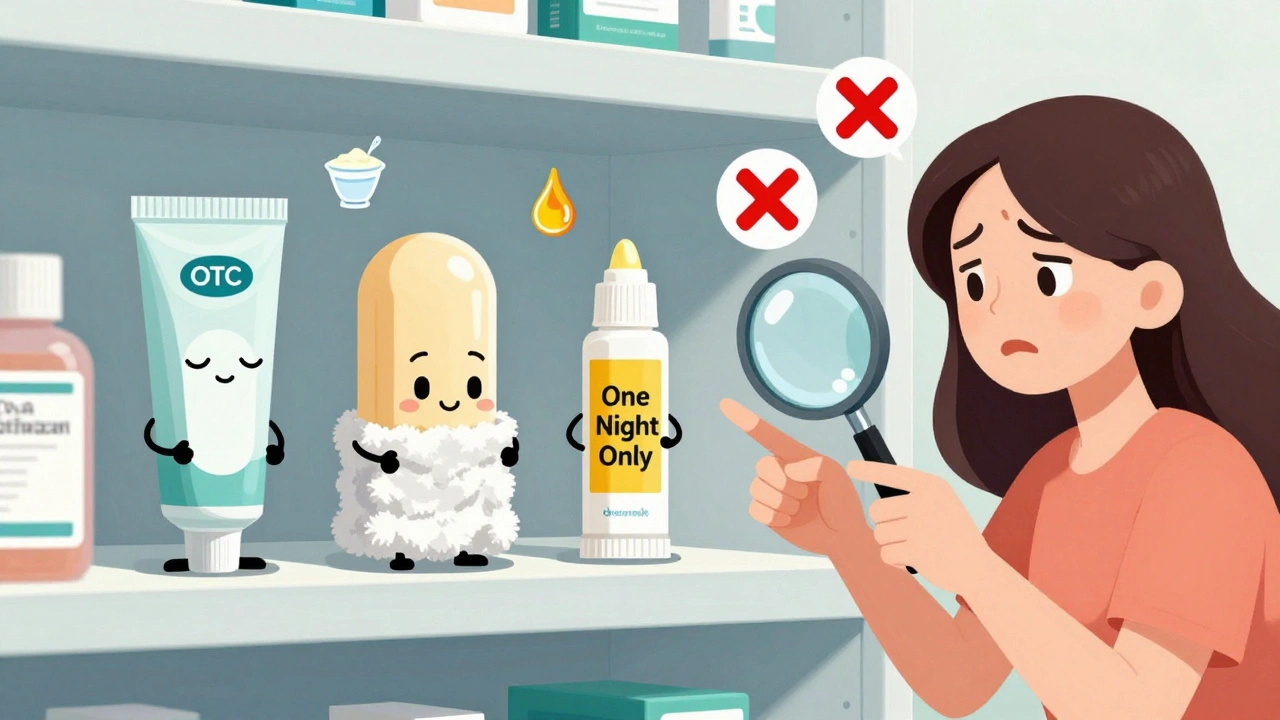
For uncomplicated cases - meaning it’s your first or occasional infection, symptoms are mild to moderate, and you’re not pregnant - OTC antifungals are effective 80-90% of the time. There are three main types:Clotrimazole
Available as creams, suppositories, or tablets. You’ll find it under brands like Lotrimin and Mycelex.- 1% cream: Apply twice daily for 7-14 days
- 2% cream: Apply once daily for 3 days
- 100mg or 200mg vaginal tablet: Insert one nightly for 3-7 nights
Miconazole
Sold as Monistat. The 7-day cream is the most popular.- 2% cream: Apply once daily for 7 days
- 100mg suppository: Insert one nightly for 7 nights
Tioconazole
A single-dose option. Only one application needed.- 6.5% ointment: Apply once, at bedtime
Most women prefer the single-dose tioconazole - no daily hassle. But studies show 65% of users find creams messy. Suppositories are cleaner to use, but some say they leak. Creams may feel more soothing for external itching. Choose based on what you can stick with.

When OTC Doesn’t Work - And Why
If you’ve tried an OTC treatment and nothing changed after 7 days? Stop. Don’t keep using it. Don’t double the dose. You might not have a yeast infection. Research shows that 47% of women who self-treat for yeast infections actually have bacterial vaginosis, trichomoniasis, or a skin condition. Treating the wrong thing delays real care. In some cases, it makes the infection worse. You should see a doctor if:- This is your first time having these symptoms
- You’re pregnant
- Your symptoms are severe - lots of swelling, cracks, or pain
- You’ve had four or more infections in a year
- You have a fever, chills, or pelvic pain
- Discharge is green, gray, or has a fishy odor
How to Use OTC Treatments Right
Using the product correctly matters just as much as choosing the right one.- Apply at bedtime. Lying down helps the medication stay in place.
- Finish the full course, even if itching stops after day two. Stopping early leads to recurrence.
- Avoid sex during treatment. It can push the medication out and reduce effectiveness by 30%.
- Insert suppositories deep into the vagina. If you feel it slipping out, you didn’t go far enough.
- Use the applicator that comes with the cream. Don’t use your fingers unless instructed - they can introduce bacteria.
What to Avoid
There are a lot of myths out there. Here’s what doesn’t help - and can hurt:- Yogurt inserts: No good evidence they work. You’re just adding sugar to a sensitive area.
- Essential oils or tea tree oil: Can cause burns and allergic reactions.
- Douching: Washes out good bacteria. Makes infections worse.
- Antibiotics without a reason: Only take them if prescribed. Don’t use leftover pills.
- Wearing thongs or tight leggings all day: Keep the area dry and airy.


Write a comment