
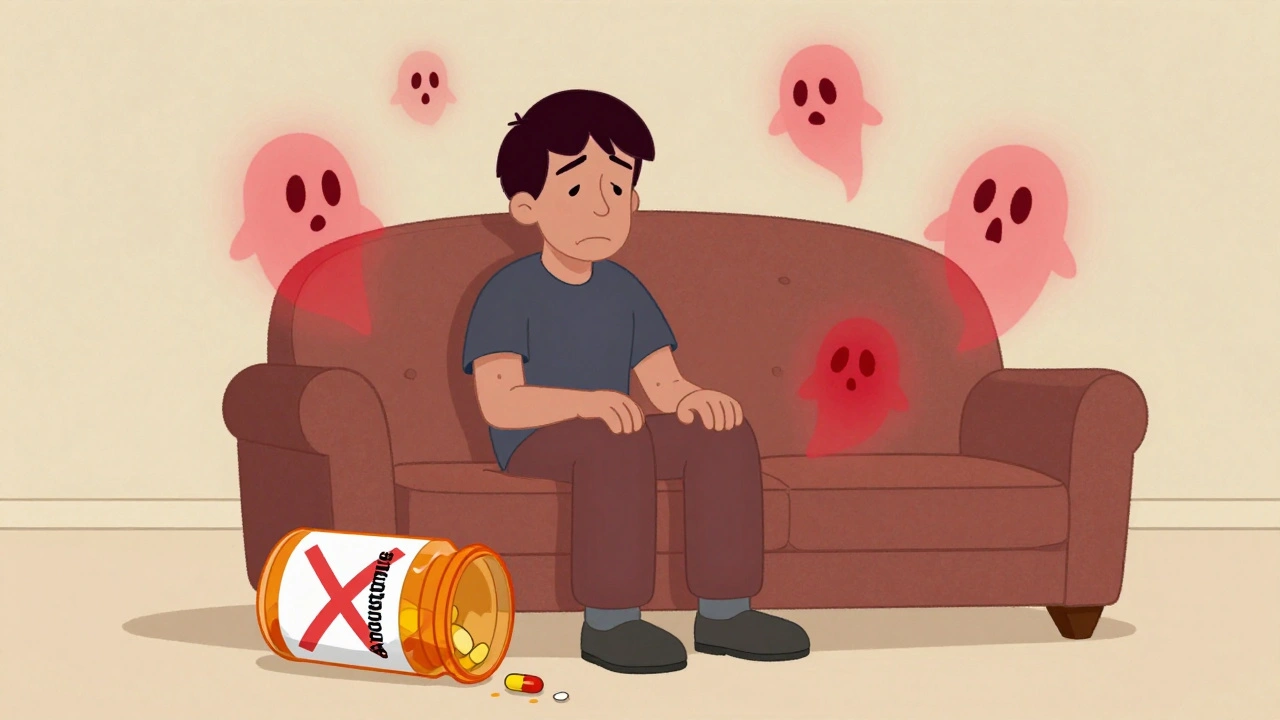
When hives don’t go away for more than six weeks, and there’s no clear trigger like food, heat, or stress, you’re likely dealing with chronic spontaneous urticaria (CSU). It’s not just an itchy rash-it’s a daily battle that can wreck sleep, ruin social plans, and make you feel like your body is working against you. About 60 to 80% of all chronic hives cases are CSU, and for nearly two-thirds of those people, the first-line treatment-standard doses of non-drowsy antihistamines-just doesn’t cut it. That’s where second-line treatments come in. These aren’t just backups. They’re often the difference between living with constant discomfort and finally getting control.
Why First-Line Treatments Often Fail
Most doctors start with second-generation antihistamines like cetirizine, loratadine, or fexofenadine. They’re safe, widely available, and usually free of drowsiness. But here’s the hard truth: only about 40% of CSU patients get meaningful relief from them, even at the highest recommended doses. That leaves the other 60% stuck in a cycle of itching, swelling, and frustration. Some doctors will bump the dose up to two, three, or even four times the normal amount. It’s legal, it’s common, and it helps a few more people-but it’s not a magic fix. Studies show even with dose escalation, total control is rare. When that happens, it’s time to move beyond antihistamines.Omalizumab: The Current Gold Standard
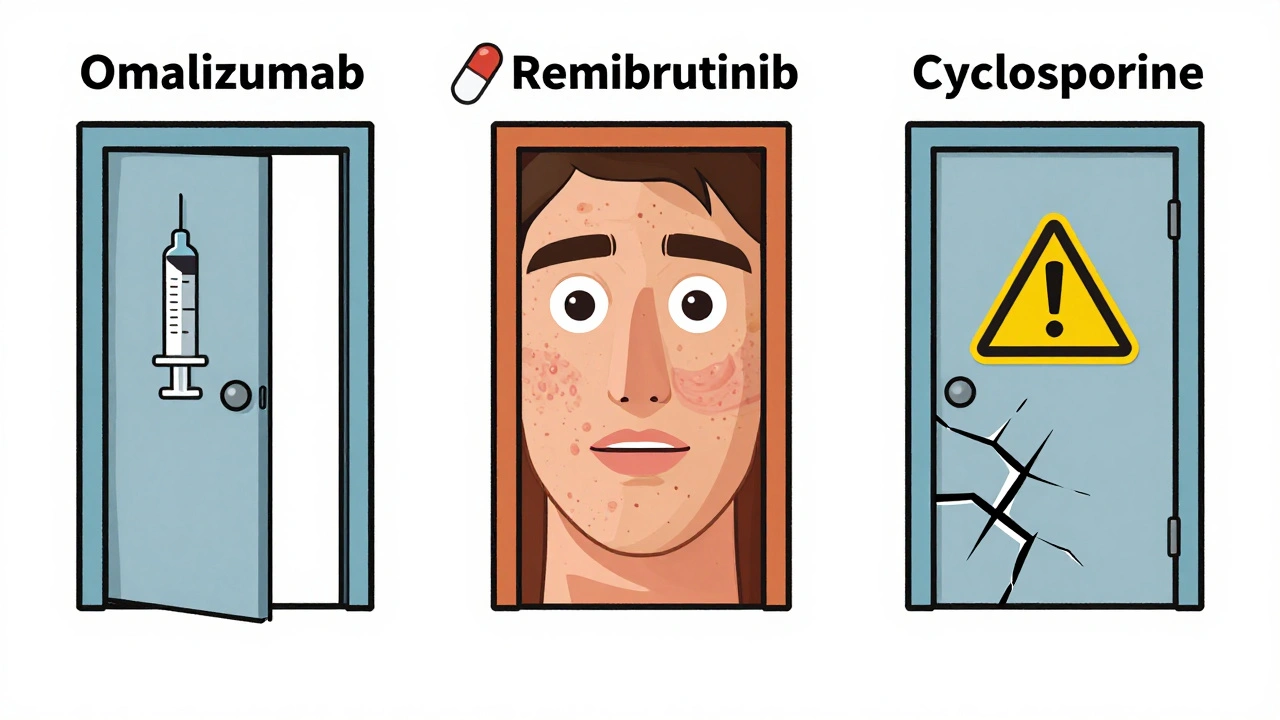
For over a decade, omalizumab has been the go-to second-line option. It’s an injectable biologic that targets IgE, the antibody that triggers mast cells to release histamine and cause hives. You get a subcutaneous shot every four weeks-no daily pills, no messy creams. It works for about 30 to 70% of patients, with many seeing a 50% or greater drop in symptoms. But here’s what most patients aren’t told: about 70% of people on omalizumab still don’t get complete control. Their hives don’t vanish. They just get less frequent or less severe. And if your CSU is driven by IgG autoantibodies (which happens in 30-50% of cases), omalizumab often doesn’t work at all. That’s not a flaw in the drug-it’s a mismatch in the cause.Emerging Alternatives: What’s Coming Next
The treatment landscape is changing fast. Three new options are on the horizon, each with different strengths.Remibrutinib is an oral Bruton tyrosine kinase (BTK) inhibitor. It doesn’t just block IgE pathways-it also shuts down the activity of basophils and autoreactive B cells, which play a role in autoimmune CSU. In two major phase 3 trials (REMIX-1 and REMIX-2), 28 to 32% of patients achieved complete symptom clearance after 24 weeks. That’s comparable to omalizumab, but with a huge advantage: it’s a pill. No needles. No clinic visits. For someone juggling work, kids, or travel, that’s a game-changer. It’s not approved yet, but regulators are reviewing it as we speak.
Dupilumab is already approved for eczema and asthma. It blocks interleukin-4 and interleukin-13, two key inflammation signals. In CSU trials, 30 to 31% of patients became completely hive-free at 24 weeks. That’s slightly better than omalizumab’s average response. The catch? It’s not officially approved for CSU yet. But doctors can prescribe it off-label, and many are starting to, especially for patients who didn’t respond to omalizumab.
Barzolvolimab is another new player. Early phase 2 results showed 38 to 51% of patients had complete clearance in just 12 weeks-faster than any other treatment tested so far. It’s still in development, but the numbers are promising.
What About Cyclosporine?
Cyclosporine isn’t new, but it’s still a powerful tool. It’s an old-school immunosuppressant used off-label for CSU. It works best in patients with autoimmune CSU-especially those who didn’t respond to omalizumab. Studies show 54 to 73% of these patients see major improvement. But it’s not gentle. Long-term use can raise blood pressure, damage kidneys, and increase infection risk. It’s usually reserved for short bursts or when newer options aren’t available. If you’re young, otherwise healthy, and desperate for relief, your doctor might try it for 3 to 6 months. But it’s not a lifelong solution.Why Some Treatments Fail-and What That Means for You
Not all CSU is the same. That’s the biggest shift in understanding over the last five years. About half of CSU cases are autoimmune. Your body makes antibodies that accidentally attack your own mast cells. If that’s your case, omalizumab (which targets IgE) won’t help much. But remibrutinib or cyclosporine might. If your hives are more allergy-driven, omalizumab could still be your best shot. The problem? Most doctors don’t test for autoimmune markers. There’s no simple blood test you can walk into a clinic and get. But if you’ve tried omalizumab and had no improvement, it’s worth asking: could I have IgG-mediated CSU? That question could change your treatment path.
What’s on the Horizon
Not everything works. Fenebrutinib, another BTK inhibitor, was dropped in 2023 because it caused liver enzyme spikes in some patients. That’s a warning. New drugs aren’t always better-they just need to be safer. The goal now isn’t just to reduce hives. It’s to eliminate them completely. That’s why regulators now require trials to prove complete response, not just improvement. The next five years will likely see at least one oral BTK inhibitor approved, and maybe dupilumab too. The future of CSU treatment is personalization: matching your biology to your medicine.What to Do If You’re Still Struggling
If you’ve been on antihistamines for months and still have hives, don’t wait. Talk to an allergist or dermatologist who specializes in urticaria. Ask:- Have I tried the highest approved dose of antihistamines?
- Could I be part of the 60% who need something stronger?
- Have I been tested for autoimmune markers? (Even if not standard, it’s worth asking.)
- Am I a candidate for omalizumab, or should I consider emerging options?
- Is cyclosporine a short-term option for me?
Don’t accept constant itching as normal. There are real options now that didn’t exist five years ago. The key is not just trying drugs-it’s understanding why they work (or don’t) for your body.


Write a comment