
Many healthcare providers face the same recurring question from patients: "Is the generic version actually as good as the brand name?" While the intuitive answer is usually "yes," the real-world data provides a much more nuanced picture. For a provider, the goal isn't just to save the patient money, but to ensure that the switch doesn't compromise the therapeutic goal. The reality is that clinical outcomes data overwhelmingly supports the use of generics, but there are specific clinical scenarios where a closer look is required.
The baseline of equivalence: How generics are vetted
To understand why generics work, we have to look at the regulatory floor. In the United States, the Hatch-Waxman Act is the 1984 legislation that created the Abbreviated New Drug Application (ANDA) pathway . This allows generic makers to skip the massive, multi-year clinical trials required for new drugs, provided they can prove bioequivalence to the reference drug.
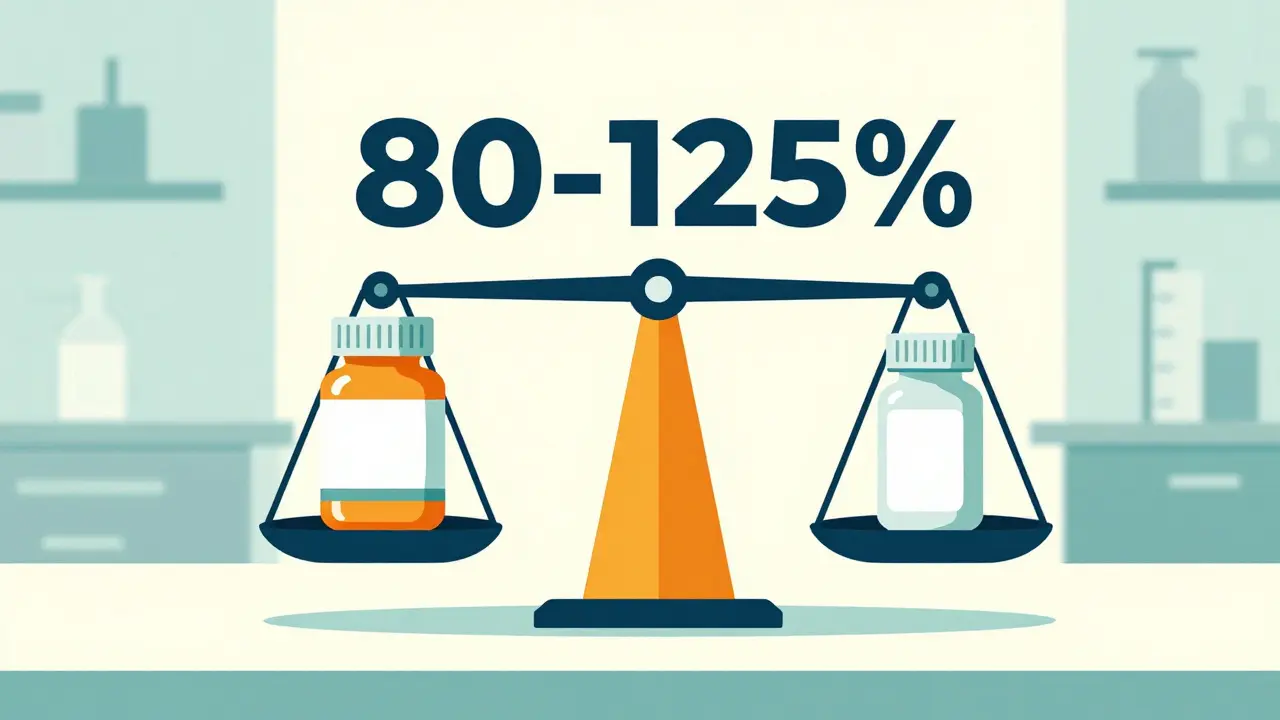
When the FDA (Food and Drug Administration) reviews these applications, they aren't looking for a perfect 1:1 match, but a statistical range. Specifically, generics must deliver between 80% and 125% of the pharmacokinetic parameters of the brand-name drug. This range covers the Average Bioequivalence (ABE) testing, ensuring that the amount of active ingredient reaching the bloodstream is virtually the same. For most patients, this difference is clinically invisible.
Hard data: What the large-scale studies show
When we move from lab tests to real-world populations, the data remains strong. A massive study published in PLOS Medicine analyzed over 1.3 million matched patient pairs across seven different drug classes. The researchers used propensity score matching to ensure they weren't just comparing a healthy person on a generic to a very sick person on a brand name. The result? Hazard ratios clustered around 1.00 for 14 clinical endpoints, meaning there was no statistically significant difference in outcomes for the vast majority of medications.
Take cardiovascular health as an example. A meta-analysis of 47 different studies found no significant differences in efficacy or safety between generic and brand-name cardiovascular drugs. In some cases, the data actually leaned in favor of generics. For instance, patients using generic amlodipine showed superior cardiovascular outcomes compared to those on the brand name (HR 0.91). While it's unlikely the generic molecule itself is "better," these findings highlight that the therapeutic outcome is at least equal, if not occasionally better, in broad populations.
| Drug Class / Example | Key Outcome Measure | Generic vs. Brand Result | Clinical Significance |
|---|---|---|---|
| Cardiovascular (e.g., Quinapril) | Hospitalization for MI/Stroke | HR 0.99 [0.94-1.05] | Equivalent |
| Metabolic (e.g., Metformin) | HbA1c Control | Mean diff -0.02% | Equivalent |
| Bone Health (e.g., Alendronate) | Non-vertebral fracture rates | HR 1.00 [0.96-1.05] | Equivalent |
| Psychiatric (e.g., Sertraline) | Hospitalization rates | HR 1.07 [1.01-1.14] | Slightly Higher Risk |
When to be cautious: Narrow Therapeutic Index (NTI) drugs
If everything is equivalent, why do some providers still insist on brand names? The answer lies in Narrow Therapeutic Index (NTI) drugs. These are medications where a small change in dose or blood concentration can lead to a significant change in the drug's effect or toxicity. Examples include certain immunosuppressants like tacrolimus or some anti-epileptics.
For these drugs, the standard 80-125% range might be too wide. The FDA often requires Scaled Average Bioequivalence (SCABE) for NTI drugs to tighten the margins. While a 2020 study in Nature Scientific Reports showed that transplant recipients remained stable across multiple product switches over 42 days, the individual variability can still be a factor. If a patient is meticulously stabilized on a brand-name NTI drug, switching to a generic might trigger a need for dose adjustment and more frequent blood monitoring.
Addressing the "Psychiatric Gap"
One of the more debated areas in clinical outcomes is psychiatric medication. Data from the PLOS Medicine study indicated slightly higher hospitalization rates for users of generic escitalopram and sertraline. This has led some providers to be hesitant about switching antidepressants.
However, the data is messy. When researchers looked at "authorized generics" (generics made by the brand manufacturer) versus brand names, they saw similar patterns. This suggests that the issue might not be the generic formulation itself, but rather how these medications are prescribed or the systemic reasons why a patient is switched to a generic in the first place. The clinical difference is marginal, but it remains a point of discussion in mental health settings.
Practical guide for providers: The Orange Book and Ratings
To make fast, evidence-based decisions, providers should rely on the FDA's "Orange Book." This is the definitive guide to therapeutic equivalence. The key is the rating:
- A-Rated: These are therapeutically equivalent. They have the same active ingredient, dosage form, and strength, and they meet the bioequivalence standards. About 97% of generics fall into this category.
- B-Rated: These are not considered therapeutically equivalent. This doesn't mean they are dangerous, but they may have different dissolution profiles or formulation differences that could affect how the drug is absorbed.
As a rule of thumb, if a drug is A-rated, you can switch with confidence. If it's B-rated, a conversation about the specific patient's stability is necessary.
The psychology of the switch: Patient perception vs. clinical reality
Providers often deal with the "nocebo effect," where a patient feels a drug isn't working simply because the pill is a different color or shape. This is common with generics because inactive ingredients (fillers and dyes) can differ from the brand version.
Clinical data confirms these aesthetic differences don't change the outcome. A 2017 FDA systematic review used "switch-back" analysis, where patients were moved from brand to generic and then back again. They found that patients were not significantly more likely to return to brand names due to failure of the generic. This tells us that when a patient claims a generic "doesn't work," it's often a perception issue rather than a pharmacological failure.
Do generics have different side effects than brand names?
Generally, no. Because they contain the same active ingredient, the primary side effect profile is identical. However, some patients may react to the inactive ingredients (excipients) like lactose or specific dyes used in the generic version, which could cause a mild allergic reaction or gastrointestinal upset.
Why are some generics cheaper if the quality is the same?
Generic manufacturers don't have to pay for the original research, development, and massive clinical trials that the brand-name company funded. Since they only need to prove bioequivalence through the ANDA process, their overhead is significantly lower, allowing them to pass those savings to the consumer.
Should I ever avoid generics for psychiatric meds?
For most patients, generics are safe and effective. However, if a patient has had a severe adverse reaction to one generic version of a drug, switching to a different generic manufacturer or the brand name can sometimes help, as the inactive ingredients vary between companies.
How can I tell if a generic is "A-rated"?
You can check the FDA's Approved Drug Products (Orange Book) online. By searching for the drug name, you can find the therapeutic equivalence rating for every approved generic version of that medication.
Are biosimilars the same as generics?
No. Generic drugs are chemically identical copies of small-molecule drugs. Biosimilars are used for large, complex proteins. Because proteins are grown in living cells, they can't be "identical," only "highly similar." They require a different, more complex approval process than traditional generics.
Next steps for clinical practice
To implement this data in your practice, start by reviewing your patients on NTI drugs. If they are stable and have not had issues, the risk of switching is low, but monitoring should be increased during the first 30 days. For all other medications, prioritize A-rated generics to reduce the financial burden on the patient without sacrificing care. When a patient expresses doubt, explain the FDA's 80-125% bioequivalence standard; giving them a concrete number often helps replace anxiety with trust in the regulatory process.