
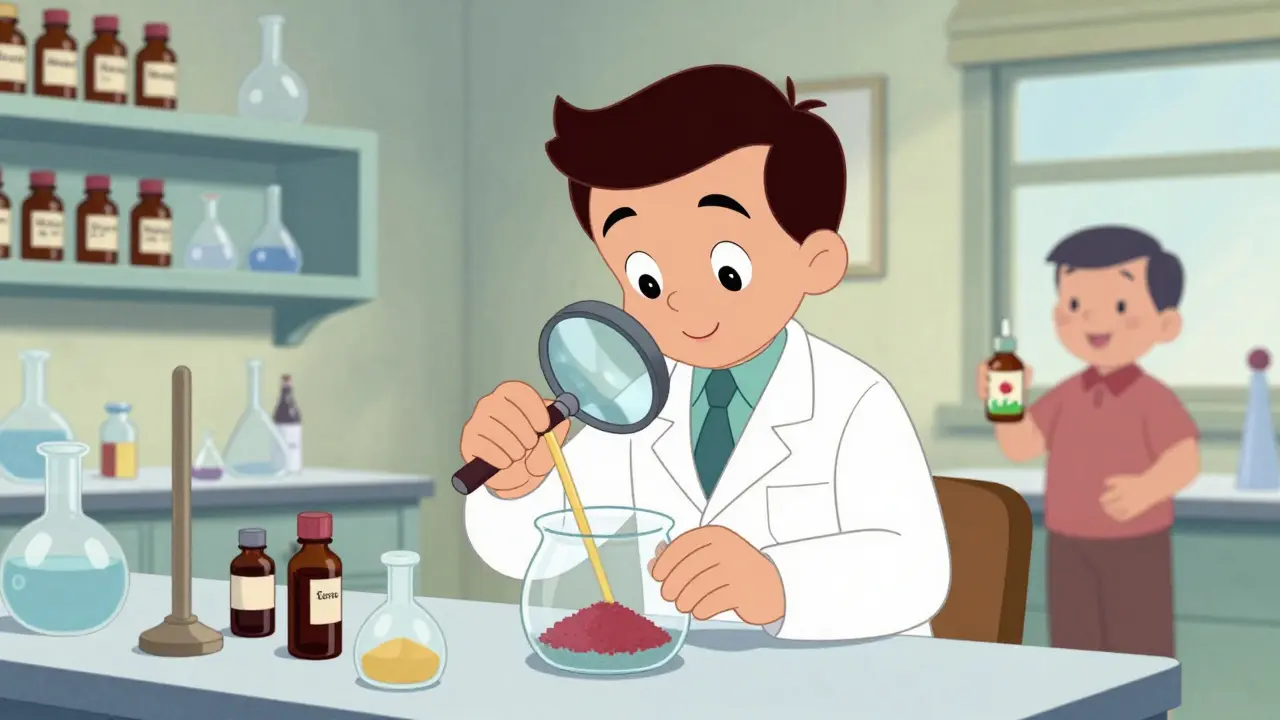
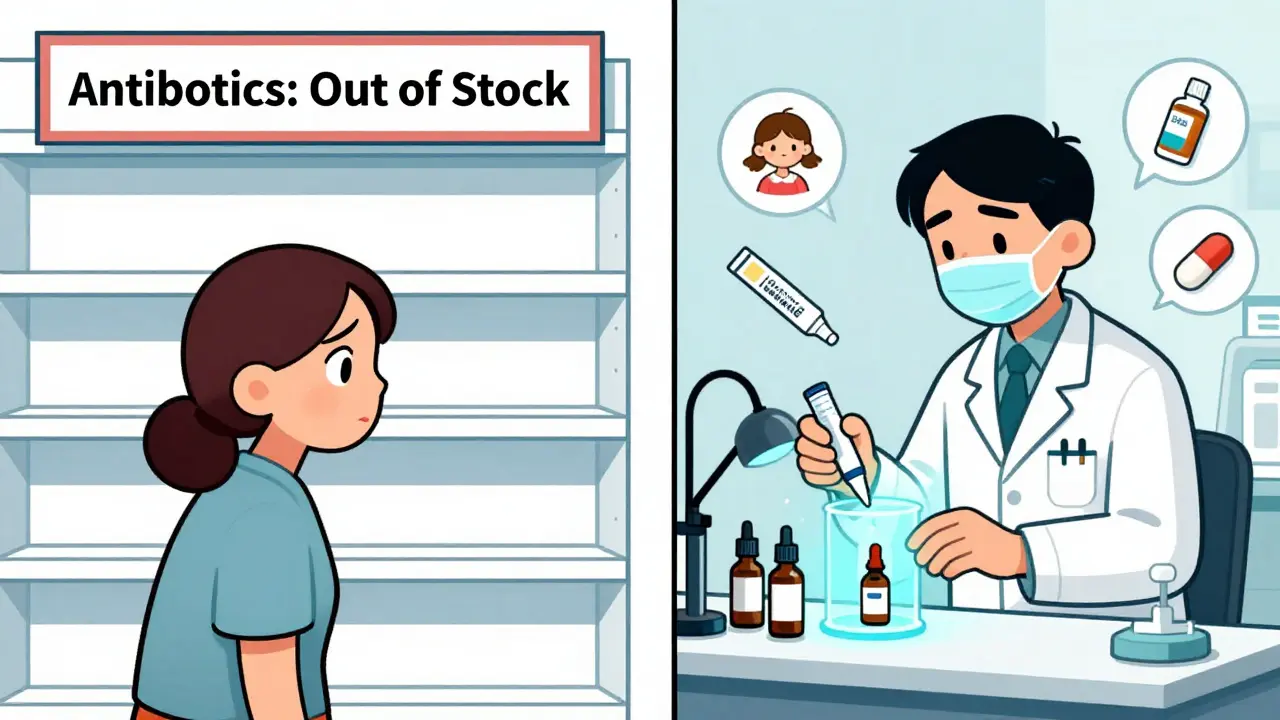
When your doctor prescribes a medication and the pharmacy says it’s out of stock-again-you’re not alone. In 2025, the U.S. saw over 350 drug shortages, affecting everything from antibiotics to heart medications and even basic pain relievers. For many, the wait isn’t just inconvenient; it’s dangerous. That’s where compounding pharmacies step in-not as a first choice, but as a vital lifeline when nothing else works.
What Exactly Is a Compounding Pharmacy?
A compounding pharmacy doesn’t just fill prescriptions. It builds them. These specialized labs take raw pharmaceutical ingredients and mix them into custom formulations that aren’t available through regular drug manufacturers. Think of it like ordering a custom cake instead of buying a pre-made one. If you’re allergic to gluten, dairy, or dyes, or need a liquid version of a pill because you can’t swallow it, a compounding pharmacist can make it happen. Unlike big drug companies that mass-produce pills in standard doses, compounding pharmacies tailor medications to individual needs. They can create:- Flavored liquids for kids who gag on medicine
- Topical gels for pain relief instead of oral pills
- Medications without preservatives or allergens
- Dosages too low or too high for commercial products
- Discontinued drugs that are no longer made
This isn’t science fiction-it’s daily practice. Around 7,500 pharmacies in the U.S. specialize in compounding, and another 32,000 offer it as a side service. They’re regulated under strict standards like USP <795> and <797>, which cover everything from clean room environments to ingredient purity.
Why Do Drug Shortages Happen?
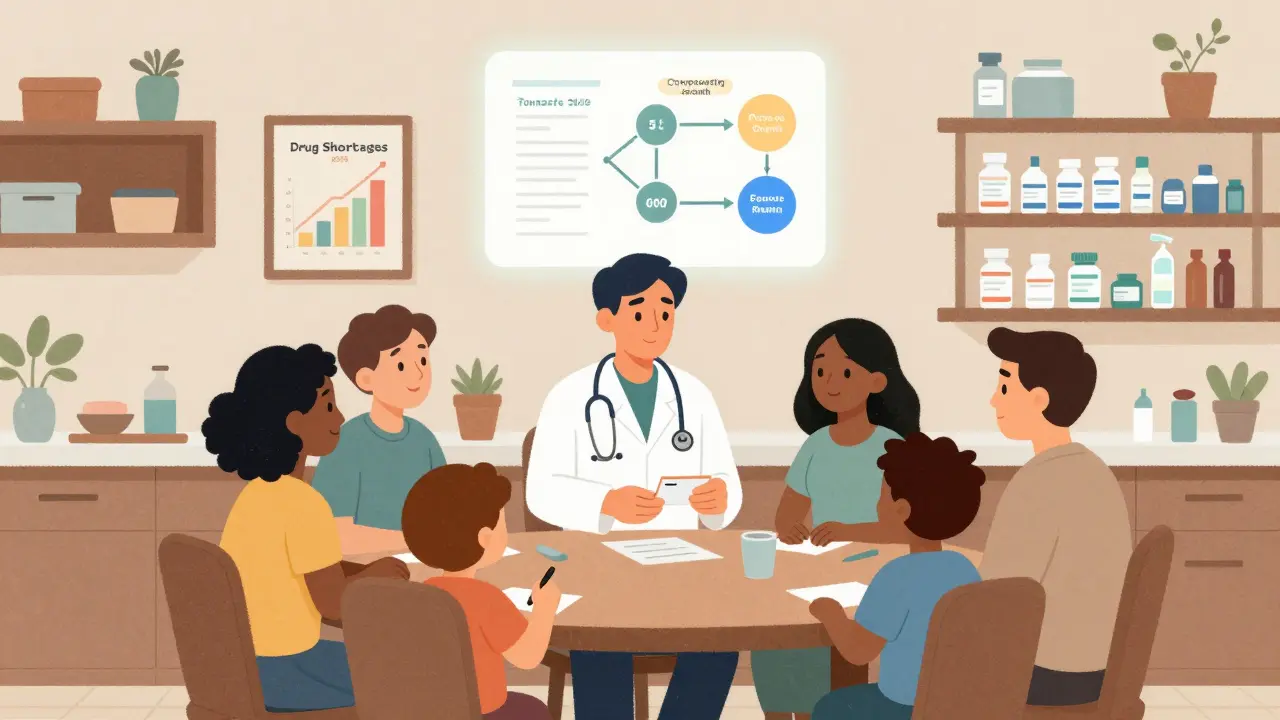
Drug shortages aren’t random. They’re often caused by manufacturing issues, supply chain breakdowns, or companies deciding a drug isn’t profitable enough to keep making. The FDA tracks these gaps, and in 2025, nearly 400 medications were listed as in short supply. Some are simple antibiotics. Others are life-saving drugs like insulin, chemotherapy agents, or even injectable steroids. When a drug disappears from shelves, doctors scramble. Patients miss doses. Conditions worsen. That’s when compounding pharmacies become critical. For example, if a patient needs a 5 mg dose of a drug that’s only sold in 10 mg tablets, a compounding pharmacy can make the exact dose. No splitting pills. No guesswork.Who Benefits Most From Compounded Medications?
Not everyone needs a compounded drug. But for certain groups, it’s the only option:- Children: About 40% of kids can’t swallow pills. Compounding pharmacies make tasty, easy-to-take liquids with flavors like strawberry or bubblegum. Parents report a 73% increase in adherence when their child’s medicine tastes good.
- Elderly patients: Around 30% of seniors struggle with swallowing. Creams, gels, or sublingual tablets can replace pills entirely.
- Allergy-sensitive patients: Up to 20% of people react to dyes, gluten, or preservatives in commercial drugs. Compounded versions remove those triggers.
- Chronic pain and hormone therapy patients: These groups make up nearly 50% of all compounded prescriptions. Custom topical creams for pain or bioidentical hormone pellets offer relief when standard treatments fail.
A 2023 study found that 85% of patients with allergies to commercial drug ingredients stuck to their treatment plan when switched to a compounded version. That’s not just convenience-it’s better health outcomes.
How Does the Process Work?
It’s not as simple as walking into a pharmacy and asking for a custom pill. Here’s how it actually works:- Your doctor identifies that a standard drug isn’t working-or isn’t available.
- The doctor writes a prescription with specific instructions: dose, form, ingredients to avoid.
- You take that prescription to a compounding pharmacy (your regular pharmacy may refer you).
- The pharmacist reviews the formula, sources pure ingredients, and prepares the medication.
- You pick it up in 24 to 72 hours-sometimes longer for sterile compounds.
It’s slower than a standard fill. But when you need a specific dose or form, waiting is worth it. Pharmacists spend 25-35% more time per compounded prescription to ensure safety. That’s because mistakes can be dangerous-precision matters.
What Can’t They Make?
Compounding pharmacies aren’t magic. They can’t replicate complex biologics like insulin pens, monoclonal antibodies, or vaccines. These require advanced manufacturing processes only big pharmaceutical companies can handle. Also, they can’t legally make copies of FDA-approved drugs just because they’re expensive or hard to find. That’s not compounding-that’s counterfeiting. The FDA is clear: compounding is for when no approved alternative exists. If a drug is available, even if it’s costly, you should use it. About 15% of compounded prescriptions could have been filled with standard meds, according to the National Community Pharmacists Association. That’s unnecessary risk.Insurance and Cost: What to Expect
Here’s the tough part: insurance doesn’t always cover compounded medications. About 45% of patients pay out-of-pocket, compared to just 15% for regular prescriptions. Costs vary widely. A simple flavored liquid might cost $50. A complex hormone cream could run $150-$300. Some insurers will cover it if your doctor submits a letter of medical necessity. Others won’t touch it. Always check ahead. Some compounding pharmacies offer payment plans or discounts for cash payers.How to Find a Reputable Compounding Pharmacy
Not all compounding pharmacies are created equal. Look for these signs:- PCAB accreditation: Only about 1,200 of the 7,500 compounding pharmacies in the U.S. are accredited by the Pharmacy Compounding Accreditation Board. This means they’ve passed strict audits on equipment, training, and quality control.
- Clear labeling: Their products should list ingredients, strength, expiration date, and storage instructions.
- Transparency: They should be willing to explain the formula and why it’s better than a commercial option.
- References: Ask your doctor or local pharmacists for recommendations.
Don’t trust online pharmacies offering “custom” meds without a prescription or a physical location. Many are unregulated and dangerous.
Real Stories, Real Results
A Reddit user shared how a compounded topical finasteride cream cut their side effects from 32% to just 8%-no more sexual dysfunction, no more nausea. Another parent said their 6-year-old, who refused all oral antibiotics, started taking medicine daily after switching to a cherry-flavored liquid made by a compounding pharmacy. In one hospital case, a cancer patient couldn’t tolerate the filler in their IV chemo drug. The compounding pharmacy removed it, and the patient completed treatment without a single reaction. These aren’t rare cases. They’re common enough that 89% of patients who use compounded medications say they’d recommend them to others.The Future of Personalized Medicine
The compounding market is growing fast-projected to hit $15.8 billion by 2027. Why? Because people want more control over their meds. Genetic testing is making it possible to tailor drugs to your DNA. Compounding pharmacies are already working with labs to create personalized hormone regimens based on blood work. New tech is helping too. Digital formulation tools have cut compounding errors by 37%. Stability testing now extends shelf life by up to 40%, meaning fewer wasted doses. But regulators are watching closely. The FDA wants to make sure compounding stays a safety net-not a loophole. That’s why standards keep tightening. And that’s a good thing. Patients need reliable, safe options. Not risky shortcuts.When to Consider a Compounded Medication
Ask yourself these questions:- Is the drug I need currently unavailable?
- Do I have allergies or sensitivities to common fillers?
- Can I not swallow pills, or do I need a different delivery method?
- Has my doctor said there’s no other option?
If you answered yes to any of these, talk to your doctor about a compounding pharmacy. Don’t wait until you’re out of options. Start the conversation early.
Are compounded medications safe?
Yes-when made by an accredited pharmacy following USP guidelines. Compounded drugs are not FDA-approved, but they’re held to high purity and consistency standards. Always choose a PCAB-accredited pharmacy and verify the ingredients with your pharmacist.
Can I get compounded medications from my regular pharmacy?
Some can. About 32,000 community pharmacies offer basic compounding services. But for complex or sterile preparations, you’ll likely need to go to a specialized compounding pharmacy. Ask your pharmacist if they have the equipment and training.
How long does it take to get a compounded prescription?
Typically 24 to 72 hours. Sterile compounds (like injections) take longer because they require extra testing. Non-sterile creams or liquids are usually ready faster. Plan ahead-don’t wait until your last pill is gone.
Why aren’t compounded drugs covered by insurance?
Because they’re not mass-produced or FDA-approved. Insurers treat them like custom services, not standard drugs. Some will cover them if your doctor proves medical necessity. Always ask your insurer and the pharmacy for a pre-authorization form.
Can a compounding pharmacy make a drug that’s been recalled?
Only if the recall was due to packaging or labeling-not safety or efficacy. If the drug itself is unsafe, compounding it is illegal and dangerous. Always check FDA recall notices and consult your pharmacist before proceeding.


Write a comment