
When you’re scheduled for a CT scan, the last thing you want to worry about is having a bad reaction to the contrast dye. But if you’ve had a reaction before-or even just heard stories about people breaking out in hives or struggling to breathe-you’re right to be cautious. The good news? With the right planning, most people can safely get the imaging they need without serious problems.
What Are Contrast Dye Reactions?
Contrast dye, also called iodinated contrast media, is used in CT scans and some X-rays to make blood vessels, organs, and tissues show up more clearly on images. It’s not the same as the iodine you find in table salt or antiseptics like Betadine. But because it contains iodine, many people mistakenly think an allergy to shellfish or iodine-based cleaners means they’re at high risk.That’s not true. Studies show that having a shellfish allergy or being sensitive to povidone-iodine doesn’t increase your chance of reacting to contrast dye by much-only about 2 to 3 times higher than someone with no allergies at all. That’s not enough to justify routine premedication.
Real contrast reactions happen in about 0.04% to 0.22% of cases with modern low-osmolar dyes. Severe reactions-like trouble breathing, low blood pressure, or cardiac arrest-are even rarer, happening in just 0.01% to 0.04% of scans. Still, for those who’ve had a reaction before, the risk jumps. If you’ve had a prior allergic-type reaction to the same kind of contrast, your chance of another one is around 35% without any protection.
Who Needs Premedication?
Premedication isn’t for everyone. It’s reserved for people with a clear history of a prior reaction to iodinated contrast. Not every reaction counts the same.Mild reactions-like a few hives, mild nausea, or a flushed face-don’t usually require premedication. Research from 2021 shows these patients have very low risk of recurrence. Many centers now skip premedication for mild cases unless there’s another reason to be extra cautious.
Moderate reactions-such as vomiting, significant hives, or wheezing-warrant consideration. Doctors will weigh the urgency of the scan against the risk.
Severe reactions-like swelling of the throat, dropping blood pressure, or cardiac arrest-require special planning. In non-emergency cases, doctors often avoid contrast entirely unless absolutely necessary. If it’s unavoidable, premedication is mandatory, and the scan must be done in a hospital setting with emergency teams ready.
One key rule: if you know which specific contrast agent caused your past reaction, switch to a different one in the same class. Studies show this can be just as effective as premedication-and avoids giving you extra meds you don’t need.
The Two Main Premedication Protocols
There are two standard ways to prepare: oral (for planned, non-emergency scans) and intravenous (for urgent or inpatient cases).Oral Protocol (13-Hour Lead Time)
This is the classic approach used for outpatient scans. You take steroids and an antihistamine by mouth over a full day:
- Prednisone 50 mg by mouth at 13 hours before the scan
- Prednisone 50 mg by mouth at 7 hours before the scan
- Prednisone 50 mg by mouth at 1 hour before the scan
- Diphenhydramine (Benadryl) 50 mg by mouth at 1 hour before the scan
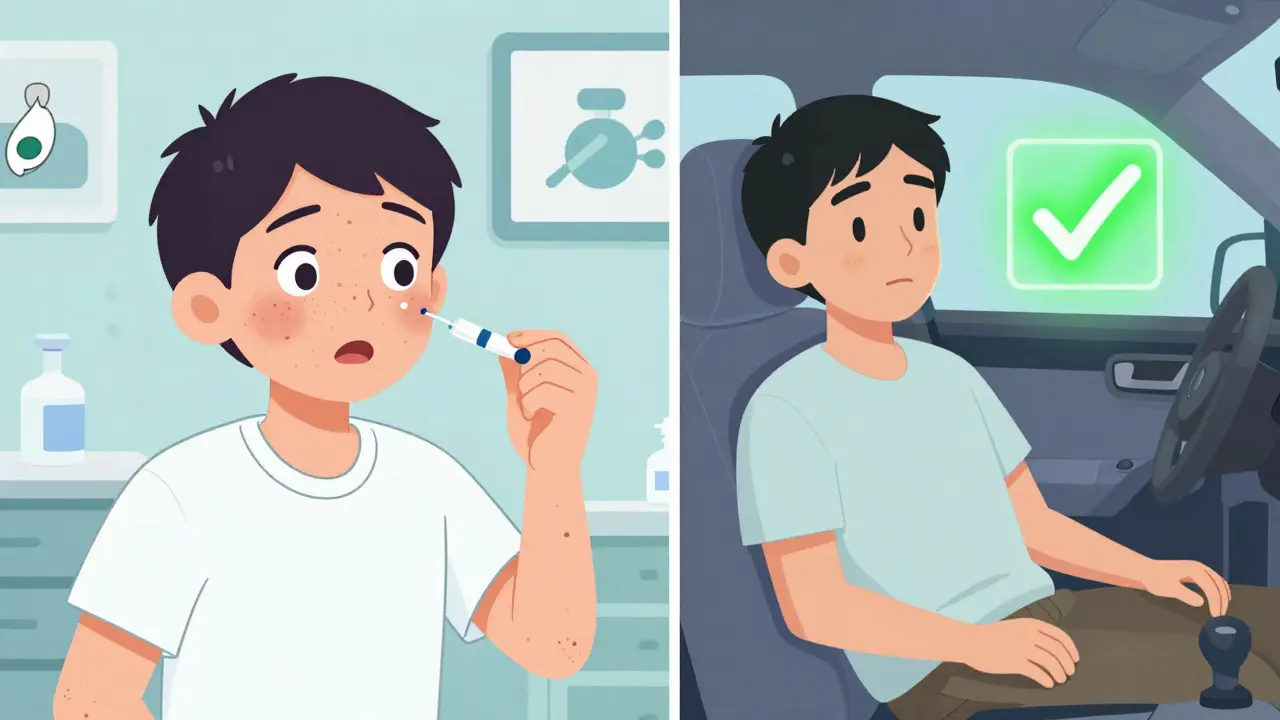
Benadryl makes you sleepy. So if you’re on this plan, you must have someone drive you home. No exceptions. Some centers will reschedule your scan if you don’t have a ride.
IV Protocol (Emergency or Inpatient)
If you’re in the hospital or emergency room, you can’t wait 13 hours. So doctors use IV meds:
- Methylprednisolone 40 mg IV, then repeated every 4 hours until the scan
- OR hydrocortisone 200 mg IV, then repeated every 4 hours until the scan
- Diphenhydramine 50 mg IV, given 1 hour before contrast
These work faster and are more reliable when time is tight. But they still need to start at least 4 to 5 hours before the scan to be effective. Giving steroids just an hour before? That won’t help.
What About the 5-Hour Shortcut?
Not everyone has 13 hours to wait. What if you need a CT scan tomorrow morning and just found out you’re at risk today?
There’s a proven shortcut. A 2017 study showed that a 5-hour oral protocol works just as well:
- Methylprednisolone 32 mg by mouth at 5 hours before the scan
- Methylprednisolone 32 mg by mouth at 1 hour before the scan
- Diphenhydramine 50 mg by mouth at 1 hour before the scan
This is now widely used in urgent care and radiology departments when time is short. It’s not the gold standard for every case-but it’s a solid option when you can’t wait.
Pediatric Considerations
Children react less often than adults, but when they do, it’s still serious. For kids 6 and older who need premedication, the go-to is:
- Cetirizine (Zyrtec) 10 mg by mouth, 1 hour before the scan
For younger kids or more severe risk, doctors may use IV steroids and antihistamines, but dosing is based on weight. Always check with your pediatric radiologist.
What About Safety Planning?
Premedication isn’t just about popping pills. It’s part of a bigger safety plan.
- Location matters. If you’ve had a severe reaction before, your scan should be done at a hospital with emergency staff nearby-like an ICU or emergency department-not a small imaging center.
- Emergency readiness. All facilities giving contrast must have crash carts, oxygen, and trained staff ready to respond within minutes. This isn’t optional-it’s required by hospital accreditation rules.
- Communication. Your referring doctor must talk to the radiologist before scheduling. You’ll need documentation that your risk was assessed and a plan was made.
- Transportation. If you’re taking Benadryl, you need a ride. No driving. No taxis. No Uber. Period.
Even with all this, reactions can still happen. About 2% of premedicated patients still have a reaction-sometimes severe. That’s why vigilance doesn’t stop after the pills are taken.
Cost and Accessibility
Premedication is cheap. Prednisone pills cost about 25 cents each. Benadryl is 15 cents per dose. For a $1,000 CT scan, the meds are less than 0.1% of the cost. That’s why nearly all academic hospitals use these protocols.
But community clinics? Only about 78% follow the full guidelines. If you’re getting scanned outside a major hospital, ask: “Do you have a written protocol for contrast reactions? Do you have emergency meds on hand?” If they can’t answer, consider rescheduling.
What’s Changing in the Future?
Contrast dyes today are much safer than the ones used 20 years ago. Modern low-osmolar agents have cut reaction rates in half. That’s why some experts now question whether we overuse premedication.
The American College of Radiology is updating its guidelines, and early drafts suggest a stronger push toward switching contrast agents instead of routinely giving steroids. If you’ve had a reaction to one dye, switching to another one from the same class might be enough.
And someday, we may have contrast agents with zero risk. Until then, the best approach is simple: know your history, talk to your doctor, and make sure your scan is done where help is close at hand.
What If You’re Nervous?
It’s okay to be anxious. You’re not alone. But remember: most people who get contrast dye-even those with past reactions-have no problems at all. The system is built to protect you.
Don’t skip your scan because you’re scared. Do the prep. Bring your driver. Tell the tech your history. And trust the team. They’ve done this hundreds of times.
Can I have a contrast dye reaction even if I’ve never had one before?
Yes, but it’s rare. About 1 in 500 people will have some kind of reaction the first time they get contrast dye. Most are mild-like itching or nausea-and go away quickly. Severe reactions are extremely uncommon, happening in fewer than 1 in 2,500 cases with modern dyes. You don’t need to be premedicated unless you’ve had a prior reaction.
Does shellfish allergy mean I’m allergic to contrast dye?
No. Shellfish allergies are caused by proteins in the seafood, not iodine. Contrast dye contains iodine, but that’s not what triggers reactions. People with shellfish allergies are only slightly more likely to react-about 2 to 3 times more than the average person. That’s not enough to warrant routine premedication. The same goes for iodine-based skin cleaners like Betadine.
Can I take Benadryl the night before my CT scan?
No. Benadryl needs to be taken 1 hour before the contrast is given to be effective. Taking it the night before won’t help. Also, it causes drowsiness that can last 6 to 8 hours. If you take it too early, you’ll be groggy during your scan and may not be able to drive afterward. Always follow the exact timing your provider gives you.
What if I forget to take my premedication?
Call the imaging center immediately. If you missed the steroid doses by more than 4 hours, the premedication won’t work. They may reschedule your scan or switch to an IV protocol if it’s urgent. Never show up without your meds and expect them to give them to you on the spot-most centers don’t keep steroids on hand for this purpose.
Is it safe to get contrast dye if I have kidney problems?
Contrast dye can stress the kidneys, especially in people with existing kidney disease. This is a different risk than an allergic reaction. Your doctor will check your kidney function with a blood test before the scan. If your kidneys are weak, they may delay the scan, use less dye, or give you fluids before and after to protect your kidneys. Pre-medication doesn’t help with kidney issues-it only helps with allergic-type reactions.
Can I get contrast dye if I’m pregnant?
Contrast dye is generally avoided during pregnancy unless the scan is critical to your health or your baby’s. There’s no proven risk to the fetus, but we don’t give medications during pregnancy unless the benefit clearly outweighs any possible risk. If you’re pregnant and need a CT scan, your doctor will discuss alternatives like ultrasound or MRI. If contrast is unavoidable, they’ll use the lowest possible dose and monitor you closely.


Write a comment