

Dental Procedure Safety Calculator
Important: This calculator provides general guidance only. Always consult your cardiologist and dentist before procedures.
When you're on blood thinners, even a simple dental cleaning can feel risky. You’ve heard the warnings: anticoagulants increase bleeding. But what if stopping them is even more dangerous? Millions of people take these medications daily-warfarin, Eliquis, Xarelto-to prevent strokes, clots, and heart attacks. And now, they need a filling, a crown, or maybe just a tooth pulled. The real question isn’t whether to stop your medication. It’s how to keep yourself safe without putting your life at risk.
Why Stopping Blood Thinners Is Often the Wrong Move
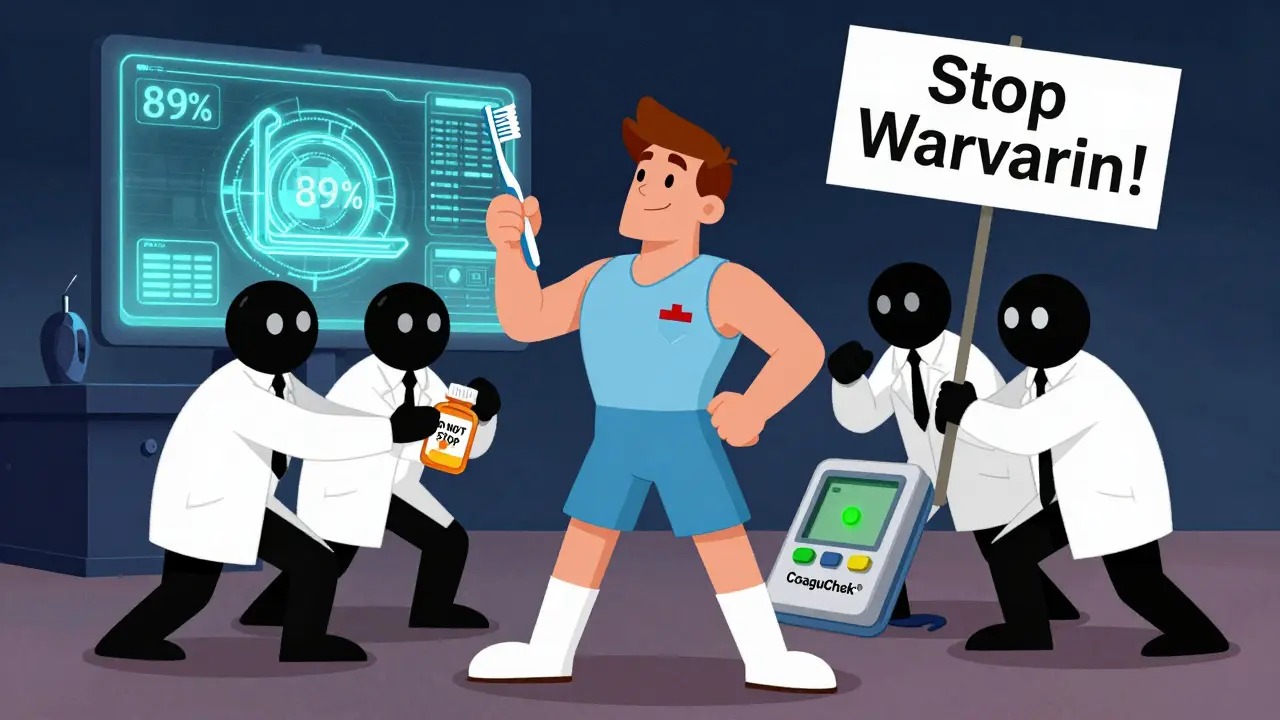
Many patients assume they should pause their blood thinner before any dental work. That’s what doctors used to recommend. But research from the last decade has turned that idea upside down. A 2020 JAMA study of over 3,000 patients found that stopping warfarin for a simple tooth extraction increased the risk of stroke by 3.5 times. For someone with atrial fibrillation, that’s not just a risk-it’s a gamble with their life. The truth is, dental bleeding is almost always controllable. A small amount of bleeding from a tooth socket? That’s normal. It’s messy, sure, but it stops. A stroke caused by a clot? That’s permanent. Or worse, fatal. Experts like Dr. Jerrold Peterson from UCSF say the mortality rate from dental bleeding is 10 to 20 times lower than from a stroke caused by stopping anticoagulants. So unless you’re having major jaw surgery, the safest choice is usually to keep taking your medication.Knowing Your Drug Type Matters
Not all blood thinners are the same. There are two big groups: warfarin and the newer direct oral anticoagulants (DOACs) like apixaban (Eliquis), rivaroxaban (Xarelto), and dabigatran (Pradaxa). Each needs a different approach. Warfarin requires regular blood tests to check your INR-the number that tells your doctor how long your blood takes to clot. For most dental procedures, your INR should be under 3.5. If it’s higher, your dentist might delay the procedure or talk to your doctor about adjusting your dose. But you don’t stop it. Not even for a tooth extraction. DOACs don’t need INR tests. They work differently and leave your system faster. For a single tooth extraction, you should wait at least 4 hours after your last dose. For twice-daily DOACs like apixaban, wait 12-24 hours. For once-daily rivaroxaban, wait 24 hours. This isn’t about stopping the drug-it’s about timing. Taking your pill too close to the procedure raises bleeding risk. Waiting a few hours reduces it without leaving you unprotected.What Procedures Are Safe? What’s Risky?
Dentists don’t treat all procedures the same. They use a simple risk scale:- Low-risk procedures: Fillings, cleanings, simple root canals, single tooth extractions. These are fine with INR ≤3.5 or any DOAC if timed properly. Bleeding complication rates are under 3%.
- Moderate-risk procedures: Multiple extractions, gum surgery, deep cleanings below the gumline. These need INR ≤2.5. Your dentist might use extra hemostatic tools.
- High-risk procedures: Full-mouth extractions, complex implant placements, major jaw surgery. These require INR ≤2.0 and often involve coordination with your cardiologist or hematologist.

How Dentists Control Bleeding Without Stopping Your Meds
Your dentist isn’t just hoping for the best. They use proven tools to seal the deal-literally.- Tranexamic acid mouthwash: A 5% solution you rinse four times a day for a week after surgery. It cuts bleeding risk by 62%. It’s cheap, safe, and effective.
- Oxidized regenerated cellulose (Surgicel®): A sponge-like material packed into the socket after extraction. It reduces bleeding time by 47% compared to plain gauze.
- Microfibrillar collagen (Avitene®): A natural substance that triggers clotting. Works in 92% of anticoagulated patients.
- Lidocaine with epinephrine: The local anesthetic your dentist injects. The epinephrine tightens blood vessels, reducing bleeding by 32%.
Painkillers You Can and Can’t Take
After your procedure, you’ll need pain relief. But not all painkillers are safe.- Acetaminophen (Tylenol): Your best bet. Safe at doses under 2 grams per day. If you take it longer than a week, ask your doctor to check your INR.
- NSAIDs (ibuprofen, naproxen, aspirin): Avoid them. They increase bleeding risk 3 to 6 times when combined with anticoagulants. Even low-dose aspirin for heart health should be continued-but don’t add extra aspirin for pain.
- Prescription opioids: Fine for short-term use, but they don’t help with inflammation. Use only if acetaminophen isn’t enough.
What You Should Do Before Your Appointment
Don’t wait until the day of your appointment to figure this out. Here’s your checklist:- Bring a list of all your medications-including doses and times.
- If you’re on warfarin, get your INR checked within 72 hours before your procedure.
- If you’re on a DOAC, tell your dentist exactly when you last took it.
- Ask if they use tranexamic acid mouthwash or Surgicel®. If they don’t, ask why.
- Confirm they know not to stop your blood thinner unless you’re having major surgery.
- Ask for a written plan: what to do after, what meds to avoid, when to call for help.
When You Should Worry After Your Procedure
Bleeding for the first few hours is normal. You might see a little pink in your saliva. That’s fine. But call your dentist immediately if:- Bleeding doesn’t slow after 2-3 hours of applying pressure with gauze.
- You’re swallowing blood constantly, not just spitting.
- You feel dizzy, weak, or your heart races.
- You notice swelling in your neck or difficulty breathing.
The Future Is Getting Smarter
New tools are making this easier. Portable INR monitors like CoaguChek® let dentists check your clotting time right in the chair-in under a minute. No more waiting for lab results. That’s huge. Reversal agents like Andexxa® can stop bleeding fast if something goes wrong. But they’re expensive-nearly $19,000 per dose-and only used in emergencies. And AI is coming. A 2024 algorithm from the University of Pennsylvania can predict bleeding risk with 89% accuracy by analyzing 17 factors: your age, kidney function, INR, the type of procedure, even your platelet count. Dentists might soon use apps to calculate your risk before you even sit down.Bottom Line: You Don’t Need to Choose Between Safety and a Healthy Smile
You don’t have to avoid the dentist because you’re on blood thinners. You just need to be prepared. The evidence is clear: continuing your anticoagulant therapy with proper planning and local hemostatic measures is safer than stopping it. Dental bleeding is manageable. A stroke isn’t. Talk to your dentist. Ask questions. Bring your meds. Know your INR. Use the mouthwash. Avoid NSAIDs. And don’t let outdated advice scare you into skipping care. Your heart and your teeth can both stay healthy-if you do it right.Should I stop my blood thinner before a tooth extraction?
No, for most patients, stopping your blood thinner is riskier than keeping it. Studies show discontinuing anticoagulants for simple extractions increases stroke risk by 3.5 times. The American Dental Association recommends continuing them for low- and moderate-risk procedures, using local hemostatic methods like tranexamic acid mouthwash and Surgicel® to control bleeding instead.
What if I’m on Xarelto or Eliquis?
For DOACs like rivaroxaban (Xarelto) or apixaban (Eliquis), you don’t need to stop them. Schedule your procedure at least 4-12 hours after your last dose. For once-daily Xarelto, wait 24 hours. For twice-daily Eliquis, wait 12-24 hours. This reduces bleeding risk without leaving you unprotected. Your dentist should confirm your dosing schedule before starting.
Can I take ibuprofen after a tooth extraction if I’m on blood thinners?
No. NSAIDs like ibuprofen, naproxen, and even aspirin increase bleeding risk 3 to 6 times when combined with anticoagulants. Use acetaminophen (Tylenol) instead. It’s safe at doses under 2 grams per day. If you need it longer than a week, ask your doctor to check your INR.
Is it safe to get dental implants if I’m on blood thinners?
Yes, but it’s considered a high-risk procedure. Your INR should be under 2.0, and your dentist will need to coordinate with your doctor. They’ll use advanced hemostatic tools like microfibrillar collagen and tranexamic acid. Some patients may need a temporary pause in DOACs-only if approved by their cardiologist. Never stop warfarin without specialist input.
How do I know if my dentist knows how to handle anticoagulants?
Ask them directly: ‘Do you use tranexamic acid mouthwash after extractions?’ ‘Do you check INR levels before procedures?’ ‘Will you continue my anticoagulant, or do you plan to stop it?’ If they say they routinely stop warfarin for simple extractions, they’re following outdated guidelines. Look for a dentist who references ADA or AHA protocols-those are current and evidence-based.


Write a comment