
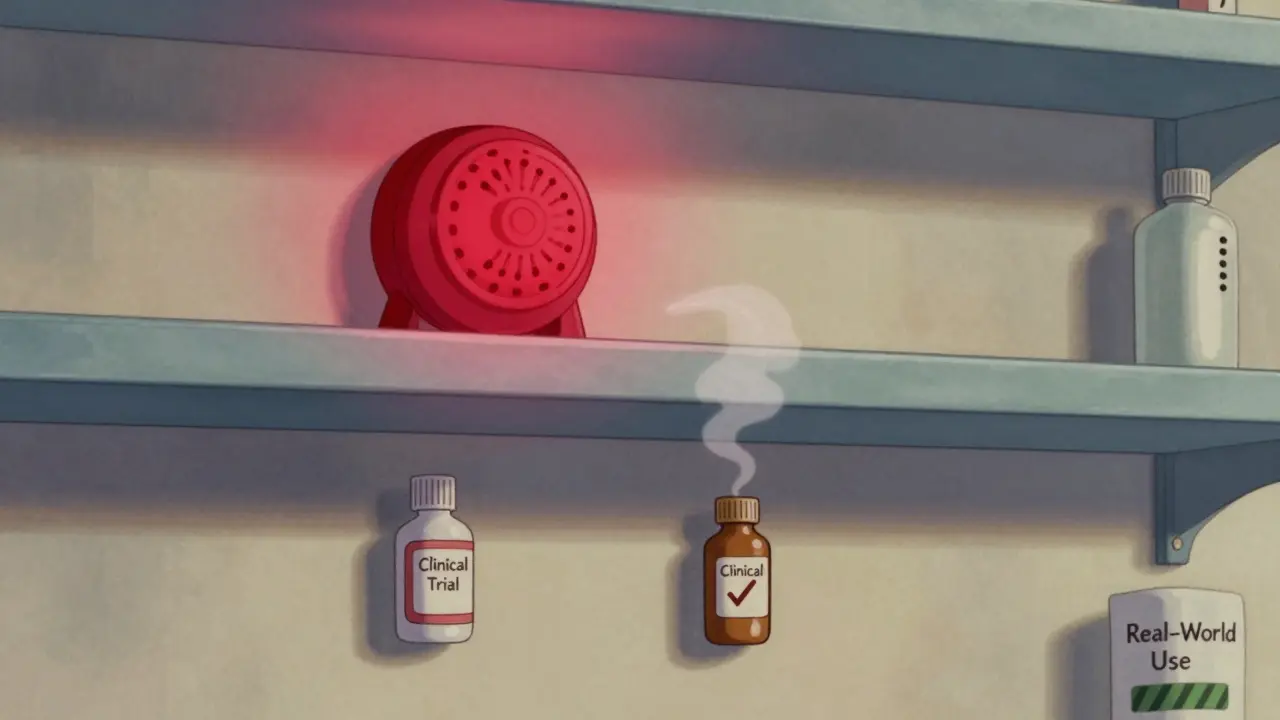
When a new drug hits the market, everyone assumes it’s been thoroughly tested. Clinical trials, after all, involve thousands of patients, rigorous controls, and years of data. But here’s the truth: drug safety signals often don’t show up until after approval - and sometimes not for years. That’s not a failure. It’s how the system is designed. Clinical trials can’t catch everything. Too few people. Too short a time. Too little diversity. Real-world use? That’s where risks emerge.
What Exactly Is a Drug Safety Signal?
A drug safety signal isn’t a confirmed danger. It’s a warning sign - a pattern that says, "Something weird is happening here, and we need to look closer." The Council for International Organizations of Medical Sciences (CIOMS) defines it as information suggesting a new or unexpected link between a medicine and an adverse event. It’s not proof. It’s a nudge. A red flag that says: "Don’t ignore this." Think of it like a smoke alarm. It doesn’t mean there’s a fire. But if it goes off, you check. You don’t wait for flames. That’s how regulators and drug companies treat signals. They don’t panic. They investigate.Where Do These Signals Come From?
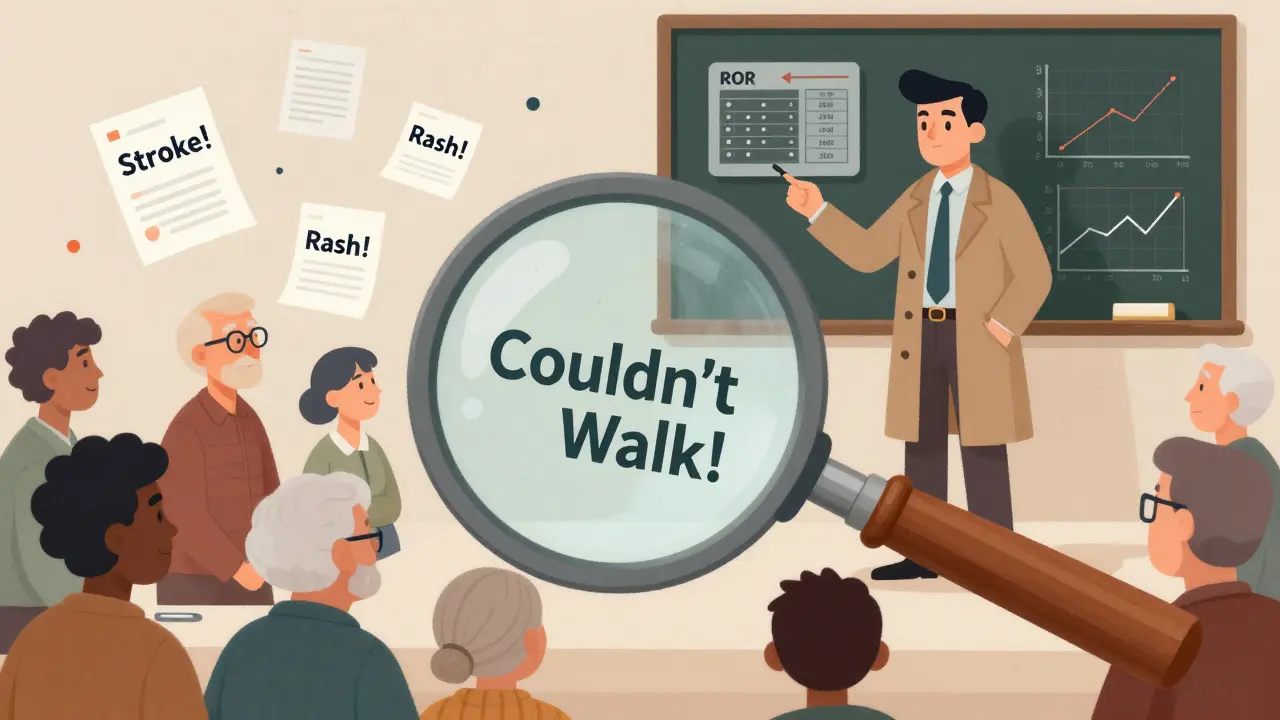
Most signals don’t come from clinical trials. They come from real life. After a drug is approved, doctors, patients, and pharmacists start reporting side effects. The FDA’s FAERS database alone holds over 30 million reports since 1968. The EMA’s EudraVigilance gets over 2.5 million reports a year. These aren’t lab results. They’re stories: "My patient had a stroke after taking this." "My daughter developed severe rash after week two." "My grandfather couldn’t walk after three months." These reports are messy. They’re incomplete. Sometimes they’re wrong. But they’re the only window into what happens when a drug is used by millions - not just 5,000 carefully screened trial participants.Why Clinical Trials Miss the Big Risks
Clinical trials are great for proving a drug works. But they’re terrible at finding rare or delayed dangers. Why?- Sample size: Most trials enroll 1,000 to 5,000 people. A side effect that happens in 1 out of 10,000 won’t show up.
- Duration: Trials last months, sometimes two years. Some reactions take five, ten, or even fifteen years to appear.
- Population: Trial participants are usually healthy, younger, and on fewer other medications. Real patients? They’re older, have diabetes, kidney disease, heart failure - and take ten other pills.
- Control groups: If the comparator is a placebo, you only see what’s different from nothing. But if the comparator is another drug, you might miss risks that both drugs share.
Take rosiglitazone. Before 2007, it was widely prescribed for type 2 diabetes. Clinical trials showed it lowered blood sugar. No red flags. Then, after millions were on it, data from spontaneous reports and studies showed a clear spike in heart attacks. The signal emerged years later - not in trials, but in real-world use.
How Regulators Find the Signal in the Noise
Detecting a signal isn’t about spotting one weird report. It’s about finding patterns. Regulators use statistical tools to sift through millions of reports. The most common method? Disproportionality analysis.Here’s how it works: If 100 people take Drug A and 3 have a rare liver injury, but only 1 person out of 10,000 taking Drug B has the same injury - that’s a signal. The system calculates the Reporting Odds Ratio (ROR). If it’s above 2.0 and there are at least three cases, it triggers a review. Other methods include Bayesian Confidence Propagation Neural Networks (BCPNN) and Proportional Reporting Ratios (PRR). The EMA and FDA both use these - but differently.
The FDA checks FAERS every two weeks. The EMA monitors continuously. A 2018 study found the EMA caught 27% more signals through case reviews, while the FDA found 19% more through numbers. They complement each other. One looks at stories. The other looks at stats.
But here’s the catch: 60 to 80% of these statistical signals are false alarms. A 2019 signal linked canagliflozin to leg amputations. The ROR was 3.5. Panic followed. Then came the CREDENCE trial - a real-world study with 3,400 patients. It showed the actual risk increase was 0.5%. The signal? A statistical glitch. Not a real danger.
What Makes a Signal Actionable?
Not every signal leads to a warning label. Only some trigger changes to prescribing information. A 2018 study of 117 signals found four key factors that predict whether regulators will act:- Replication across data sources - if the same pattern shows up in spontaneous reports, clinical trials, and published studies, the odds of action jump 4.3 times.
- Mechanistic plausibility - does the drug’s chemistry or known effects make the reaction possible? If yes, the risk is taken more seriously.
- Severity of the event - 87% of serious events (like death, hospitalization, permanent disability) led to label changes. Only 32% of mild ones did.
- Drug age - drugs under five years old are 2.3 times more likely to get updated labels. New drugs have less history. More uncertainty.
For example, dupilumab, a biologic for eczema and asthma, triggered a signal in 2018: eye inflammation. It was reported in 150 cases across Europe. The link wasn’t obvious in trials. But when ophthalmologists started seeing the pattern, they confirmed it. The label was updated. Doctors started checking patients’ eyes. Patient outcomes improved.
The Dark Side: False Signals and Missed Dangers
False signals waste time and scare patients. The canagliflozin case wasn’t an isolated mistake. A 2021 survey of 327 pharmacovigilance professionals found 61% felt overwhelmed by false positives. They spend weeks chasing ghosts.And some dangers never show up at all. Bisphosphonates - drugs for osteoporosis - were linked to jawbone death (osteonecrosis) seven years after approval. Why? The reaction is slow. Rare. And patients didn’t connect their dental pain to the drug. No one reported it. The signal only emerged when dentists started noticing clusters.
Another blind spot? Polypharmacy. Since 2000, prescription use among the elderly has jumped 400%. People take five, six, even ten drugs. Interactions? Hidden. Complex. Current systems aren’t built to detect them. A 2022 study from the University of Massachusetts showed most signal tools still treat drugs in isolation. That’s dangerous.
The Future: AI, Real-World Data, and Better Tools
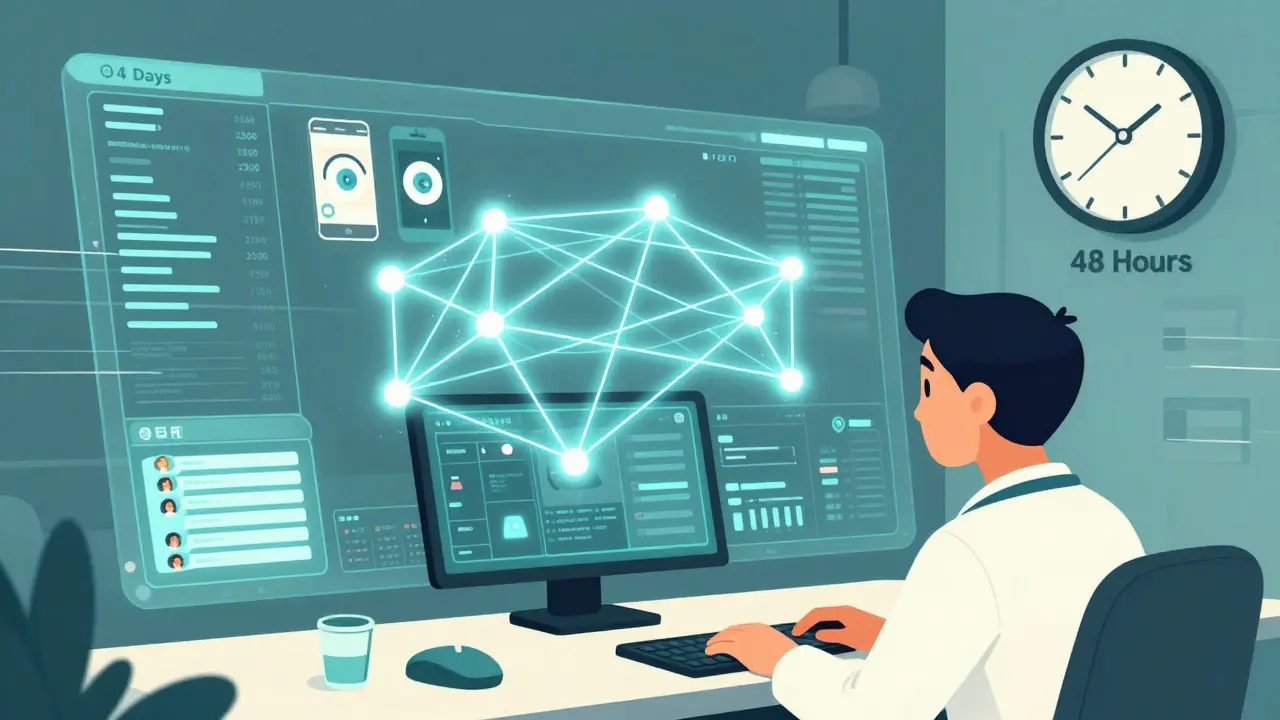
The game is changing. The FDA’s Sentinel Initiative 2.0, launched in January 2023, taps into electronic health records from 300 million patients. That’s not a database of reports. That’s real-time clinical data - prescriptions, lab results, hospital visits. It’s like having a live feed of what’s happening in clinics across America.The EMA added AI to EudraVigilance in late 2022. Signal detection time dropped from 14 days to 48 hours. Sensitivity stayed at 92%. That’s a revolution.
And it’s not just regulators. Pharmaceutical companies are adopting AI-powered tools at a 43% yearly growth rate since 2020. The ICH’s new M10 guideline, coming in 2024, will standardize lab data reporting - crucial for spotting drug-induced liver injury, one of the hardest side effects to catch.
The future isn’t just more data. It’s smarter data. Combining spontaneous reports, EHRs, patient apps, and even social media (yes, some companies are testing this) will create a network of early warnings. By 2027, 65% of top-priority signals will come from integrated systems - up from 28% in 2022.
What Patients and Doctors Should Know
You don’t need to understand the math. But you should understand this: drug safety isn’t static. A drug that was safe in trials might not be safe for you. Your doctor might not know about a new signal until it’s in the label - and even then, it might take months to update.That’s why reporting side effects matters. If you have an unusual reaction, tell your doctor. File a report. It might feel small. But if enough people report the same thing, it becomes a signal. And that signal could save lives.
And if you’re on multiple medications - especially if you’re over 65 - ask your doctor: "Could any of these drugs interact in ways we haven’t seen before?" That’s not paranoia. That’s smart.