

Imagine having to take six different pills every morning just to keep a single chronic condition under control. For many patients, the sheer volume of medication-known as "pill burden"-becomes a second job, leading to missed doses and fragmented care. This is why Fixed-dose combination drugs is a pharmaceutical approach where two or more active ingredients are combined into a single dosage form, like one tablet or capsule, at specific, unchanging concentrations. Also known as FDCs, these medications turn a handful of pills into one, simplifying a patient's life while often boosting the actual effectiveness of the treatment.
Why combine medications into one pill?
The logic behind FDCs isn't just about convenience; it's about biology and behavior. When two drugs are combined, they often produce synergistic effects, meaning the combined impact is greater than the sum of the parts. For example, in treating hypertension, one drug might relax the blood vessels while another reduces the volume of fluid in the blood. Together, they hit the problem from two different angles, often allowing doctors to use lower doses of each, which can reduce side effects.
Beyond the science, there is the human element: adherence. It is a simple fact that the more pills a person has to take, the more likely they are to forget one. By reducing the number of tablets, FDCs significantly increase the chances that a patient will stick to their prescribed regimen. This is particularly critical in high-stakes treatments, such as antiretroviral therapy, where missing a single dose of HIV medication can contribute to drug resistance.
The types of combinations you'll find
Not all FDCs are created equal. From a regulatory and development standpoint, they generally fall into three buckets based on how the ingredients were first approved:
- Mono:Mono: Both ingredients were already sold as separate, single-drug medications before being combined. This is common in blood pressure medications.
- Mono:New: One ingredient is a well-known, approved drug, while the other is a brand-new chemical entity.
- Novel Combinations: Both ingredients are new and are developed specifically to be used together from the start.
The FDA (U.S. Food and Drug Administration) requires that every single component in an FDC must prove it adds value. You can't just add a "filler" drug to a combination to make it seem more comprehensive; each active ingredient must contribute to the overall efficacy of the treatment.
| Feature | Single-Agent Therapy | Fixed-Dose Combination (FDC) |
|---|---|---|
| Pill Burden | Higher (multiple pills) | Lower (one pill) |
| Dosing Flexibility | High (each drug adjusted independently) | Low (fixed ratio) |
| Patient Adherence | More prone to missed doses | Generally improved |
| Cost/Co-pays | Multiple pharmacy co-pays | Often a single co-pay |
Common examples of FDCs in practice
You'll see FDCs across almost every medical specialty, but some are more common than others. In cardiovascular health, combining a diuretic with an ACE inhibitor is a standard way to manage heart failure. In respiratory care, "combination inhalers" often pair a long-acting bronchodilator with a corticosteroid to treat COPD or asthma.
Some of the most clinically validated "rational" FDCs include:
- Sulfamethoxazole and Trimethoprim: Used for various bacterial infections, where the two drugs block different steps of the bacteria's folic acid synthesis.
- Levodopa and Carbidopa: A staple for Parkinson's disease. Carbidopa prevents Levodopa from breaking down before it reaches the brain, making the treatment far more effective.
- Rifampicin and Isoniazid: Essential for treating tuberculosis, as using multiple agents prevents the bacteria from developing resistance.

The trade-offs: It's not always the best choice
If FDCs are so convenient, why don't we combine everything? The primary drawback is the loss of flexibility. Because the ratio of ingredients is fixed, a doctor cannot increase the dose of Drug A without also increasing the dose of Drug B. If a patient develops a side effect from only one component, the doctor often has to switch the patient back to separate pills entirely.
There are also pharmacokinetic concerns. Different drugs are absorbed and processed by the body at different speeds. If Drug A needs to be taken every 4 hours but Drug B only every 24 hours, combining them into one pill is physically impossible without compromising how one of the drugs works. Furthermore, some critics argue that pharmaceutical companies occasionally create FDCs as "lifecycle extension strategies." This happens when a drug is about to lose its patent (loss of exclusivity), and the company combines it with another drug to create a new, patentable product to protect their market share.
How regulators decide if an FDC is "Rational"
The World Health Organization (WHO) uses specific criteria to distinguish between a "rational" and an "irrational" combination. A rational FDC must meet these standards:
- Different Mechanisms: The drugs should work in different ways to attack the disease.
- Compatible Pharmacokinetics: They must have similar absorption and excretion profiles so they can be taken at the same frequency.
- No Supra-additive Toxicity: Combining the drugs shouldn't create a new, dangerous side effect that wasn't present when the drugs were taken separately.
- Defined Population: The fixed ratio must be appropriate for the majority of the target patient group.
When these boxes are checked, the FDC moves from being a mere convenience to a clinical tool that actually improves patient outcomes.
Future directions in combination therapy
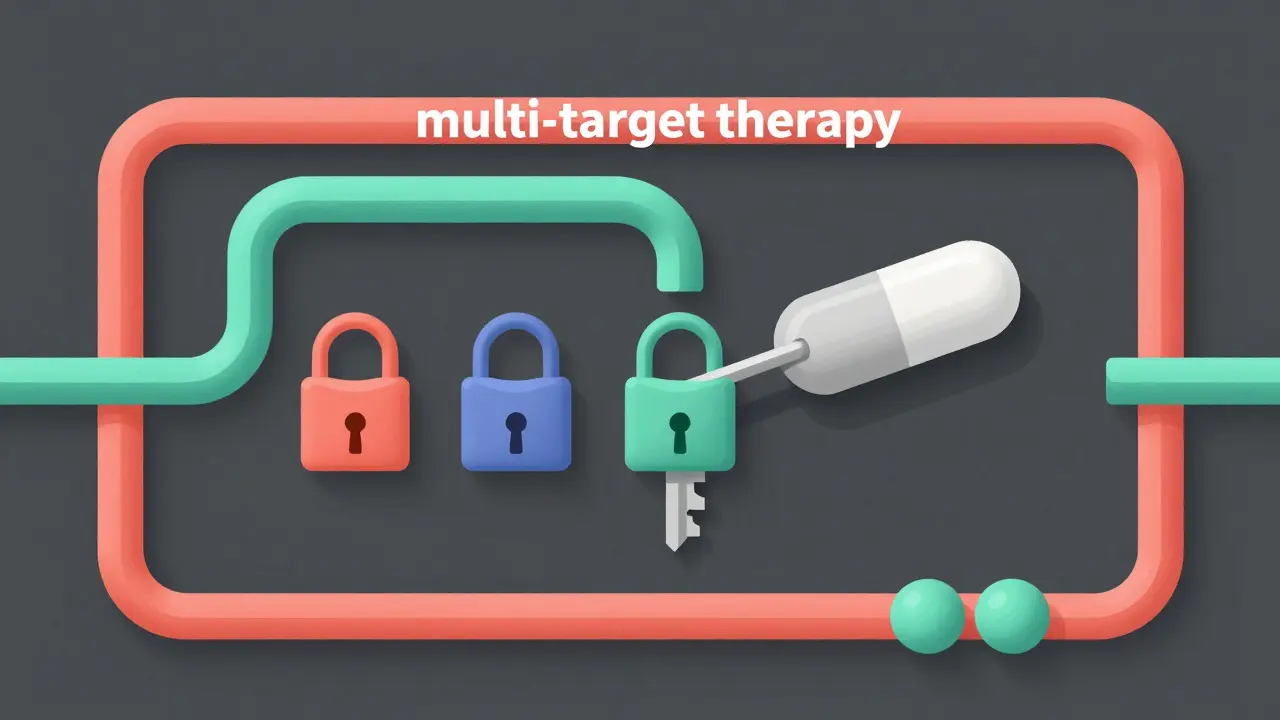
We are moving toward an era of "multi-target' therapy. In oncology and neurodegenerative diseases, researchers are looking at FDCs that can hit several different biological pathways simultaneously. We are also seeing growth in the fight against antimicrobial resistance. For instance, combining beta-lactams with beta-lactamase inhibitors allows the medication to "shield" the antibiotic from being destroyed by resistant bacteria, essentially reviving the power of older drugs.
Are FDCs more expensive than taking separate pills?
It varies. While the branded FDC itself might have a higher price point than two generic singles, patients often save money through reduced pharmacy co-pays and fewer prescriptions to fill. In many healthcare systems, the overall cost to the system is lower because improved adherence leads to fewer emergency room visits.
Can I switch from separate pills to an FDC without a doctor?
No. You must consult your healthcare provider. The doses in an FDC are fixed; your doctor needs to ensure that the specific ratio in the combined pill matches the exact dosages you require for your specific condition.
What happens if I'm allergic to one ingredient in an FDC?
If you have a known allergy to one component, you cannot take the FDC. Your doctor will prescribe the other necessary medications as separate, individual agents (monotherapy) to avoid the allergen.
Do FDCs have more side effects?
Not necessarily. In some cases, they can actually reduce side effects by allowing for lower doses of each individual drug. However, because you are taking multiple active agents, the chance of a drug-drug interaction is inherently there, which is why they are strictly regulated.
Why aren't all medications available as FDCs?
Many drugs have incompatible "pharmacokinetics." For example, one drug might need an acidic stomach environment to be absorbed, while another requires an alkaline one. Combining them into one pill would make at least one of them ineffective.
Next Steps and Considerations
If you are managing a complex health condition and feel overwhelmed by your medication schedule, ask your doctor if a fixed-dose combination drug is a safe option for you. To prepare for the conversation, list all your current medications and note which ones you struggle to take consistently. Keep in mind that while FDCs are great for maintenance, they may not be suitable if your condition requires frequent, precise dose adjustments. Always ensure your pharmacist is aware of all combinations you are taking to prevent overlapping therapies.