
When you pick up a prescription, you might not realize you’re holding a piece of one of the biggest cost-saving deals in American healthcare. Generic drugs aren’t cheaper because they’re weaker-they’re cheaper because the system lets them be. And that difference isn’t small. It’s life-changing.
How Much Do Generics Actually Save You?
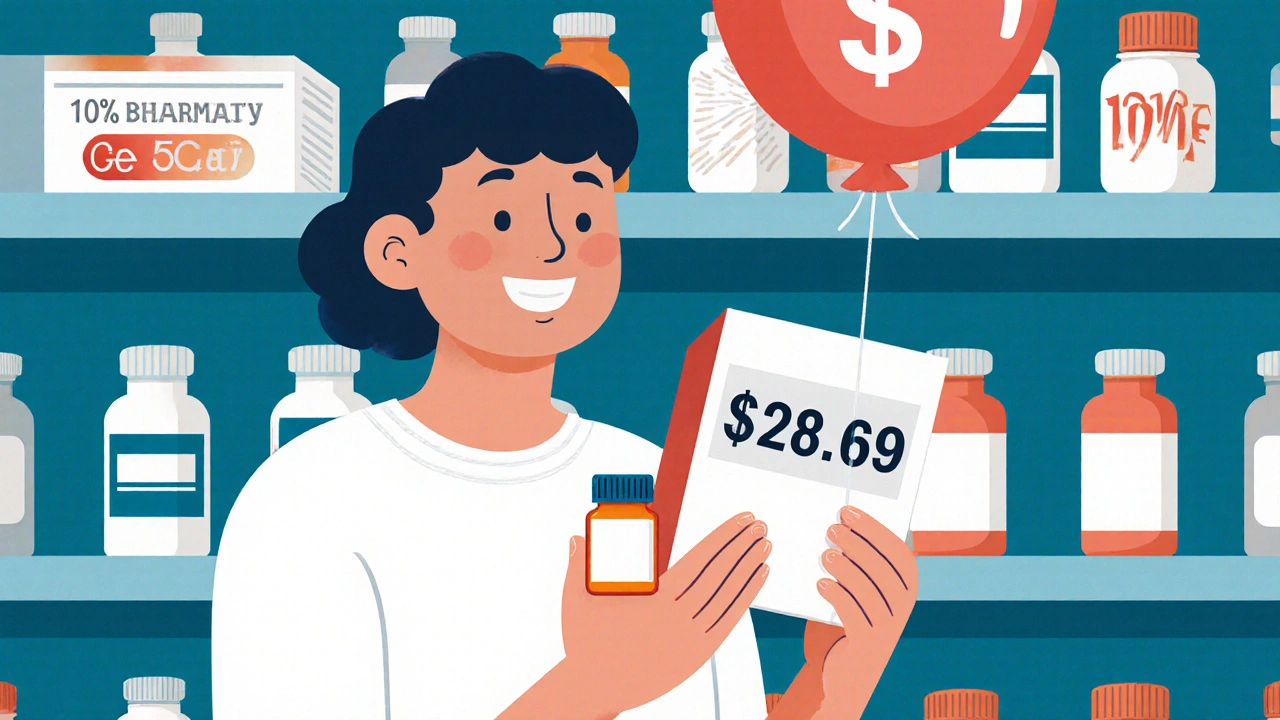
In 2024, the average out-of-pocket cost for a generic prescription was $6.95. For the same medicine in brand-name form? $28.69. That’s not a 20% discount. That’s an 80% drop in price. For someone taking multiple medications, that adds up fast. A diabetic on metformin, a heart patient on lisinopril, and someone managing high cholesterol with atorvastatin could save over $1,200 a year just by switching to generics.
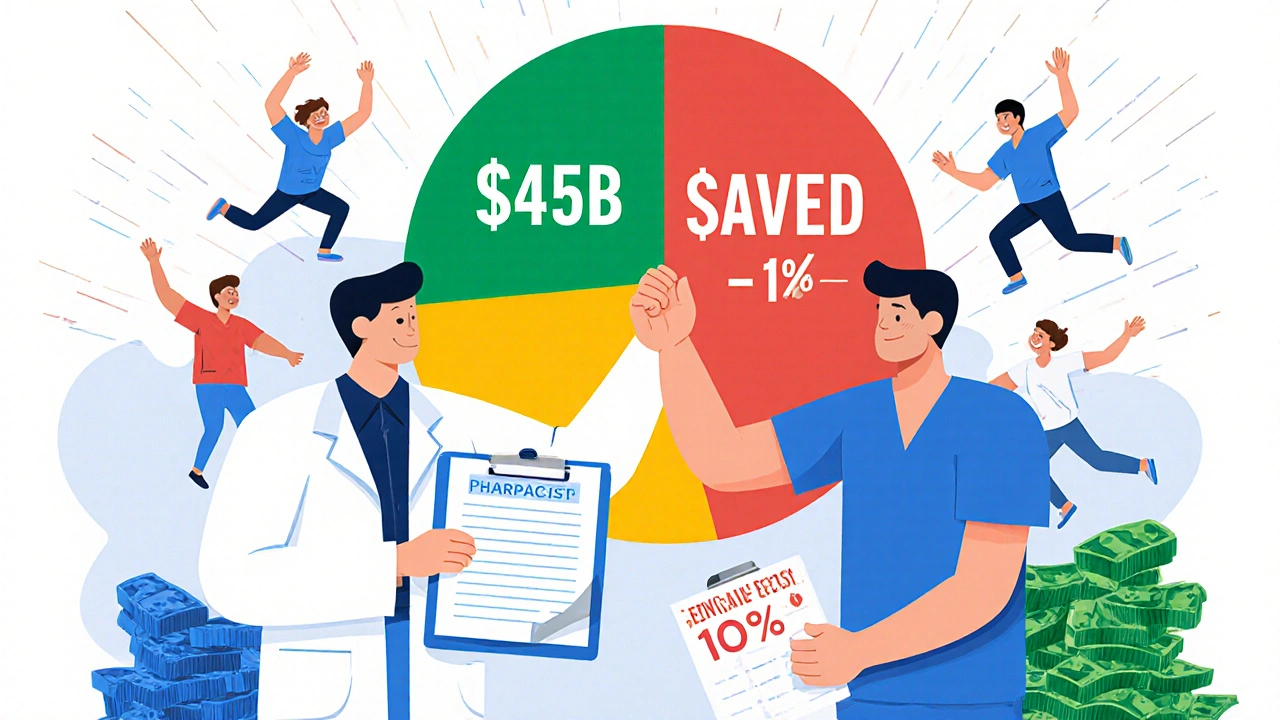
These aren’t hypothetical numbers. They’re from real data collected by The Center for Biosimilars. And it’s not just individuals saving. The entire U.S. healthcare system saved $445 billion in 2023 because of generic and biosimilar drugs. That’s more than the annual GDP of countries like Ireland or Portugal. Generics make up 90% of all prescriptions filled, yet they account for only 12% of total drug spending. Brand drugs? Just 10% of prescriptions, but 88% of the cost.
Why Is There Such a Huge Price Gap?
It comes down to one thing: competition. When a brand-name drug’s patent expires, other companies can make the exact same medicine. They don’t need to repeat expensive clinical trials. The FDA only requires proof that the generic works the same way in the body-bioequivalence. That cuts development costs by 80% or more.
That’s why a 30-day supply of generic atorvastatin (the active ingredient in Lipitor) costs $10 at Walmart, while the brand version still lists for over $300. The active ingredient is identical. The tablet shape might be different. The filler ingredients might vary slightly. But the effect on your blood pressure or cholesterol? The same.
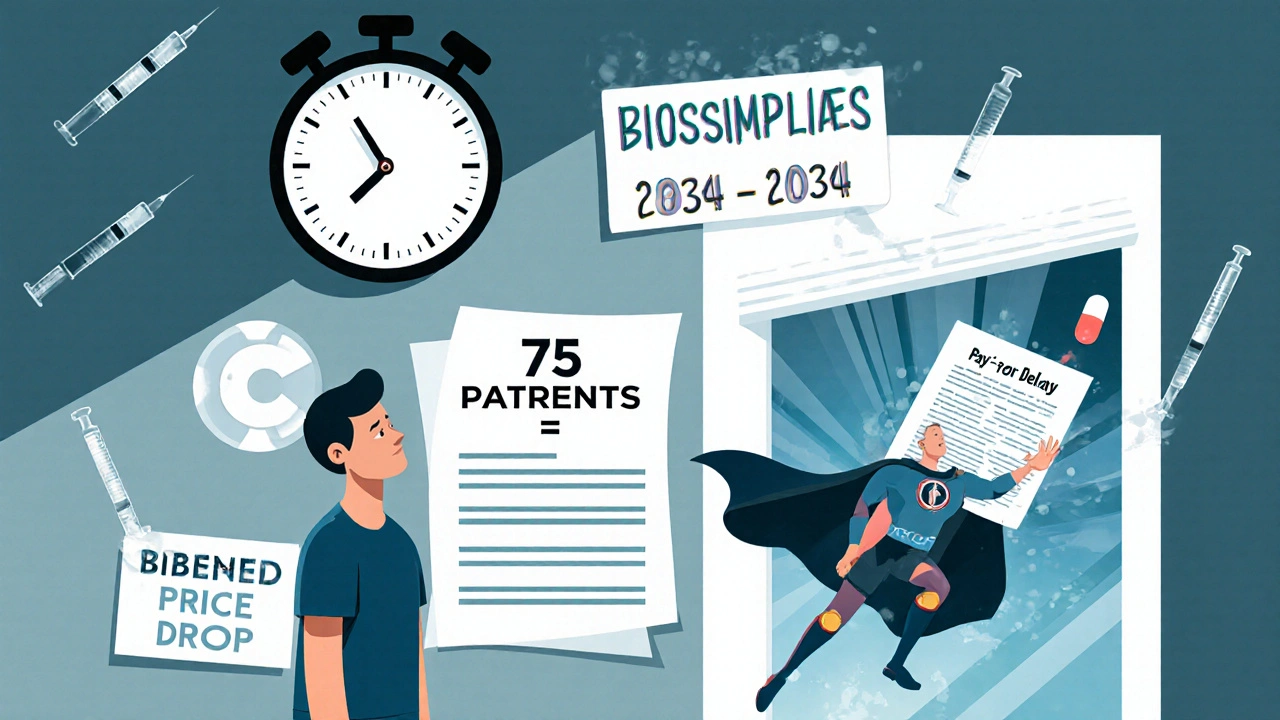
Brand companies fight to keep prices high. They use legal tricks like “patent thickets”-filing dozens of minor patents on packaging, timing, or delivery methods to block generics. One drug, originally set to go generic in 2016, stayed protected until 2034 thanks to over 75 patents. That’s not innovation. That’s delay.
Biosimilars: The Next Wave of Savings
Biologic drugs-like those for rheumatoid arthritis, Crohn’s disease, or cancer-are more complex than regular pills. They’re made from living cells, not chemicals. That made them harder to copy. But now, biosimilars are here. They’re not exact copies, but they’re close enough to work the same way and are approved by the FDA.
Since their introduction, biosimilars have saved the U.S. healthcare system $56.2 billion. In 2024 alone, they saved $20.2 billion. One example: Stelara, a treatment for psoriasis and Crohn’s, had a list price of over $6,000 per dose. When nine biosimilars hit the market in 2025, prices dropped as much as 90%. Patients who couldn’t afford it before could now get treatment.
And it’s not just patients. Medicare and Medicaid saved billions. Hospitals cut pharmacy budgets by 30% in some cases. Yet, biosimilars still make up less than 30% of the market for drugs they compete with. That means billions more are still sitting on the table.
Who’s Really Paying the Bill?
If you’re uninsured, brand-name drugs got worse. Since 2019, the average cost per prescription jumped 50% to $130.18. Meanwhile, generic prices dropped by 6%. That’s not a coincidence. It’s a market signal: when generics are available, brand companies lose leverage. But when they’re blocked? Prices soar.
Even with insurance, you might still pay more than you should. Some plans still push brand drugs first, even when a generic exists. Pharmacy benefit managers (PBMs) often get kickbacks from brand manufacturers to favor expensive drugs. That’s why 87% of commercial health plans now require pharmacists to substitute generics when possible. It’s not just policy-it’s profit protection.
What About Safety? Are Generics Just as Good?
Yes. The FDA requires generics to meet the same standards as brand drugs. Same active ingredient. Same strength. Same way it’s taken-pill, injection, inhaler. Same shelf life. Same quality controls. The FDA inspects generic manufacturing plants just like brand ones. In fact, many brand companies make their own generics under different labels.
Some people worry about switching brands of generic. For most drugs, it’s fine. But for narrow therapeutic index drugs-like warfarin, levothyroxine, or seizure meds-small differences can matter. That’s why your doctor might stick with one brand of generic if it’s working for you. But even then, switching between FDA-approved generics is safe for 99% of patients. Adverse event reports show less than 1% of issues are linked to generic switches.
Why Aren’t More People Using Generics?
It’s not lack of availability. There are over 16,000 generic drugs on the market. It’s not lack of awareness. Most people know generics are cheaper. The problem is inertia. Doctors don’t always prescribe them first. Pharmacists can’t always substitute without permission. And some patients believe “brand means better.”
Only 42 states have laws that let pharmacists automatically switch to a generic unless the doctor says no. In the other eight, you might get stuck paying more unless you ask. And even when generics are available, insurance formularies sometimes require prior authorization or step therapy-forcing you to try the brand first.
What’s Coming Next?
Big changes are coming in late 2025. Three major drugs are losing patent protection: Entresto (heart failure), Tradjenta (diabetes), and Opsumit (pulmonary hypertension). Together, they brought in $8.6 billion in sales in 2023. Once generics arrive, prices could drop by 80-90%. That’s billions saved for Medicare, insurers, and patients.
The FDA approved 745 generic drugs in 2024-a 12% jump from the year before. That trend is accelerating. At the same time, Congress is pushing bills to stop patent thickets and “product hopping”-where companies tweak a drug slightly just to reset the patent clock. These aren’t radical ideas. They’re common sense.
What You Can Do Today
Ask your pharmacist: “Is there a generic version of this?” Even if your doctor didn’t prescribe it, they can often switch it. Check GoodRx or SingleCare for cash prices-sometimes generics cost less than your insurance copay.
Ask your doctor: “Is this the only option?” Many conditions have multiple generic alternatives. If you’re on a brand drug with no generic yet, ask when one might come. Set a reminder for when your drug’s patent expires.
And if you’re on Medicare, check your plan’s formulary every year. Generics get added. Prices change. You might be paying more than you need to.
Generic drugs aren’t a compromise. They’re the smart choice. They’re safe. They’re effective. And they’ve saved Americans trillions over the last decade. The system works-when we let it.
Are generic drugs as effective as brand-name drugs?
Yes. The FDA requires generic drugs to have the same active ingredient, strength, dosage form, and route of administration as the brand-name version. They must also prove bioequivalence-meaning they work the same way in the body. Over 90% of generics are considered therapeutically equivalent. Less than 1% of patients report issues linked to switching generics, according to FDA adverse event data through mid-2025.
Why are generic drugs so much cheaper?
Generic manufacturers don’t have to repeat expensive clinical trials. The Hatch-Waxman Act of 1984 created a streamlined approval process called ANDA, which lets companies prove their drug is equivalent to the brand without starting from scratch. That cuts development costs by 80% or more. Competition among multiple generic makers drives prices down further.
Can I switch between different generic brands?
For most medications, yes. But for drugs with a narrow therapeutic index-like warfarin, levothyroxine, or epilepsy meds-your doctor may recommend sticking with one manufacturer to avoid small variations in absorption. Even then, switching between FDA-approved generics is safe for nearly all patients. If you notice a change in how you feel after switching, talk to your pharmacist or doctor.
Do insurance plans cover generics?
Yes-and they often cover them at a lower cost. Most insurance plans have lower copays for generics. Some even require you to try a generic before approving the brand version. As of January 2025, 87% of commercial health plans mandate generic substitution when available. Medicare Part D plans also prioritize generics in their formularies.
What’s the difference between a generic and a biosimilar?
Generics are exact chemical copies of small-molecule drugs like pills or injections. Biosimilars are highly similar versions of complex biologic drugs made from living cells-like those for cancer, arthritis, or autoimmune diseases. They’re not identical, but they work the same way and are approved by the FDA. Biosimilars are typically 15-35% cheaper than the original biologic, while generics are often 80-90% cheaper than their brand counterparts.
Why do some brand-name drugs still cost so much even after generics exist?
Some brand companies delay generics using legal tactics like patent thickets-filing dozens of minor patents to extend their monopoly. Others use “pay-for-delay” deals, where brand makers pay generic companies to hold off entering the market. These practices cost consumers nearly $12 billion a year, according to Blue Cross Blue Shield. Even when generics are available, insurance formularies sometimes favor the brand due to rebates, not patient benefit.
Final Thought: The Real Cost of Ignoring Generics
Over the past decade, generic and biosimilar drugs have saved Americans $3.4 trillion. That’s more than the entire federal budget for education or transportation. Yet, most people don’t know how much they’re paying because of the system’s hidden costs. You don’t need to be a policy expert to save money-you just need to ask the right questions. Ask your pharmacist. Ask your doctor. Ask your insurer. Generics aren’t a backup plan. They’re the smartest, safest, and most proven way to cut drug costs without cutting care.


Write a comment