
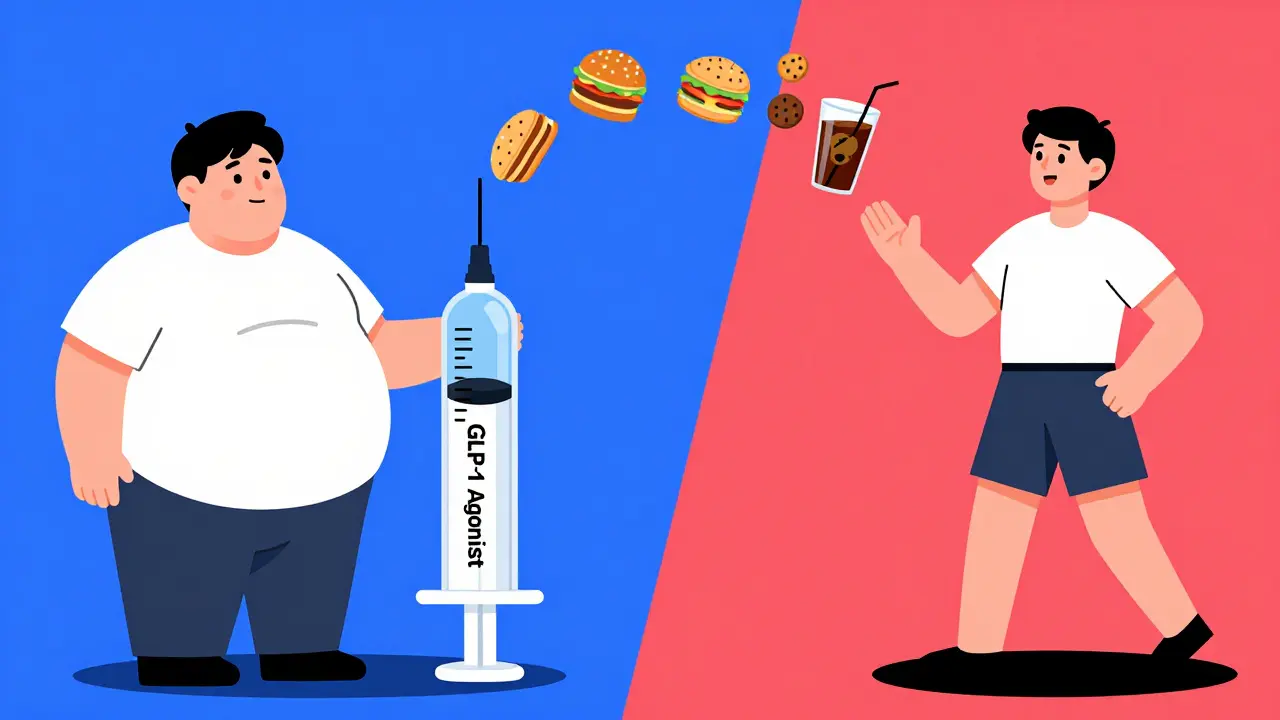
GLP-1 Weight Loss Calculator
Your Weight Loss Estimate
How It Works
GLP-1 agonists help reduce hunger and increase feelings of fullness, leading to sustained weight loss when combined with healthy lifestyle changes.
Clinical studies show:
- Up to 20% weight loss with Tirzepatide
- 15% average weight loss with Semaglutide (Wegovy)
- Weight loss typically peaks between 6-12 months
Important Notes
- Results may vary based on individual factors
- Weight loss is most effective with healthy eating and exercise
- Weight may return if medication is stopped
- Side effects like nausea may occur initially
Your Weight Loss Estimate
Based on current research, this medication may help you lose 0 pounds over 12 months.
This represents approximately 0% of your current weight.
Timeframe:
Most people see initial results within 4-8 weeks, with weight loss continuing for 6-12 months.
For years, people with type 2 diabetes were told to manage their weight through diet and exercise - but the medications they took often made it harder. Insulin and sulfonylureas? They packed on pounds. Then came GLP-1 agonists. What started as a tool to control blood sugar has turned into one of the most powerful weight loss tools in modern medicine. And it’s not just about looking different. It’s about feeling better, living longer, and reducing the risk of heart attacks, strokes, and even depression.
How GLP-1 Agonists Actually Work
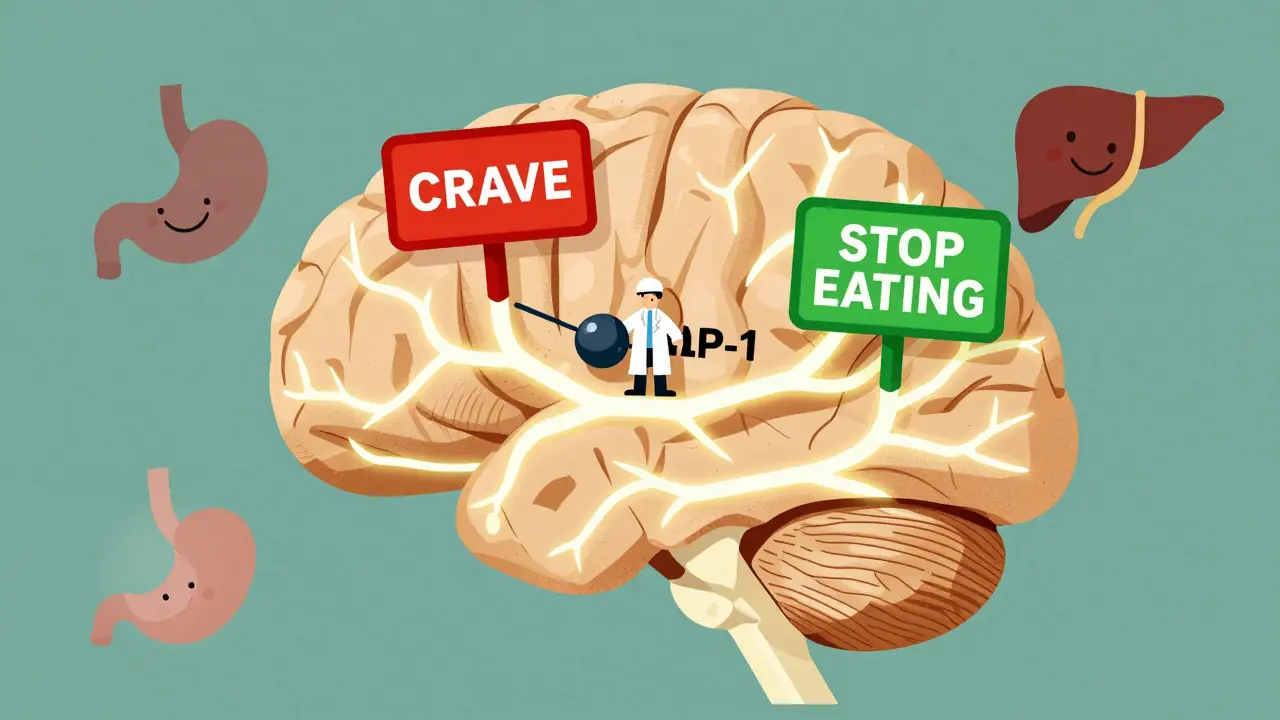
GLP-1 agonists mimic a hormone your body already makes - glucagon-like peptide-1. This hormone does three big things: it tells your pancreas to release insulin only when blood sugar is high (so you don’t crash), it shuts off glucagon (the hormone that tells your liver to dump more sugar into your blood), and it slows down how fast food leaves your stomach. But the most surprising effect? It talks directly to your brain.
Studies show GLP-1 agonists reduce hunger signals and make you feel full longer. You don’t just eat less - you stop craving junk food. People on semaglutide (Wegovy) report their favorite snacks no longer feel urgent. That’s not willpower. That’s biology. The effect is so strong that in clinical trials, people lost up to 20% of their body weight without changing their diet dramatically. In one study, 60% of participants on tirzepatide 15 mg lost over 20% of their starting weight. That’s not a few pounds. That’s 40 to 60 pounds for many.
Weight Loss That Actually Lasts
Most diets fail. People lose weight, then regain it - often more than they lost. But with GLP-1 agonists, the results are different. In the STEP-1 trial, people using semaglutide 2.4 mg weekly lost an average of 14.9% of their body weight over 68 weeks. The placebo group, even with lifestyle coaching, lost just 2.4%. And the weight stayed off as long as they kept taking the drug.
Here’s the catch: when people stop, the weight comes back. Studies show 50 to 70% of the lost weight returns within a year of stopping. That doesn’t mean the drug doesn’t work - it means it’s a treatment, not a cure. Think of it like blood pressure medication. You don’t stop taking it because you feel better. You keep taking it because your body needs the support.
More Than Just Weight Loss
People start GLP-1 agonists for weight, but they stay for the other benefits. A 2024 study from the University of Chicago found these drugs cut the risk of heart attack, stroke, or death by up to 18% in people with existing heart disease. That’s bigger than any other diabetes drug on the market.
They also lower blood pressure. Improve cholesterol - especially triglycerides and LDL. Reduce liver fat in people with fatty liver disease. Even cut inflammation markers linked to arthritis and autoimmune conditions.
And then there’s the brain. A 2024 study of 2 million U.S. veterans found GLP-1 users had 23% fewer seizures, 17% lower rates of substance addiction (including alcohol and opioids), and 14% less suicidal thinking. No one expected that. The science isn’t fully clear yet, but it’s likely tied to reduced inflammation and better metabolic health in the brain.
How Do the Drugs Compare?
Not all GLP-1 agonists are the same. Here’s how the main ones stack up for weight loss:
| Drug (Brand) | Dose | Average Weight Loss | Frequency |
|---|---|---|---|
| Tirzepatide (Zepbound, Mounjaro) | 15 mg weekly | 20% | Once weekly |
| Semaglutide (Wegovy) | 2.4 mg weekly | 15% | Once weekly |
| Semaglutide (Ozempic) | 1.0 mg weekly | 12% | Once weekly |
| Liraglutide (Saxenda) | 3.0 mg daily | 8% | Daily injection |
| Dulaglutide (Trulicity) | 1.5 mg weekly | 5% | Once weekly |
Tirzepatide is the clear winner for weight loss - it’s a dual agonist, hitting both GLP-1 and GIP receptors. Semaglutide (Wegovy) is close behind and is the most widely prescribed for weight loss. Ozempic is the same drug but approved for diabetes at lower doses. Saxenda and Trulicity work, but they’re less effective. Exenatide (Byetta), the first one, barely moves the needle anymore.
Side Effects: What No One Tells You
The biggest problem? Your stomach. Up to 50% of people get nausea, vomiting, or diarrhea - especially when starting. Most improve after a few weeks. But for some, it’s enough to quit. The key is slow titration. Doctors start at 0.25 mg weekly and bump up every 4 weeks. Rushing it makes side effects worse.
Then there’s ‘Ozempic face.’ Long-term users report loss of facial volume, hollow cheeks, and skin sagging. It’s not in the official warnings, but dermatologists are seeing it. The weight loss is so rapid that skin and fat don’t have time to adjust. Some people end up needing fillers or even facelifts.
There’s also a small risk of pancreatitis (less than 1%) and gallbladder problems. And while the drugs are safe for most, they’re not for everyone. People with a personal or family history of medullary thyroid cancer or multiple endocrine neoplasia should avoid them. The FDA requires a boxed warning for this.
Cost and Access: The Real Barrier
Wegovy costs about $1,349 a month without insurance. That’s more than most people make in a week. Even with insurance, many plans require step therapy - try metformin first, then lifestyle, then maybe you’ll get approval. In 2024, 58% of users reported insurance denials.
Novo Nordisk offers a patient assistance program that covers 75% of out-of-pocket costs for eligible people. But you need to meet income limits. Telehealth clinics like Found and Calibrate bundle the drug with coaching and labs - for $99 to $149 a month on top of the medication. It’s still expensive, but they help with insurance appeals.
And supply? Shortages are common. In 2023, 60% of semaglutide prescriptions were for weight loss - not diabetes. That’s why some people with type 2 diabetes can’t get Ozempic. Pharmacies prioritize weight loss patients because they’re willing to pay more.
Who Benefits the Most?
These drugs work best for people with:
- Type 2 diabetes and overweight/obesity
- Prediabetes with high BMI
- Obesity (BMI ≥30) with at least one weight-related condition like high blood pressure or sleep apnea
- Heart disease and excess weight
They’re less effective in lean people without metabolic issues. If you’re a 5’7” woman weighing 130 pounds and you’re not diabetic, you probably won’t lose much - and the side effects won’t be worth it.
The American Diabetes Association now recommends GLP-1 agonists as first-line treatment for type 2 diabetes patients with obesity or heart disease. That’s a huge shift. It means doctors aren’t just treating sugar - they’re treating the whole body.
What’s Next?
The next wave of drugs is coming. Oral semaglutide (Rybelsus) is already approved, but it’s less effective than the injection. Novo Nordisk is testing a 50 mg oral dose in Phase 3 trials - if it works, it could replace shots for many.
Triple agonists are in the pipeline - hitting GLP-1, GIP, and glucagon receptors. Early results show even greater weight loss and better blood sugar control. Some are being tested for Alzheimer’s and Parkinson’s, too. The market for these drugs could hit $100 billion by 2030.
But the big question remains: can we afford it? Health systems are already strained. If 10% of obese Americans started these drugs, the cost would be astronomical. Insurance companies are starting to push back. The next few years will be about access, not just efficacy.
Real Talk: Is It Worth It?
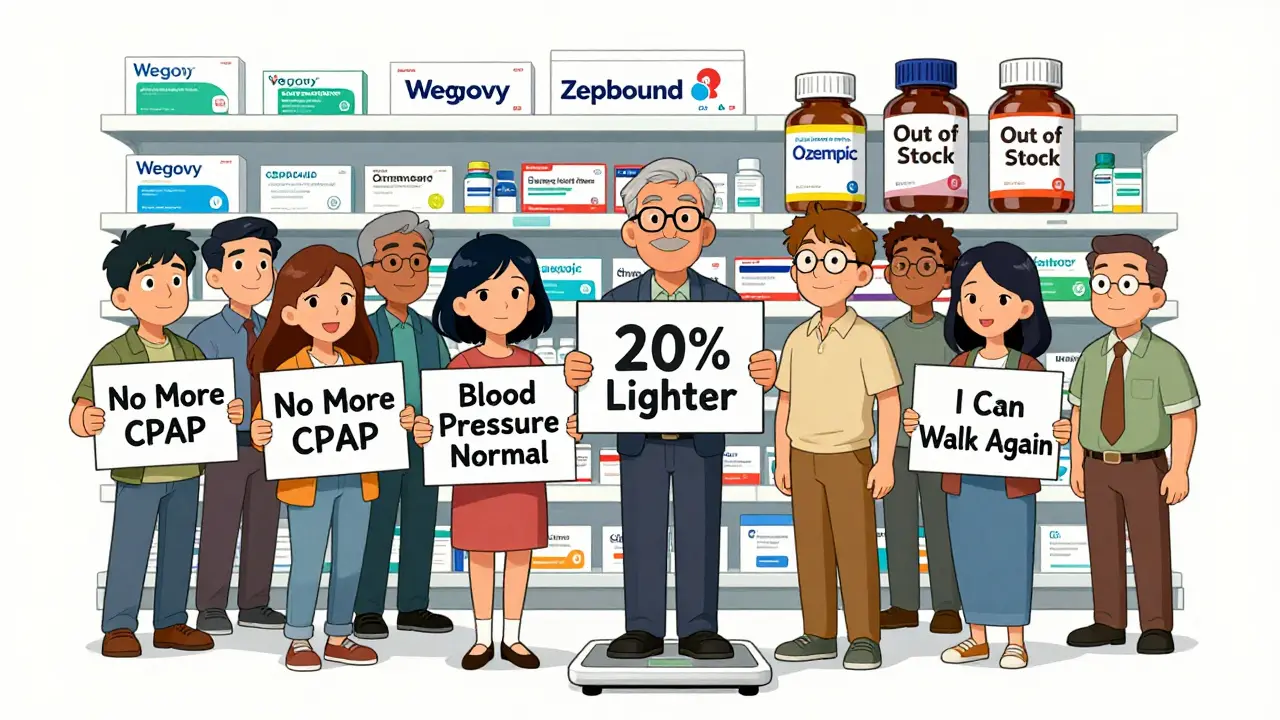
People on Reddit’s r/semaglutide say the same things: ‘I haven’t felt this in control of my life in years.’ ‘My blood pressure dropped off the chart.’ ‘I stopped needing my CPAP machine.’
But others say: ‘I feel sick every day.’ ‘I can’t afford it.’ ‘I gained it all back after stopping.’
There’s no one-size-fits-all answer. These drugs aren’t magic. They’re powerful tools - but they work best with real lifestyle changes. Eat protein. Move daily. Sleep well. Don’t expect a pill to fix everything.
And if you stop? You’ll likely gain weight back. That doesn’t mean you failed. It means your body needs support. Like insulin for diabetes, these drugs are part of a longer-term plan - not a quick fix.
For many, they’ve been life-changing. For others, too expensive or too hard to tolerate. The key is to talk to your doctor - not a social media influencer. Know your numbers. Know your risks. And know that weight loss isn’t just about looks. It’s about breathing easier, moving without pain, and living longer.
Can GLP-1 agonists be used for weight loss if you don’t have diabetes?
Yes. Wegovy and Zepbound are FDA-approved specifically for chronic weight management in adults with obesity or overweight and at least one weight-related condition, even without diabetes. Tirzepatide (Zepbound) and semaglutide (Wegovy) were tested and proven effective in people without type 2 diabetes in large clinical trials.
How long does it take to see weight loss results?
Most people start seeing results within 4 to 8 weeks. Weight loss typically peaks around 6 to 12 months. In trials, people lost about 1 to 2 pounds per week in the first few months, slowing to 0.5 pounds per week after 6 months. The full effect usually takes 6 to 12 months to reach.
Do GLP-1 agonists cause muscle loss?
Some muscle loss can occur with rapid weight loss, but studies show GLP-1 agonists preserve more muscle than traditional dieting. Adding resistance training and adequate protein intake (1.2 to 1.6 grams per kg of body weight) helps protect muscle mass. In the SURMOUNT-1 trial, participants on tirzepatide lost mostly fat, with minimal lean mass loss compared to placebo.
Is it safe to drink alcohol while on GLP-1 agonists?
Moderate alcohol is generally okay, but it can worsen nausea and increase the risk of low blood sugar, especially if you have diabetes. Alcohol also adds empty calories and can trigger cravings. Many users report reduced alcohol desire while on these drugs - likely due to reduced appetite and reward-seeking behavior in the brain.
What happens if I miss a dose?
If you miss a weekly dose of semaglutide or tirzepatide and it’s been less than 5 days, take it as soon as you remember. If it’s been more than 5 days, skip it and wait for your next scheduled dose. Don’t double up. Missing doses can reduce effectiveness and may cause temporary weight gain or increased hunger. Consistency matters more than perfection.
Are there cheaper alternatives to Wegovy or Zepbound?
There are no true generics yet. Some people buy semaglutide from Canada or online pharmacies, but this carries risks - counterfeit drugs, improper storage, or lack of medical oversight. The safest option is to use manufacturer assistance programs (like Novo Nordisk’s Norditrac) or work with a clinic that offers sliding-scale pricing. Lifestyle changes, metformin, or older GLP-1s like liraglutide are cheaper but less effective.


Write a comment