
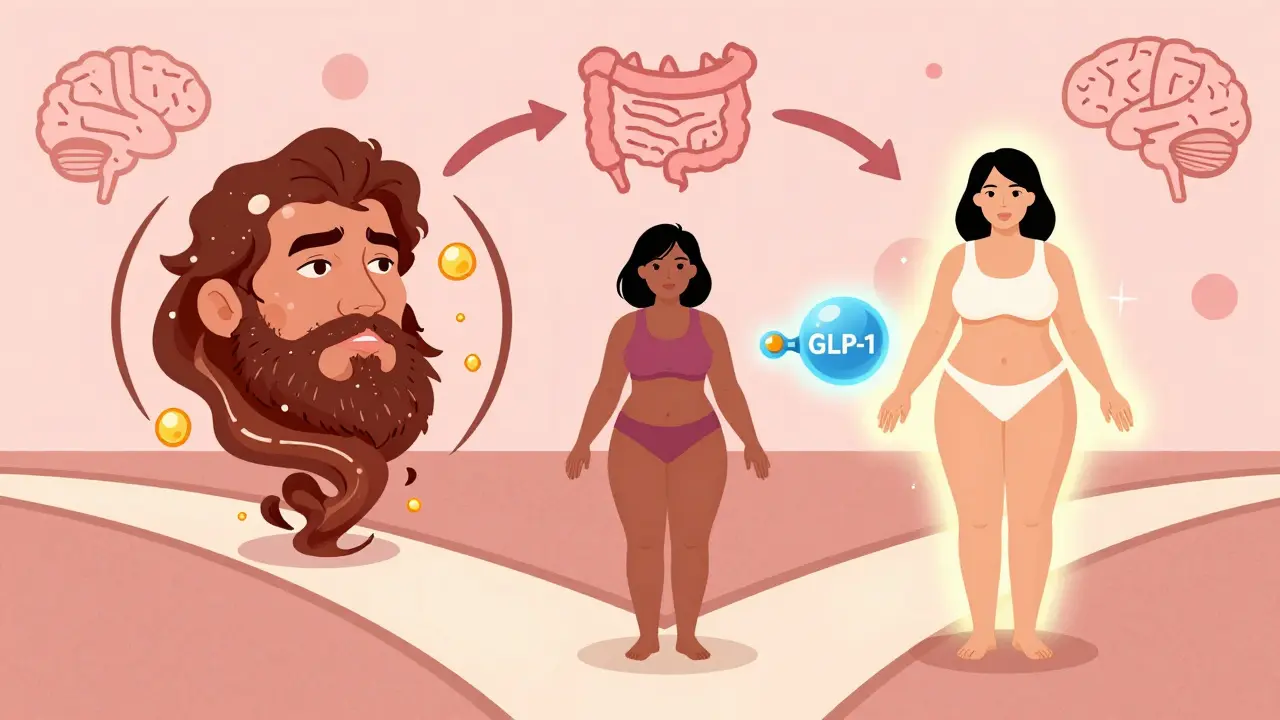
For women with polycystic ovary syndrome (PCOS) and obesity, losing weight isn’t just about appearance-it’s about survival. Up to 80% of women with PCOS are overweight or obese, and that extra weight makes insulin resistance, irregular periods, high testosterone, and fertility struggles worse. Traditional treatments like metformin help a little, but they rarely deliver the kind of weight loss needed to turn things around. Enter GLP-1 receptor agonists: drugs originally designed for diabetes that are now proving to be game-changers for PCOS. GLP-1s work in ways that directly target the core problems of PCOS: appetite, insulin spikes, and fat storage. Unlike older drugs, they don’t just nudge the system-they rewire it. And the results? Real, measurable, and sometimes life-changing.
How GLP-1s Actually Work in the Body
GLP-1 is a natural hormone your gut releases after eating. It tells your pancreas to make insulin only when blood sugar rises, slows down how fast food leaves your stomach, and sends a signal to your brain: "You’re full." GLP-1 receptor agonists are synthetic versions of this hormone. They mimic its effects, but stronger and longer-lasting. In women with PCOS, this matters because their bodies are stuck in a cycle: high insulin → more androgen production → weight gain → worse insulin resistance. GLP-1s break that cycle. They reduce hunger, lower blood sugar without causing crashes, and help the body burn fat instead of storing it. Studies show they cross the blood-brain barrier and act directly on appetite centers in the hypothalamus. That’s why people on these drugs often say they don’t feel hungry, even when they used to crave carbs constantly.
Weight Loss That Actually Sticks
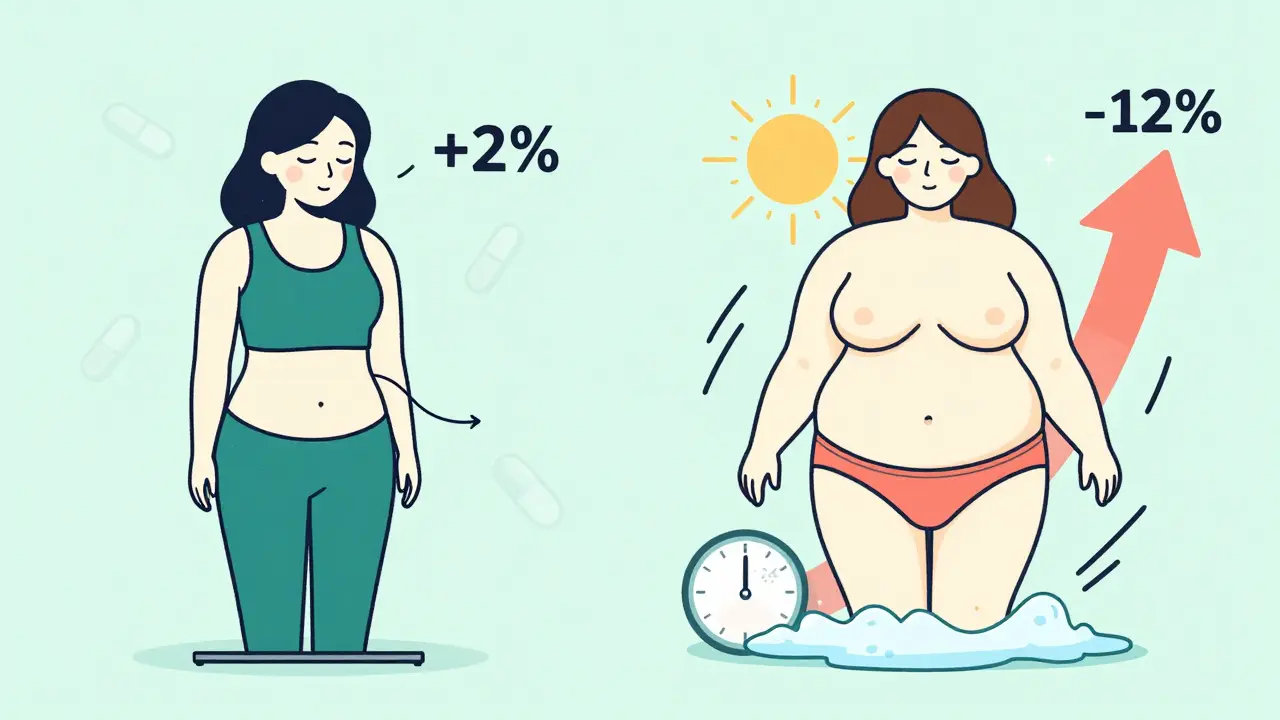
Most PCOS treatments promise modest weight loss-maybe 2-5% of body weight. GLP-1s deliver 5-15%. In clinical trials, women with PCOS using liraglutide (1.8 mg daily) lost an average of 5.6% of their body weight in just 12 weeks. Those on semaglutide (2.4 mg weekly) lost over 10% in 36 weeks. One study found visceral fat-the dangerous fat around organs-dropped by 18%. That’s not just slimming down. That’s reversing metabolic damage. Compare that to metformin: it typically leads to 2-4% weight loss. GLP-1s don’t just beat it-they leave it behind. The STEP 5 trial showed semaglutide helped people without diabetes lose nearly 15% of their weight over a year. For PCOS patients, that same effect means fewer acne breakouts, more regular periods, and a real shot at pregnancy without fertility drugs.
Metabolic Improvements Beyond the Scale
Weight loss is the headline, but the deeper wins are metabolic. Women on GLP-1s see:
- Lower fasting insulin levels (a sign of improved insulin sensitivity)
- Reduced testosterone by 20-30% (leading to less facial hair and clearer skin)
- Better cholesterol profiles (lower LDL, higher HDL)
- Lower markers of inflammation like CRP
- Higher rates of prediabetes reversal
GLP-1s vs. Metformin: The Real Comparison
Metformin has been the go-to drug for PCOS for decades. It’s cheap, safe, and helps with insulin resistance. But here’s the truth: it doesn’t cut the mustard when it comes to weight.
| Outcome | GLP-1 RAs (Liraglutide/Semaglutide) | Metformin |
|---|---|---|
| Average weight loss (12-36 weeks) | 5.6%-10.2% | 2%-4% |
| BMI reduction | -1.59 kg/m² vs placebo | -0.5 to -1.0 kg/m² |
| Testosterone reduction | 20-30% | 10-15% |
| Menstrual regularity improvement | 68% of users | 30-40% |
| Monthly cost (USD) | $800-$1,400 | $10-$20 |
| Side effect rate | 44% nausea, 24% vomiting | 30% GI upset (usually mild) |
Who Benefits Most-and Who Doesn’t
Not every woman with PCOS will respond the same way. GLP-1s shine brightest in women with:
- BMI over 30
- Insulin resistance or prediabetes
- High testosterone levels
- History of failed weight loss attempts
Side Effects and Real-World Challenges
The biggest hurdle isn’t cost-it’s tolerability. Nausea affects nearly half of users. Vomiting, dizziness, and constipation are common, especially when starting. Most people adapt after 4-8 weeks, but some don’t. Reddit threads from r/PCOS and r/WeightLoss are full of stories like: > "Spent $1,200 a month on Wegovy. Lost 15 lbs, but I couldn’t eat anything without throwing up. Switched back to metformin." > "Took 6 months to get to the full dose. Nausea was brutal. But once I did, my cravings vanished. I lost 28 lbs. First regular period in 3 years. Worth it." The key is slow titration. Doctors now recommend starting at 0.25 mg of semaglutide weekly and increasing every 4 weeks. Eating smaller meals, avoiding greasy foods, and staying hydrated helps. Injection sites (abdomen, thigh, upper arm) are simple to learn-no needles like insulin.
The Future: What’s Coming Next
The European Medicines Agency accepted a new application in June 2024 for semaglutide 2.4 mg specifically for PCOS with metabolic complications. A decision is expected in early 2025. If approved, this will be the first official indication for GLP-1s in PCOS. Meanwhile, new drugs are on the horizon. Retatrutide, a triple agonist that targets GLP-1, GIP, and glucagon receptors, is showing even greater weight loss in early trials-up to 24% in some cases. Oral versions like Rybelsus (semaglutide pills) are also improving, which could cut costs and boost adherence. Experts predict GLP-1s will become standard care for obese PCOS patients by 2027. But access remains uneven. In places without insurance, the $1,000+ monthly price tag is a dealbreaker. Some clinics now offer patient assistance programs. Others pair GLP-1s with lifestyle coaching to maximize results and minimize long-term dependency.
What You Should Do Now
If you have PCOS and obesity:
- Get tested for insulin resistance (fasting insulin, HOMA-IR)
- If your BMI is over 30 and you’ve tried diet and metformin with little success, talk to your endocrinologist about GLP-1s
- Start low-don’t rush the dose increase
- Combine with diet changes and movement. GLP-1s work better with lifestyle support
- Don’t stop abruptly. Work with your doctor on a maintenance plan
Can GLP-1s help with PCOS symptoms even if I’m not overweight?
GLP-1s are not effective for lean PCOS patients who don’t have insulin resistance or metabolic issues. These drugs primarily work by reducing appetite and improving insulin sensitivity-both of which are most relevant in overweight or obese individuals. For lean women with PCOS, treatments like birth control pills, metformin, or lifestyle changes are more appropriate first steps.
How long does it take to see results from GLP-1s for PCOS?
Weight loss typically starts within 2-4 weeks, but noticeable metabolic improvements-like more regular periods or reduced acne-often take 3-6 months. Studies show ovulation resumes in many women after 24 weeks of treatment. The full effect on insulin sensitivity and testosterone levels usually appears around the 6-month mark.
Are GLP-1s safe for long-term use in PCOS?
Long-term safety data beyond two years is still limited, but GLP-1s have been used safely for over a decade in type 2 diabetes and obesity. The main risks are gastrointestinal side effects and potential for weight regain after stopping. There’s no evidence they cause infertility or harm ovarian function-in fact, they may improve it. Always discuss personal risks, especially if you have a history of thyroid cancer or pancreatitis.
Can I take GLP-1s with birth control pills?
Yes, GLP-1s can be safely combined with birth control pills. In fact, many women use both: the pill helps regulate periods and reduce androgens, while the GLP-1 helps with weight and insulin resistance. There are no known dangerous interactions between these medications. Always inform your doctor about all medications you’re taking.
What happens if I stop taking GLP-1s?
Most people regain weight after stopping GLP-1s-often 60-70% of what was lost-unless they maintain lifestyle changes. Studies show that continuing metformin after stopping GLP-1s helps reduce weight regain to about one-third. This suggests GLP-1s are best used as a short- to medium-term tool to jumpstart metabolic recovery, not as a lifelong solution.
GLP-1s aren’t the answer for every woman with PCOS. But for those struggling with weight, insulin resistance, and fertility, they offer the most powerful tool we’ve had in decades. The science is clear. The results are real. And for many, they’re the first step toward reclaiming their health.


Write a comment