

If you’ve been prescribed gemfibrozil, you’re not alone. Thousands of people take it every year to manage high triglycerides and low HDL cholesterol. But here’s the thing: gemfibrozil isn’t a one-size-fits-all drug. It works for some, causes problems for others, and often gets handed out without enough context. Too many patients leave the office feeling confused, unheard, or even scared. You don’t have to be one of them.
Know Why You’re Taking It
Before you even sit down with your doctor, ask yourself: Why am I on this? Gemfibrozil is a fibrate, a type of lipid-lowering drug. It doesn’t lower LDL (bad) cholesterol like statins do. Instead, it targets triglycerides-fat particles in your blood that, when too high, raise your risk of pancreatitis and heart disease. It also gently raises HDL (good) cholesterol. That’s it. If your doctor says you need it because your triglycerides are over 500 mg/dL, that’s a clear reason. If they say it’s because your cholesterol is "a little high" without numbers, dig deeper.Keep a simple log: your last lipid panel results, when you got them, and what your doctor said at the time. Bring it to the appointment. Don’t assume they remember. Most doctors see 30 patients a day. You’re not being difficult-you’re being smart.
Track Your Side Effects
Gemfibrozil isn’t harmless. Common side effects include stomach upset, nausea, muscle pain, and dizziness. Less common but serious ones include gallstones, liver problems, and a rare but dangerous condition called rhabdomyolysis-where muscle tissue breaks down and can damage your kidneys. This risk goes up if you’re also taking a statin. That’s why you’ll rarely see gemfibrozil and statins prescribed together anymore.If you’ve noticed new muscle weakness, dark urine, or unexplained fatigue since starting gemfibrozil, write it down. Don’t say, "I feel a bit off." Say: "Since starting gemfibrozil, I’ve had persistent pain in my thighs and dark urine twice this month. I’m worried it might be muscle damage." Specifics matter. Vague complaints get vague answers.
Ask About Alternatives
You have options. Before gemfibrozil, your doctor should have considered lifestyle changes: reducing sugar and alcohol, increasing omega-3s from fish, losing weight if needed. For some, high-dose prescription omega-3s (like Vascepa or Lovaza) are now preferred over gemfibrozil for triglycerides over 500. They’re more targeted, with fewer drug interactions.Ask: "Is gemfibrozil the best choice for me, or are there newer options with better safety profiles?" If your doctor says no, ask why. Is it cost? Insurance? Or is it because they’ve never tried anything else? Your health isn’t a default setting.
Know the Drug Interactions
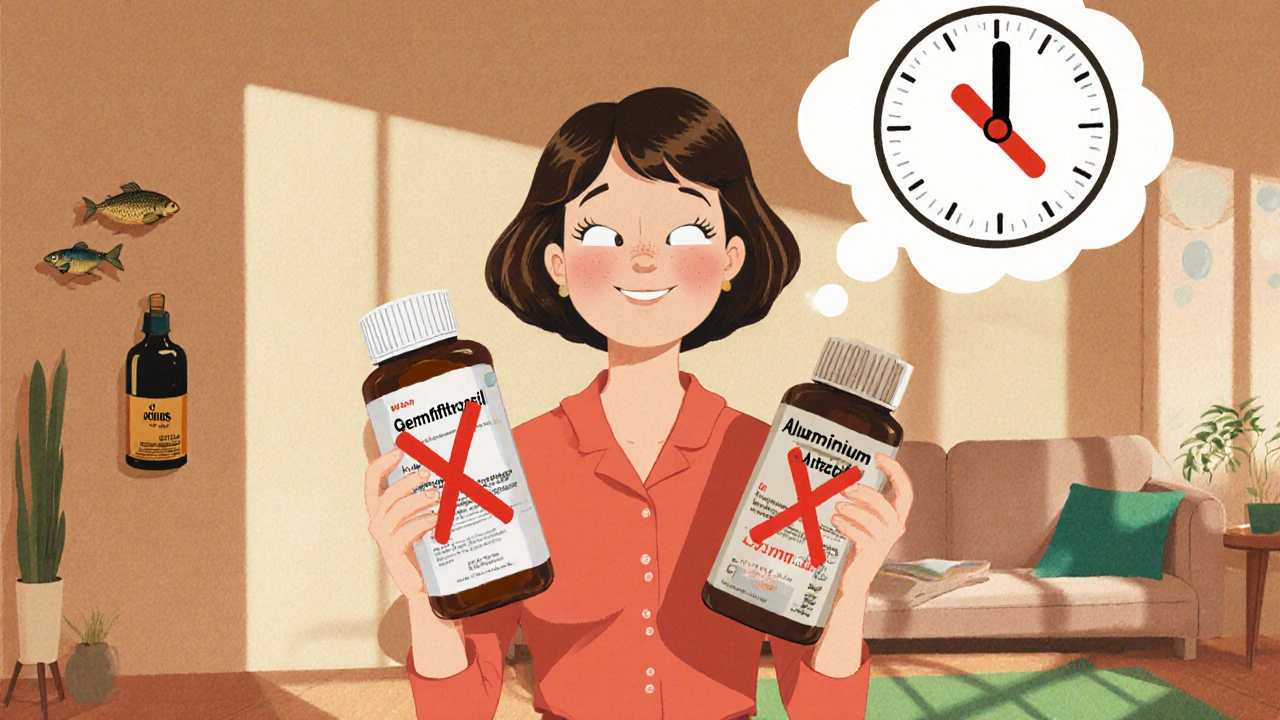
Gemfibrozil plays poorly with other medications. It can make blood thinners like warfarin more dangerous. It can boost levels of certain diabetes drugs, leading to low blood sugar. It can even interfere with some migraine medications and seizure drugs. If you’re on anything else-prescription, over-the-counter, or even supplements like fish oil or red yeast rice-list them all. Bring the bottles if you can.One patient I spoke with in Wellington was taking gemfibrozil and a common antacid with aluminum hydroxide. The antacid cut gemfibrozil’s absorption by 40%. She thought her meds weren’t working. Turns out, she was taking them at the same time. A simple change-taking the antacid two hours after gemfibrozil-fixed it. No one asked her about her antacid. She didn’t think it mattered.
Speak Up About Cost and Access
Gemfibrozil is cheap-usually under $10 a month in New Zealand with a prescription. But if you’re paying more, ask why. Is it because your pharmacy doesn’t stock the generic? Can they order it? Are you being upsold to a brand name? Don’t assume cost is fixed. Pharmacists can often switch you to a different supplier or batch. Ask: "Is there a lower-cost version?" If you’re on a fixed income, ask about the Pharmaceutical Management Agency (PHARMAC) subsidies. You might qualify for more help than you think.Set Clear Goals and Check-Ins
Don’t let this be a "take it and forget it" situation. Ask your doctor: "What’s my target triglyceride level? When will we retest? What signs should make me call you sooner?" Most guidelines recommend a lipid panel 4-12 weeks after starting gemfibrozil. If your doctor doesn’t schedule a follow-up, ask for one. Write it in your calendar.If your triglycerides drop from 800 to 400, that’s progress. But if they’re still at 600 after three months, you need to talk about next steps. Maybe gemfibrozil isn’t enough. Maybe you need a different approach. You have the right to know.
Bring a Friend or Take Notes
Doctor visits are overwhelming. You’re nervous. You forget questions. You zone out when they start talking about "LDL particle density." Bring someone with you. A partner, a sibling, a friend. Even better, record the conversation (ask permission first). Or take notes. Write down what’s said, what’s promised, what’s next. After the visit, review your notes. If something doesn’t add up, call back.One woman in Dunedin brought her daughter to her appointment. Her daughter asked, "Why not try diet first?" That question led to a referral to a dietitian, a three-month trial of omega-3s, and eventually, stopping gemfibrozil altogether. Her triglycerides stayed under 300. No side effects. No extra cost.
Know When to Get a Second Opinion
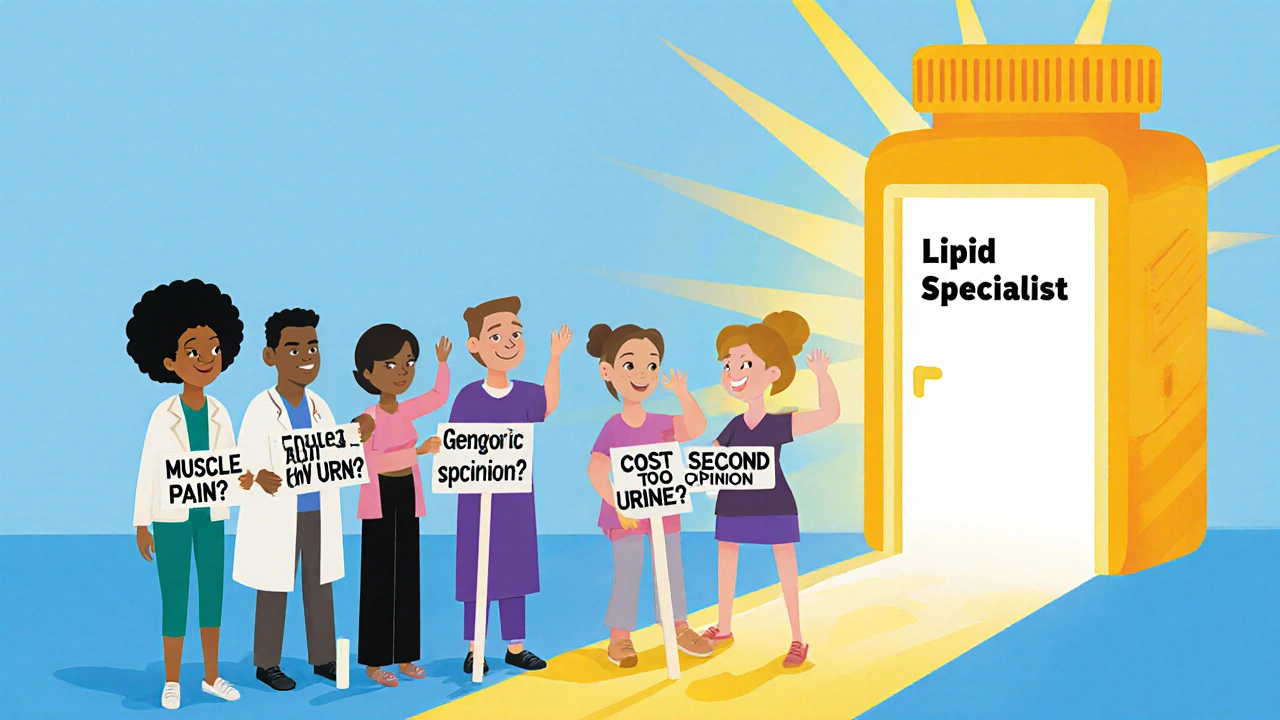
If your doctor dismisses your concerns-"It’s just a side effect," "Everyone feels that," "It’s fine"-and you still feel wrong, get another opinion. You don’t need a crisis to justify it. A second doctor might spot something the first missed. Maybe you have an undiagnosed thyroid issue causing high triglycerides. Maybe your liver enzymes are elevated and no one checked. Maybe you’re on too high a dose.There’s no shame in asking for a referral to an endocrinologist or a lipid specialist. These aren’t "specialist" problems. High lipids are common. Managing them well isn’t. You deserve care that matches your needs, not your doctor’s routine.
It’s Your Body. Your Health. Your Voice.
Advocating for yourself isn’t about being difficult. It’s about being informed. It’s about making sure the medication you’re taking actually fits your life, your body, and your goals. Gemfibrozil can help. But it’s not magic. It’s a tool. And tools work best when the person using them understands how and why.Write down your questions before you go. Bring your records. Speak clearly. Ask for numbers. Push for follow-ups. If you’re told "it’s fine," ask, "How do you know?" You’re not arguing. You’re collaborating. And your health is worth that effort.
Can gemfibrozil cause muscle pain?
Yes. Muscle pain, weakness, or cramps are known side effects of gemfibrozil. In rare cases, it can lead to rhabdomyolysis-a serious condition where muscle tissue breaks down and can damage the kidneys. This risk increases if you’re also taking a statin. If you notice unexplained muscle pain, especially with dark urine or extreme fatigue, contact your doctor immediately.
How long does it take for gemfibrozil to work?
Gemfibrozil usually starts lowering triglycerides within 1-2 weeks. But it can take up to 6-12 weeks to reach its full effect. Most doctors will order a lipid panel 4-12 weeks after you start the medication to check if it’s working. Don’t wait for symptoms to change-get tested.
Can I take gemfibrozil with statins?
It’s generally not recommended. Combining gemfibrozil with statins increases the risk of severe muscle damage, including rhabdomyolysis. Most guidelines now avoid this combination. If you’re on both, your doctor should have a very clear reason-and you should be monitored closely with regular blood tests for muscle enzymes.
What foods or supplements should I avoid with gemfibrozil?
Avoid large amounts of alcohol-it can raise triglycerides and harm your liver, which gemfibrozil already stresses. Also, avoid grapefruit juice, which can interfere with how your body processes the drug. Some herbal supplements like red yeast rice or high-dose fish oil may interact, so always tell your doctor what you’re taking-even if you think it’s "natural."
Is there a better alternative to gemfibrozil?
For very high triglycerides (over 500 mg/dL), prescription omega-3 fatty acids (like Vascepa or Lovaza) are now often preferred because they’re more targeted and have fewer drug interactions. Lifestyle changes-cutting sugar, reducing alcohol, losing weight, and increasing physical activity-are also powerful and should always be part of the plan. For some people, these changes alone can reduce triglycerides enough to avoid medication.
Should I stop gemfibrozil if I feel fine?
No. Even if you feel fine, stopping gemfibrozil without medical advice can cause your triglycerides to spike again, increasing your risk of pancreatitis. Always talk to your doctor before making any changes. If you’re concerned about side effects or long-term use, ask about a gradual plan to reassess your need for the drug.


Write a comment