
Opioid Hormone Impact Calculator
Calculate Your Risk
Enter your opioid use details to estimate potential testosterone impact
Key Facts
300 ng/dL is the clinical threshold for testosterone deficiency
Within 30 days: 30-50% testosterone drop in men
After 6 months: 63% of men develop hypogonadism
At 120+ MME/day: nearly all patients show endocrine issues
Enter your details above to see results
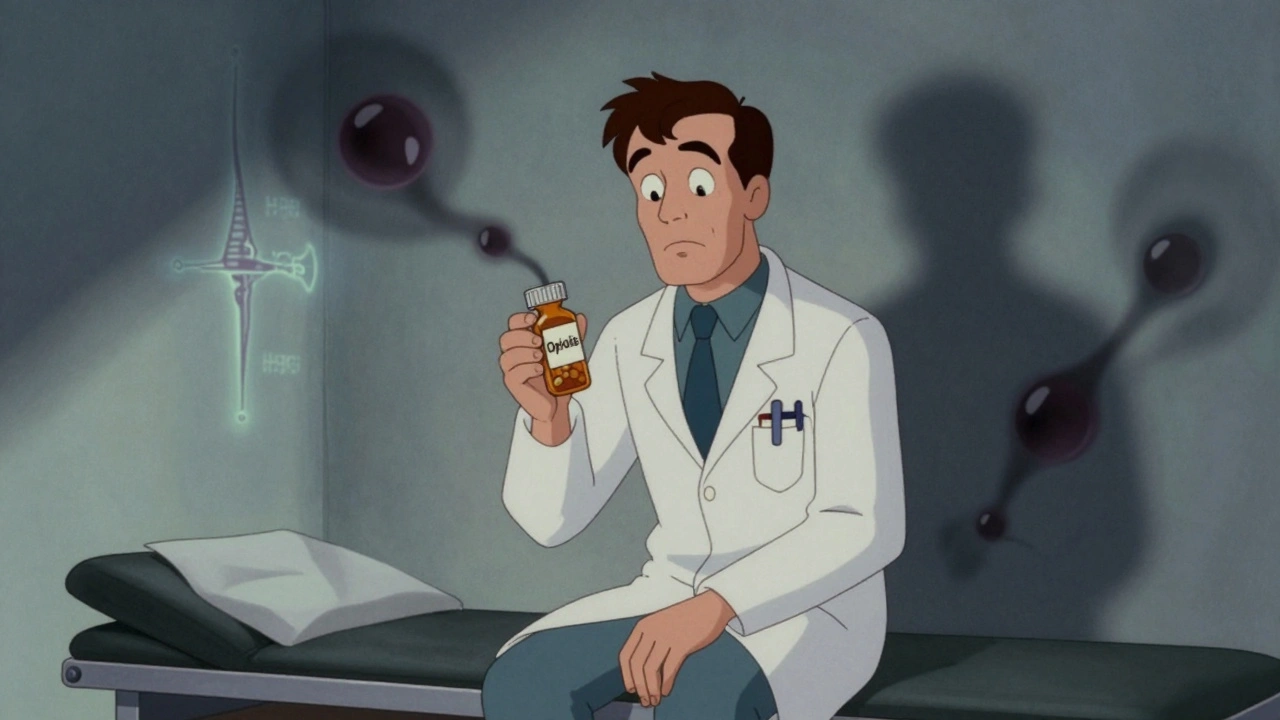
When you're on long-term opioids for chronic pain, the focus is usually on whether the medicine is working - not on what it’s doing to your body underneath. But here’s something most people don’t talk about: opioid side effects can wreck your hormones and destroy your sex life - often without you even realizing it’s the drugs causing it.
How Opioids Break Your Hormone System
Opioids don’t just block pain signals. They also shut down your body’s natural hormone production. The key system they mess with is called the hypothalamic-pituitary-gonadal (HPG) axis. This is the control center that tells your testes or ovaries to make testosterone and estrogen. When opioids bind to receptors in your brain, they stop the signal from being sent. No signal = no hormone production.It happens fast. Within 30 days of starting daily opioid therapy, testosterone levels in men can drop by 30% to 50%. After six months, about 63% of men on chronic opioids develop biochemical hypogonadism - meaning their testosterone falls below 300 ng/dL, the clinical threshold for deficiency. Women aren’t spared either. While estrogen levels often stay normal, testosterone drops, and menstrual cycles go haywire. One study found 87% of premenopausal women on long-term opioids had irregular periods, and nearly half stopped getting their period altogether.
This isn’t rare. A 2020 meta-analysis in the Journal of Clinical Endocrinology and Metabolism showed that 21% to 86% of people on chronic opioid therapy have some form of hormone disruption. The risk goes up with dose. At 60-120 morphine milligram equivalents (MME) per day, the damage starts. At 120 MME or higher - which is common for severe chronic pain - nearly every patient shows signs of endocrine trouble.
What This Means for Your Sex Life
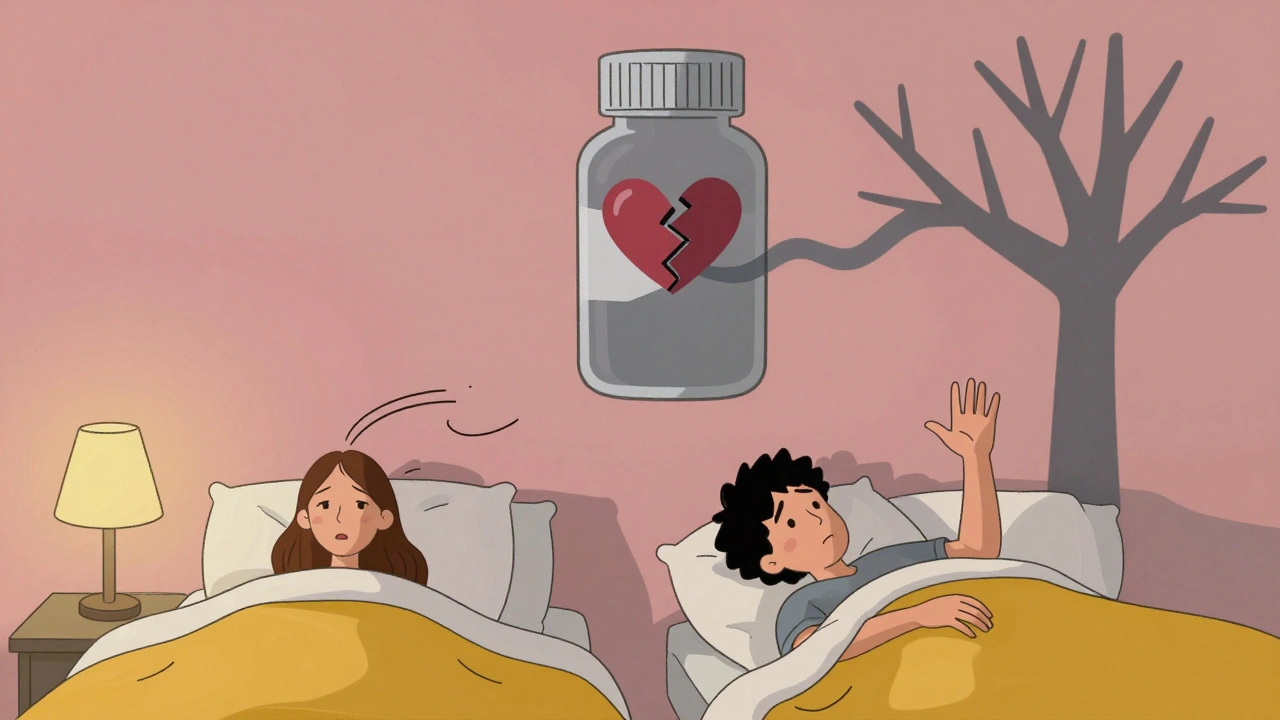
Low testosterone doesn’t just mean you’re tired. It means you lose interest in sex - completely. Erectile dysfunction becomes common. Orgasms feel flat or disappear. Some men say they can’t even get aroused anymore. Women report the same: libido vanishes. Intimacy becomes a chore, not a connection.Reddit threads like “Opioids killing my sex life - anyone else?” have hundreds of responses. One user wrote: “After two years on oxycodone, my testosterone was 180. My doctor never tested it. I had to push for it.” That’s not unusual. A 2021 survey of 342 women on chronic opioids found 78% lost interest in sex. Only 13% said their doctor ever asked about it.
And it’s not just about sex. Hormone disruption leads to depression, brain fog, muscle loss, and weight gain - symptoms that get blamed on “chronic pain” or “aging,” when the real culprit is the opioid itself. Patients often feel guilty or ashamed. They think it’s their fault. It’s not. It’s pharmacology.
Opioids vs. Other Pain Treatments
Not all pain meds do this. NSAIDs like ibuprofen or acetaminophen might cause mild sexual side effects in 5-15% of users, but they don’t touch hormone levels. Gabapentinoids like pregabalin affect testosterone in only 12% of men - a fraction of the opioid rate.That’s why the American Pain Society and the CDC both say opioids shouldn’t be first-line treatment for chronic non-cancer pain. They work great for acute pain - a broken bone, surgery recovery - but for back pain, arthritis, or fibromyalgia? The long-term cost is too high. Studies show physical therapy, cognitive behavioral therapy, and certain antidepressants like duloxetine give better outcomes over time - with fewer side effects.
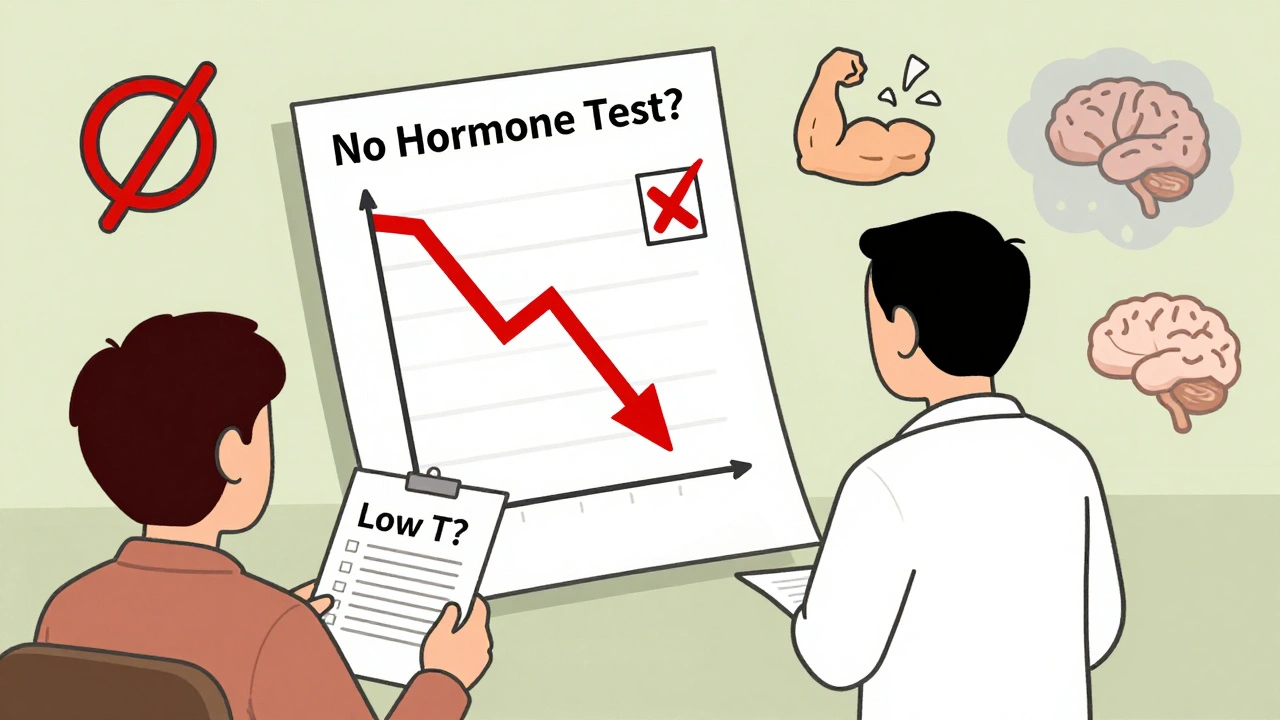
Even the FDA now requires opioid labels to warn about hormonal side effects. But most doctors still don’t screen for them. A 2023 study found only 38% of primary care physicians test testosterone in men on long-term opioids. That’s not just negligence - it’s substandard care, according to the Endocrine Society’s 2019 guidelines.
What Can You Do If You’re on Opioids?
If you’re on opioids and notice low sex drive, fatigue, or mood changes, don’t assume it’s normal. Ask for a blood test. For men: total testosterone, free testosterone, LH, and FSH. For women: testosterone, LH, FSH, and prolactin. If your testosterone is low and you’re on opioids, it’s likely opioid-induced.For men, testosterone replacement therapy (TRT) works. Studies show 70-85% of men see improvement in libido, erections, and energy once levels are restored. TRT comes as gels, patches, or injections. But it’s not risk-free - 15-20% develop thicker blood (polycythemia), which needs monitoring.
For women, options are limited. There’s no FDA-approved treatment for opioid-related low libido. Some doctors use off-label testosterone patches (1-2 mg daily), and small studies show 50-60% of women report better sex drive. But research is thin. Most women are left without clear answers.
Another option: reducing the dose. A 2024 Cleveland Clinic study found that lowering opioid dose and adding low-dose naltrexone (a drug that blocks opioid receptors) improved testosterone by 25-35% in 68% of patients - without losing pain control. It’s not a cure, but it’s a step forward.
The Bigger Picture: Why This Matters
The opioid crisis isn’t just about addiction. It’s about hidden damage. People are living longer on these drugs - but not living well. Sexual dysfunction, depression, and fatigue erode relationships, self-worth, and quality of life. And because these side effects are invisible, they go untreated.The market for non-opioid pain treatments is growing fast - projected to hit $59 billion by 2027. Testosterone replacement therapy is growing too, at 12% a year, partly because of opioid-induced hypogonadism. But awareness lags behind science.
Newer opioids like buprenorphine buccal film (Belbuca) show 40% less hormone disruption than traditional ones. That’s promising. But until every doctor routinely checks hormone levels in patients on long-term opioids, thousands will keep suffering in silence.
What to Ask Your Doctor
If you’re on opioids for more than 90 days, here’s what to say:- “Could my low sex drive or fatigue be from the opioids?”
- “Can you test my testosterone (or hormone levels)?”
- “Are there non-opioid options I haven’t tried yet?”
- “Would lowering my dose help my hormones?”
- “Can you refer me to a pain specialist or endocrinologist?”
Don’t wait for them to bring it up. Most won’t. You have to lead the conversation.


Write a comment