
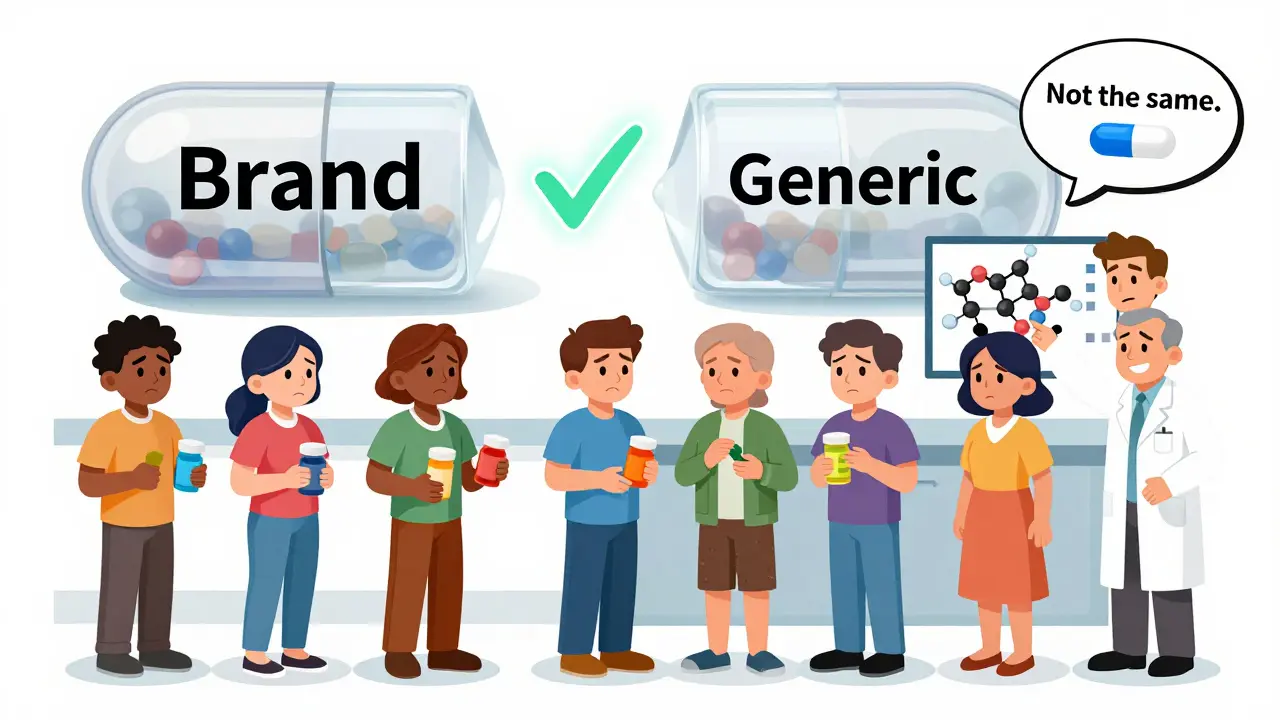
Switching from a brand-name drug to a generic version should be simple: same active ingredient, same dose, same effect. But for millions of people, it’s anything but. After the switch, some stop taking their medication. Others skip doses. Some even call their doctor, convinced the generic isn’t working. And here’s the truth: the problem isn’t always the drug. It’s the perception, the packaging, the silence from the provider, and the fear that something’s been lost in translation.
Why People Stop Taking Their Generic Medication
Generic drugs make up 90% of all prescriptions filled in the U.S. They’re cheaper-often 80% to 85% less than the brand. That’s why insurers push them. But adherence drops after the switch. For some drugs, like statins, adherence actually goes up because people can afford to take them. But for others-blood pressure pills, antidepressants, seizure meds-it plummets.
Why? It’s not science. It’s psychology.
A 2018 study showed patients given identical placebo pills, but labeled as "generic," reported 18% more pain and were 31% more likely to take extra pills than those given the same placebo labeled as "brand-name." The pills were the same. The belief wasn’t.
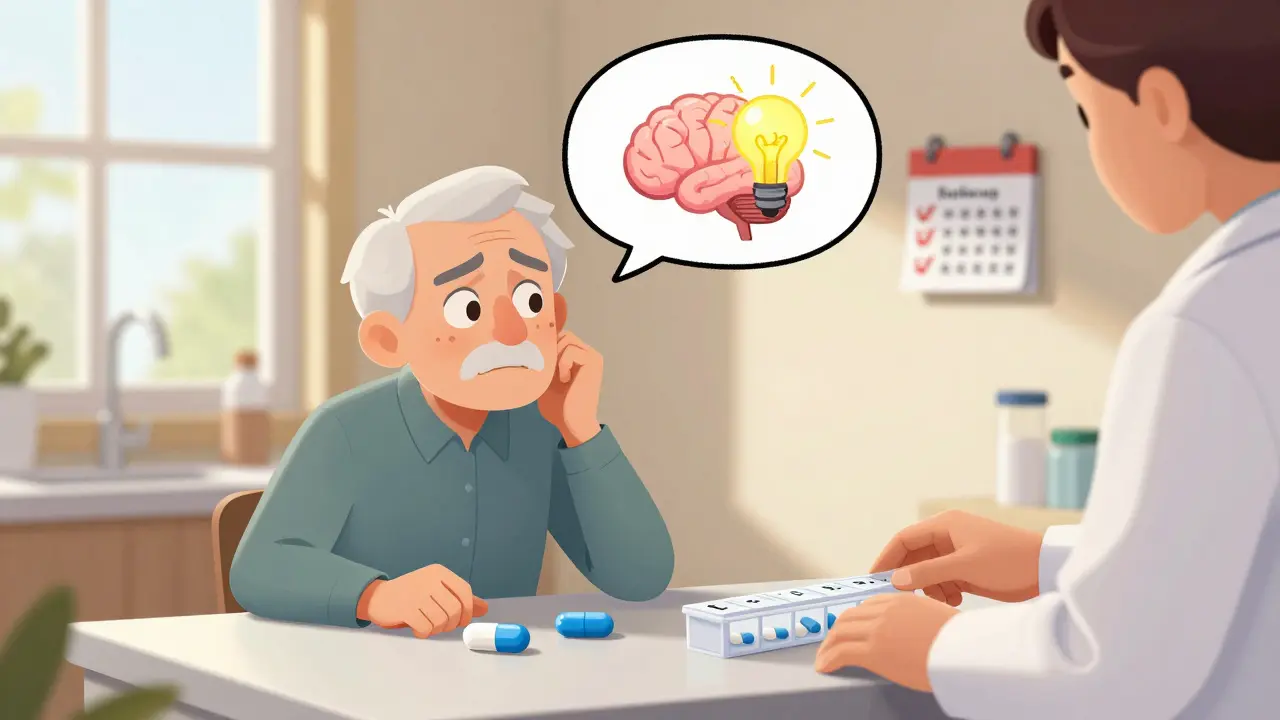
Then there’s appearance. Pills change color, shape, size, even markings. A 2020 University of Michigan study found 28.4% of older adults got confused after switching. One man took his blood pressure pill twice because the new one looked like his old diabetes pill. Another stopped her antidepressant because the generic was blue instead of white. "It just didn’t feel right," she told her pharmacist.
And let’s not forget the myth: "Brand-name is stronger." A 2021 Consumer Reports survey found 62% of Americans trusted brand-name drugs more-even when told generics are FDA-approved and chemically identical. That’s not ignorance. It’s a deep-seated cultural bias.
When Generic Switches Actually Matter
Most generics are fine. But not all drugs are created equal. For medications with a narrow therapeutic index-where the difference between a helpful dose and a dangerous one is tiny-even small changes can cause problems.
Drugs like warfarin (blood thinner), levothyroxine (thyroid hormone), and certain seizure medications (like lamotrigine) fall into this category. A 2017 NEJM study found a 0.8% higher hospitalization rate after switching patients with epilepsy from brand-name Lamictal to generic lamotrigine. The FDA later said the generics met bioequivalence standards. But 8,432 patients filed a lawsuit claiming breakthrough seizures. The science says it’s safe. The experience says otherwise.
Here’s the catch: even if the active ingredient is identical, the inactive ingredients-fillers, dyes, coatings-can differ. A 2021 JAMA Dermatology study found 3.7% of patients had allergic reactions to new fillers in generics. One woman broke out in hives after switching to a generic version of her asthma inhaler. The active ingredient hadn’t changed. The dye had.
So while most people can switch without issue, a small but real group needs caution. That’s why doctors and pharmacists must screen before switching-not assume it’s always safe.
What Works: The Best Practices for Smooth Transitions
There’s a proven way to prevent adherence drops during brand-to-generic switches. It’s not complicated. It’s just rarely done.
1. Talk to the patient-before the switch. A 2022 JACM audit found only 28% of transitions included any explanation about bioequivalence. That’s not enough. Patients need to hear: "This generic has the same active ingredient as your old pill. The FDA requires it to work the same way. It’s not a cheaper version-it’s an identical one."
2. Explain the look. 34% of pharmacists mention appearance changes. That’s still too low. Show the patient the new pill. Say: "I know it looks different. That’s because the company that makes it uses a different coating. But the medicine inside is the same."
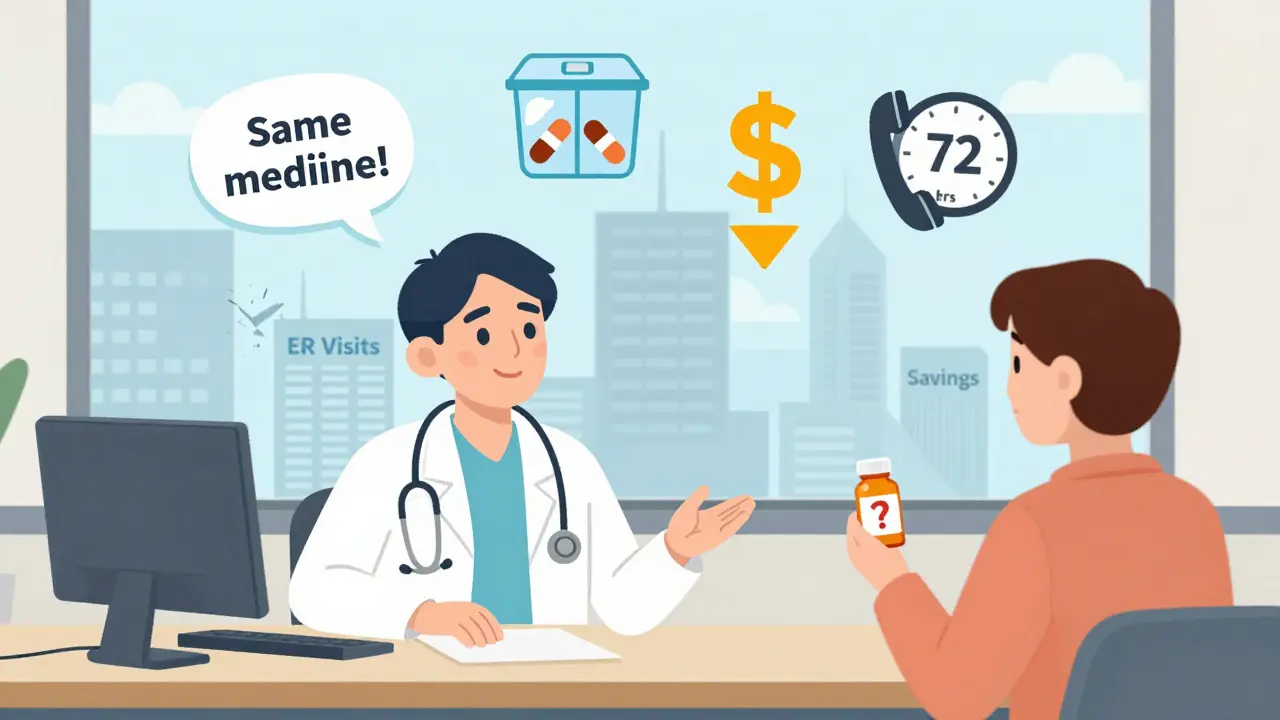
3. Highlight the cost benefit. 61% of transitions cover cost. That’s the highest number, and for good reason. A 2018 JAMA study found generic statins improved adherence by 14.2% because patients could afford them. For someone on Medicare, saving $50 a month on a pill can mean the difference between taking it or skipping it.
4. Invite questions. Don’t wait for them. Only 19% of transitions include a direct invitation like, "What concerns do you have about this change?" That’s a missed opportunity. Patients won’t say, "I’m scared it won’t work." They’ll just stop taking it.
5. Follow up within 72 hours. A 2022 meta-analysis found pharmacist follow-up calls within three days of a switch increased adherence by 31%. A simple call: "How are you feeling on the new pill? Any side effects? Any confusion?" makes all the difference.
Technology Can Help-But Doesn’t Replace Human Talk
Electronic prescribing systems now flag brand-to-generic switches for pharmacist review. Surescripts reports a 22.4% increase in adherence when this happens. That’s good. But it’s not enough.
AI tools like AiCure use smartphone cameras to verify patients are taking their pills. A 2023 JMIR study showed a 37% improvement in adherence during generic transitions. But AI can’t answer why someone feels "off." It can’t calm fears. It can’t explain why a blue pill works just as well as a white one.
Technology supports. Humans heal.
What Patients Can Do
Patients aren’t powerless. Here’s what works:
- Ask if you can stay on the brand. If cost is a barrier, ask about patient assistance programs. Many drug makers offer them.
- Request the same manufacturer. If you’ve had a good experience with a generic made by Teva or Mylan, ask your pharmacist to stick with that brand. Even if the label says "generic," the manufacturer matters.
- Use a pill organizer. If pill appearance changes confuse you, a weekly pill box with labeled compartments helps. One Reddit user said it cut her confusion in half.
- Don’t assume side effects are from the drug. New fatigue? Headache? That could be stress, sleep loss, or even the nocebo effect. Talk to your provider before quitting.
The Bigger Picture: Why This Matters
Medication non-adherence costs the U.S. healthcare system $528 billion a year. That’s not just wasted pills. That’s ER visits. Hospital stays. Missed work. Premature death.
Generics save money-$132.7 billion in 2023 alone. But if patients stop taking them, those savings vanish. And the costs? They pile up elsewhere.
The FDA says generics are safe. The science says they work. But until we fix the way we communicate during transitions, patients will keep doubting them.
The solution isn’t more regulation. It’s more conversation.
Are generic drugs really the same as brand-name drugs?
Yes, for the vast majority of medications. The FDA requires generics to contain the same active ingredient, strength, dosage form, and route of administration as the brand-name drug. They must also prove bioequivalence-meaning they deliver the same amount of medicine into the bloodstream at the same rate. The FDA allows up to 20% variability in absorption, but that’s the same range seen between different batches of the brand-name drug. So while inactive ingredients (like dyes or fillers) may differ, the medicine itself works the same.
Why do some people feel worse after switching to a generic?
Often, it’s not the drug-it’s the mind. This is called the nocebo effect: expecting side effects leads to experiencing them. A 2014 double-blind study showed identical placebo pills labeled as "generic" caused 22% more reported side effects than the same pills labeled as "brand-name." Other reasons include changes in inactive ingredients (like dyes or fillers) that trigger allergies in a small percentage of people, or confusion from pill appearance changes. For drugs with a narrow therapeutic index-like thyroid or seizure meds-even tiny absorption differences can matter for some individuals.
Can I ask my pharmacist to keep me on the same generic manufacturer?
Yes. While pharmacies often switch manufacturers to save money, you can request a specific generic brand. For example, if you’ve been on a generic made by Teva and it worked well, you can ask your pharmacist to fill with Teva’s version again. Some insurers allow this if you provide a valid reason, like stability on that formulation. It’s worth asking, especially for critical medications like thyroid, epilepsy, or blood thinners.
Is it safe to switch generics back and forth?
For most drugs, yes. But for medications with a narrow therapeutic index-like warfarin, levothyroxine, or phenytoin-frequent switching between different generic manufacturers can increase the risk of side effects or reduced effectiveness. Each manufacturer’s formulation may have slightly different absorption rates. If you’re on one of these drugs, it’s best to stick with the same generic manufacturer unless your doctor advises otherwise.
What should I do if I think my generic isn’t working?
Don’t stop taking it. Call your doctor or pharmacist. Describe what you’re feeling-changes in symptoms, new side effects, or just a sense that it’s "not the same." They can check for interactions, review your dose, or test blood levels if needed (for drugs like warfarin or lithium). Sometimes, switching back to the brand or a different generic fixes the issue. But often, the problem is psychological or unrelated to the medication at all. A conversation is the first step to solving it.
What’s Next?
The FDA’s new Generic Drug Communication Initiative, starting in January 2025, will require manufacturers to include transition-specific patient education with every generic prescription. That’s a step forward. But real change will come when pharmacists are given time to talk. When doctors stop assuming patients understand. When we stop treating medication adherence as a numbers game and start treating it like a human one.
The goal isn’t to stop generics. It’s to make sure no one pays for them with their health.


Write a comment