
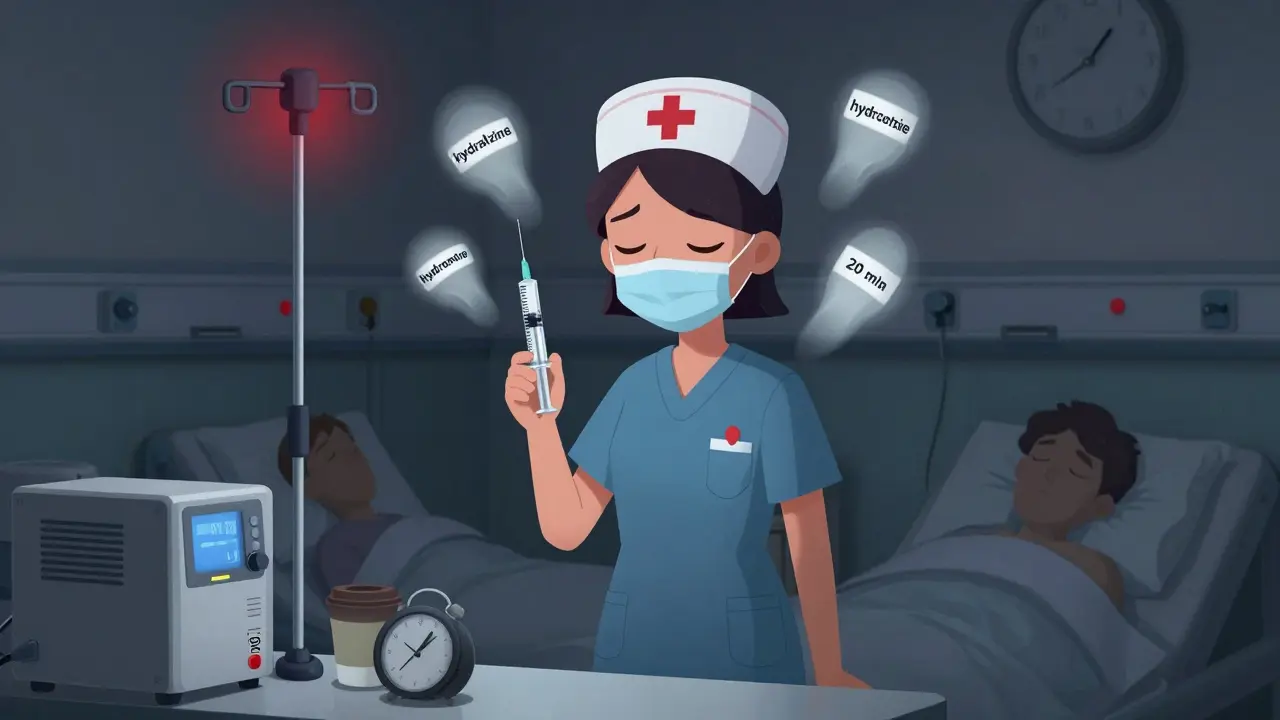
It’s 3 a.m. You’ve been on your feet for 12 hours. Your eyes feel heavy. The IV pump beeps. You grab the syringe, check the label-medication safety at night feels like a checklist you’re running on autopilot. But in that moment, your brain isn’t running on full power. It’s running on fumes. And that’s when mistakes happen.
Why Nighttime Is the Riskiest Time for Medication Errors
Most people think medication errors happen because someone forgot to check the patient’s name. But the real culprit? Fatigue. A 2023 review of 38 studies across 15 countries found that 82% of medication errors and near-misses during night shifts were linked to sleep deprivation. Nurses, doctors, and pharmacists working overnight aren’t just tired-they’re operating with cognitive function that’s dropped by 25-30%. That’s the same drop seen in people who haven’t slept for 24 hours.
It’s not just about forgetting a dose. It’s about misreading a decimal point, confusing two similar-sounding drugs like hydralazine and hydromorphone, or giving a medication at the wrong time because your short-term memory is glitching. One study of 12,450 healthcare workers found errors increased by 12.1% during night or rotating shifts. The risk of self-reported errors jumped even higher when workers had multiple consecutive nights without enough rest.
How Sleep Loss Changes Your Brain
Your brain doesn’t just slow down when you’re tired-it rewires itself. Research from the American College of Obstetricians and Gynecologists shows that after less than five hours of sleep, your ability to process numbers, remember details, and focus on tasks drops sharply. Speed suffers more than accuracy, which means you might rush through a task and miss the red flag.
Even worse, your brain starts to hallucinate normalcy. You think you’re doing fine. You’re confident. But your psychomotor skills-like reading a syringe or pressing the right button on an infusion pump-are slipping. Anesthesiologists who pulled an all-nighter showed a 23% drop in vigilance and an 18% drop in memory during simulated procedures. That’s not hypothetical. That’s real people, real patients, real risk.
And it’s not just the meds you’re giving. It’s the meds you’re taking. Antihistamines like diphenhydramine (Benadryl) cause drowsiness in 50-60% of users. Sleep aids like zolpidem (Ambien) leave 15-20% of people impaired the next day. Benzodiazepines, narcotic painkillers, and even some antidepressants like trazodone can make you sluggish, slow your reaction time, and blur your judgment-all while you’re supposed to be keeping others safe.
The Hidden Cost of Fatigue
Medication errors don’t just hurt patients. They cost the U.S. healthcare system an estimated $20 billion a year. That’s not just for lawsuits or extra hospital days. It’s for repeat tests, extended stays, and preventable complications. Nurses working night shifts have a 38% higher error rate than those on day shifts. Those working 12-hour shifts? A 15% increase in mistakes. And it’s not just nurses. Surgeons who got less than six hours of sleep had patients with 2.7 times more complications. When their shifts stretched beyond 12 hours, complication rates jumped nearly 50%.
It’s not just about performance. Fatigue affects mood. Communication drops by 33% when you’re sleep-deprived. You snap at coworkers. You skip double-checks. You avoid asking for help because you don’t want to seem weak. But in healthcare, silence kills.
What Works: Real Strategies That Reduce Errors
There’s no magic fix. But there are proven ways to fight fatigue-driven errors.
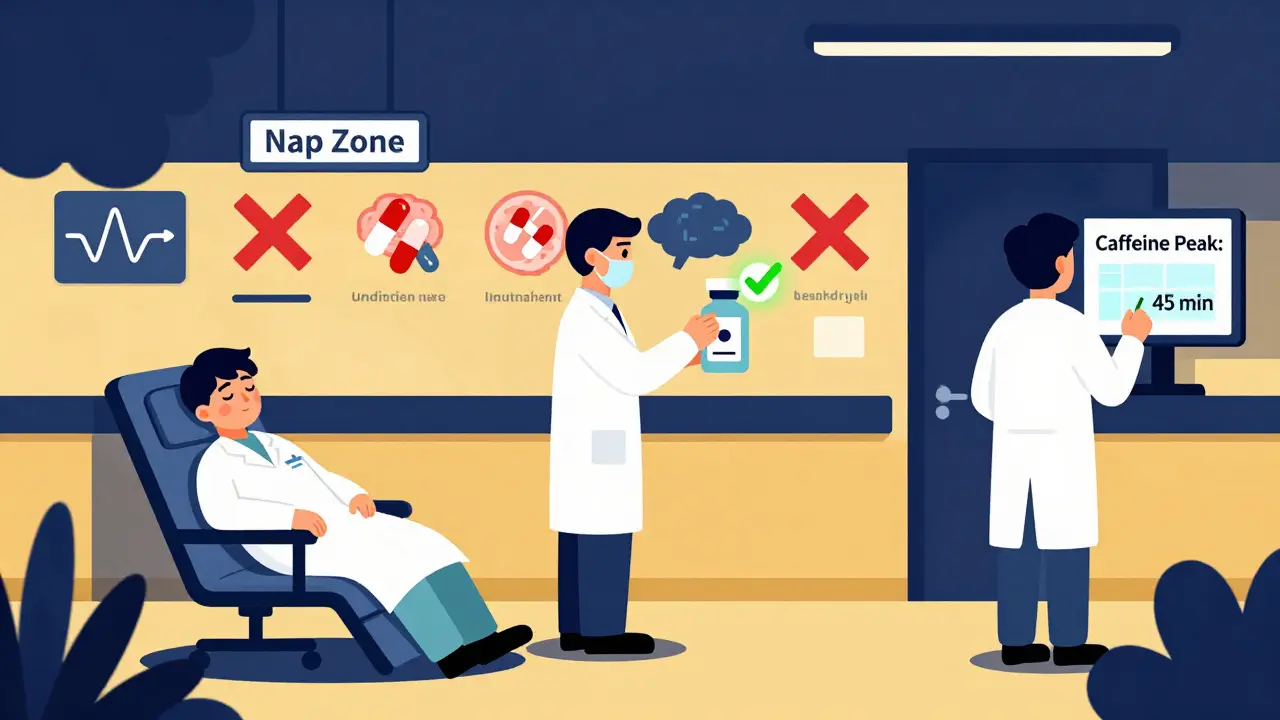
- Strategic napping: A 20-40 minute nap before or during a night shift can boost alertness by 12-15%. But don’t nap longer than 90 minutes-you’ll wake up groggy for up to 30 minutes. That’s called sleep inertia, and it’s dangerous when you’re about to draw up insulin or push a high-risk drug.
- Caffeine timing: A cup of coffee right before your toughest task helps. But don’t chug it at midnight and expect it to last until dawn. Caffeine peaks in 30-60 minutes and lasts 4-6 hours. Use it like a tool, not a crutch.
- System backups: Electronic alerts, barcode scanning, and automated double-checks reduce errors by 18%. Don’t rely on memory. Let technology catch what your tired brain misses.
- Medication review: If you’re on a sedating antihistamine, antidepressant, or sleep aid, talk to your doctor. Switching from diphenhydramine to loratadine can cut drowsiness without losing symptom control. Same goes for zolpidem-alternatives like melatonin or cognitive behavioral therapy for insomnia don’t leave you impaired.
- Shift scheduling: The most effective solution? Give people time to recover. Working three nights in a row without a full day off? That’s a recipe for disaster. Studies show it takes up to three days to fully recover from one night of total sleep loss.
What Doesn’t Work
Don’t fall for the myths.
- “I’m used to it.” Your body doesn’t adapt to chronic sleep loss. You just get better at ignoring how tired you are.
- “I’ll catch up on the weekend.” Weekend sleep doesn’t undo the damage of five straight night shifts. Your circadian rhythm stays out of sync, and your risk stays high.
- “I don’t need help.” The bravest thing you can do is say, “I’m too tired to do this safely.”
What You Can Do Right Now
If you’re on the night shift:
- Check your own meds. Are any of them making you sleepy? Talk to your doctor before your next shift.
- Take a 20-minute nap before your busiest time-even if you think you don’t need it.
- Use the barcode scanner. Always. Even if you’re 100% sure.
- Ask a colleague to verify high-risk meds: insulin, heparin, opioids, sedatives.
- Hydrate. Dehydration worsens fatigue. Water isn’t optional.
- Get out of the room. Walk for five minutes. Sunlight-even through a window-helps reset your internal clock.
If you’re managing staff:
- Don’t schedule back-to-back night shifts.
- Allow 24 hours of recovery after a night shift before the next one.
- Provide quiet, dark nap spaces. Make it normal to rest.
- Review medication protocols. Are there too many look-alike drugs? Too many manual checks?
The Bottom Line
Medication safety at night isn’t about being more careful. It’s about designing systems that protect people when they’re at their weakest. Fatigue isn’t a personal failure. It’s a biological reality. And ignoring it puts lives at risk.
You can’t outwork sleep deprivation. But you can outsmart it-with better scheduling, smarter tools, and the courage to pause when you need to. Your patients deserve more than your exhaustion. And so do you.
Why are medication errors more common at night?
Medication errors increase at night because fatigue from sleep deprivation reduces attention, slows reaction time, and impairs memory and decision-making. Studies show cognitive performance drops by 25-30% after less than five hours of sleep, and errors rise by 12.1% during night shifts compared to daytime.
Can taking sleep aids increase the risk of medication errors?
Yes. Sleep aids like zolpidem (Ambien) can cause next-day impairment in 15-20% of users, and sedating antihistamines like diphenhydramine cause drowsiness in over half of people who take them. These drugs can leave healthcare workers groggy, slow to react, and less able to catch mistakes-even if they feel awake.
Is a 20-minute nap enough to help during a night shift?
Yes. A 20-40 minute nap can improve alertness by 12-15% and reduce errors in settings like emergency rooms and ICUs. Longer naps (90+ minutes) may cause sleep inertia, leaving you groggy for up to 30 minutes after waking, which can be dangerous if you’re about to administer medication.
What medications should healthcare workers avoid if they work nights?
Avoid sedating medications like diphenhydramine (Benadryl), zolpidem (Ambien), diazepam (Valium), oxycodone, and trazodone if you work nights. These can worsen fatigue or cause next-day drowsiness. Non-sedating alternatives like loratadine for allergies or melatonin for sleep are safer choices.
Do work-hour limits actually reduce medication errors?
Work-hour restrictions helped reduce resident fatigue, but they haven’t clearly lowered overall error rates. The real issue is chronic sleep loss across multiple nights. One night of total sleep loss can take three days to recover from. Better scheduling and recovery time matter more than just limiting shift length.
How can hospitals reduce fatigue-related errors?
Hospitals can reduce errors by implementing electronic alerts, barcode scanning, mandatory napping breaks, and non-sedating medication alternatives. They should also avoid scheduling staff for more than three consecutive night shifts and provide dark, quiet spaces for rest during shifts.


Write a comment