
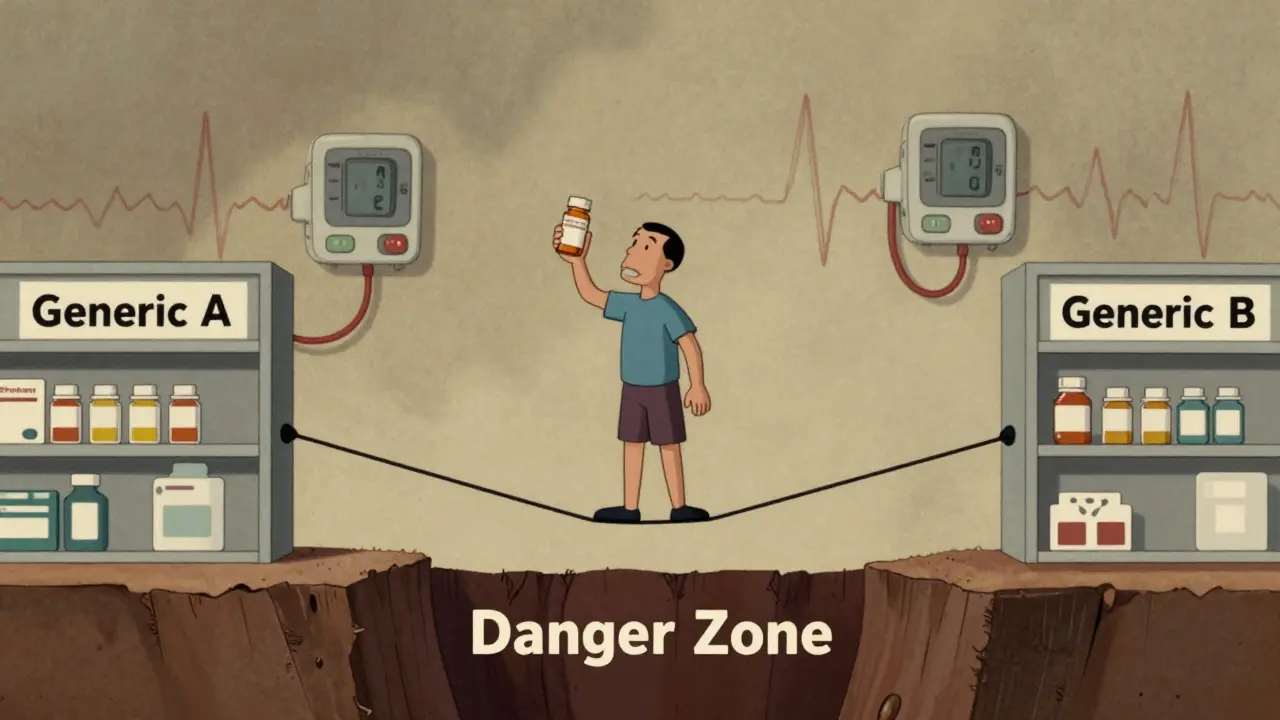
When you take a medication like levothyroxine or tacrolimus, even a tiny change in dose can mean the difference between feeling well and ending up in the hospital. These are narrow therapeutic index (NTI) drugs - medicines where the gap between a safe dose and a dangerous one is razor-thin. The FDA requires stricter testing for these drugs than for regular generics, but that doesn’t stop pharmacists from switching you between different manufacturers. And that’s where things get messy.
What Makes a Drug an NTI Drug?
NTI drugs have a very small window of effectiveness. Take warfarin, for example. If your blood level drops just a little, you could clot. If it rises too high, you could bleed internally. The therapeutic index - the ratio between the toxic dose and the effective dose - is often around 2:1. That means if your normal dose is 5 mg, 10 mg could be life-threatening. Other NTI drugs include digoxin, lithium, phenytoin, cyclosporine, and carbamazepine. These aren’t just any pills. They’re drugs that require constant monitoring. Your doctor checks your blood levels. Your pharmacist tracks your refills. You’re not just taking medicine - you’re managing a tightrope walk.
How Are Generic NTI Drugs Different?
The FDA says generics are just as good as brand names. And for most drugs, that’s true. But for NTI drugs, the rules are tighter. While regular generics must be within 80-125% of the brand’s absorption rate, NTI drugs must stay within 90-111% - sometimes even tighter. The FDA’s 2022 guidance requires manufacturers to prove their product’s active ingredient is within 95-105% of the brand’s strength. That sounds strict. But here’s the catch: even if two generics meet those numbers, they might still behave differently in your body.
A 2019 study tested five different generic versions of tacrolimus, a drug used after organ transplants. The brand-name version had 100% of the labeled dose. One generic had 93%. Another had 110%. That’s a 17% difference between the lowest and highest. The FDA considers this acceptable because the average was within range. But for a transplant patient, that kind of variation can trigger rejection. One study found 21.9% variation in blood levels when patients switched between generic manufacturers - a red flag for doctors who need those levels to stay steady.
Why Do Pharmacists Switch Generics?
Pharmacists switch generics because it’s cheaper. Insurance companies push for the lowest-cost option. Many states allow automatic substitution unless the doctor writes “dispense as written.” In 2022, 27 states had laws restricting NTI drug substitutions - but the rest didn’t. So if you’re in a state without restrictions, your pharmacist can swap your levothyroxine from one brand to another without telling you. And you might never know.
But here’s the irony: pharmacists themselves are divided. A 2019 national survey found that 87% believed generic NTI drugs were just as effective. But 63% said they’d received complaints from patients or doctors after switching. Some pharmacists avoid substitution entirely for drugs like phenytoin or carbamazepine because they’ve seen patients have seizures after a switch. Others don’t think twice - because the FDA says it’s safe.
What Does the Evidence Really Show?
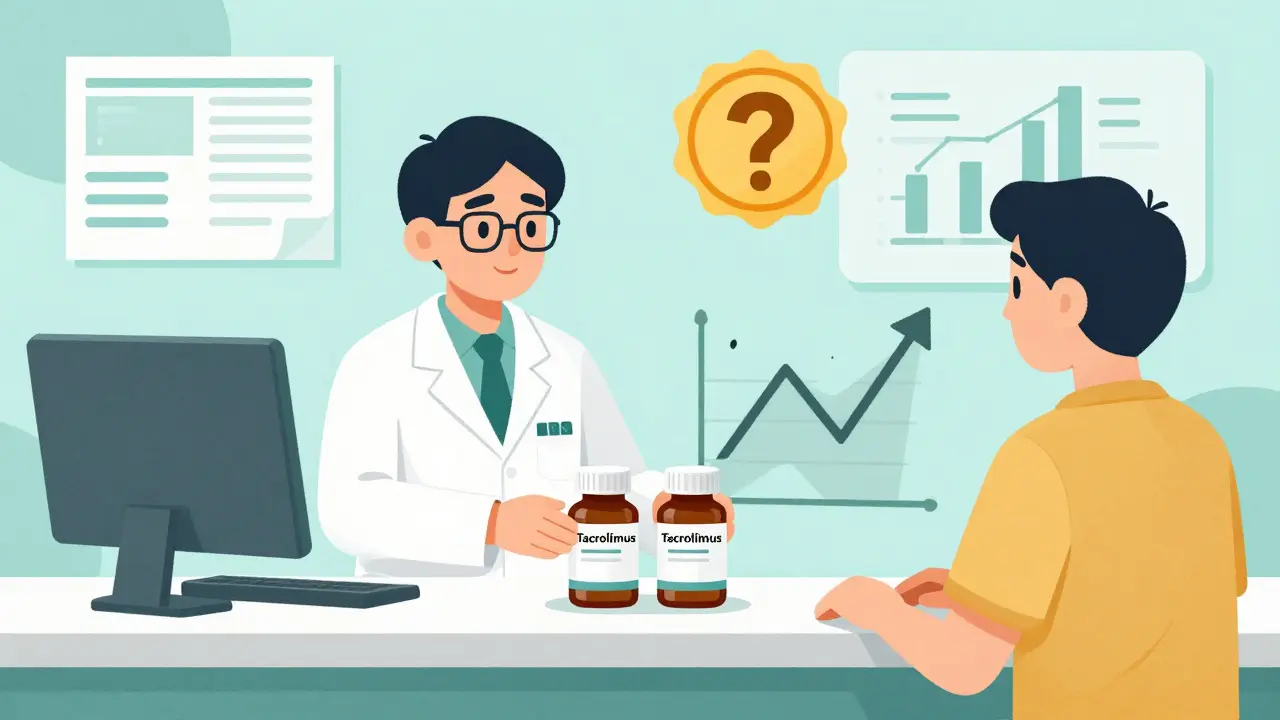
The FDA points to real-world data. A 2021 analysis of over 10,000 patients switching from brand-name Synthroid to generic levothyroxine found no meaningful difference in TSH levels. The average was 2.12 vs. 2.15 - a difference so small it wasn’t statistically significant. That’s reassuring. But that’s population data. What about you?
Some patients don’t respond to averages. A 2015 study of kidney transplant patients found that switching from one generic cyclosporine to another led to a 15.3% higher rate of acute rejection. Another study showed that switching between generic warfarin brands increased INR variability by 0.32 - enough to make doctors nervous, even if it didn’t cause more bleeding. These aren’t flukes. They’re real events happening to real people.
The American Academy of Neurology says: don’t automatically substitute generic antiepileptics. The Epilepsy Foundation has collected dozens of patient stories where a switch triggered breakthrough seizures. The FDA says it’s rare. But rare doesn’t mean zero. And for someone who just had a seizure, “rare” doesn’t matter.
What Should You Do?
If you’re on an NTI drug, here’s what you need to know:
- Ask your doctor to write “dispense as written” or “no substitution” on your prescription. This is your legal right.
- Check the label every time you fill your prescription. If the name changes - even if it’s still “levothyroxine” - ask why.
- Monitor symptoms. If you feel different after a switch - fatigue, dizziness, irregular heartbeat, mood changes - tell your doctor immediately. Don’t wait for your next appointment.
- Request blood tests. For drugs like lithium, warfarin, or tacrolimus, regular lab checks are non-negotiable. Don’t skip them, even if you feel fine.
- Know your state’s rules. If you live in a state that restricts NTI substitutions, you have more protection. If not, you need to be your own advocate.
There’s no perfect answer. The FDA’s data supports generic substitution. But clinical experience tells a different story. For some people, switching manufacturers is harmless. For others, it’s a disaster waiting to happen. The system is built on averages. But your body doesn’t care about averages. It cares about what works - and what doesn’t.
Why This Matters Beyond the Pharmacy
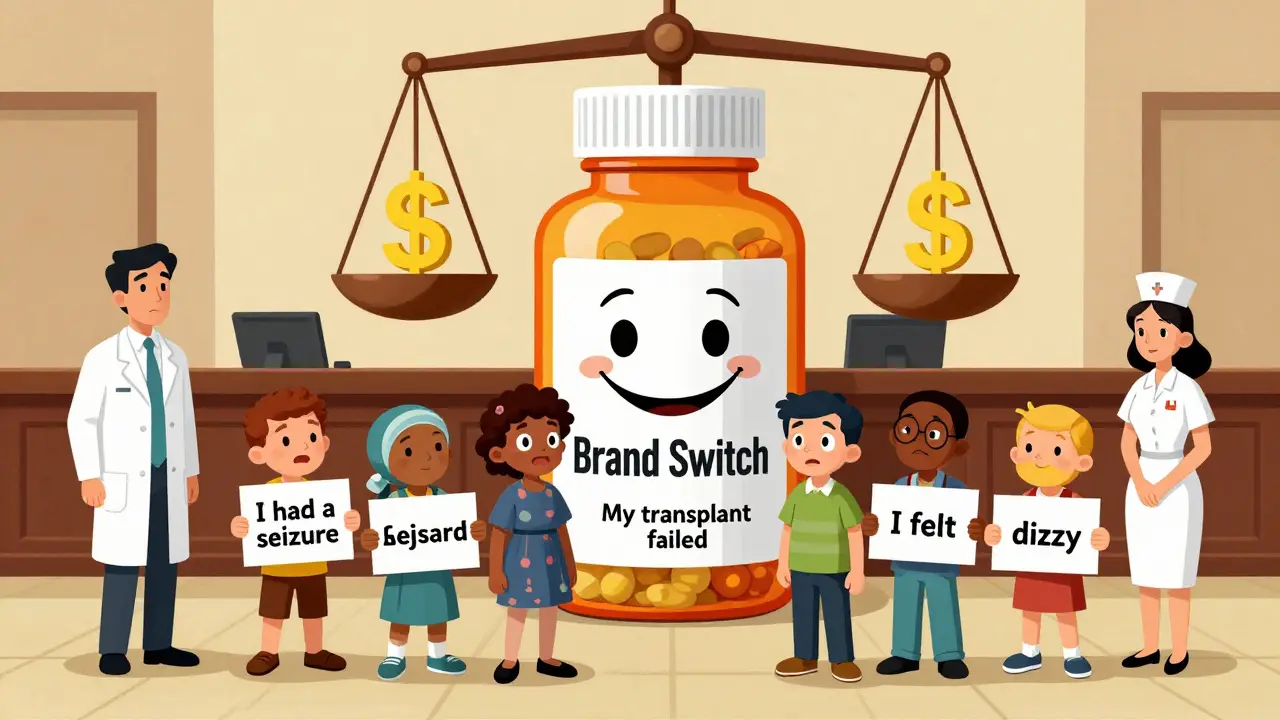
This isn’t just about pills. It’s about trust. Patients are told generics are interchangeable. But when your life depends on a drug with a 2:1 safety margin, “interchangeable” feels like a gamble. And it’s not just the manufacturers - brand-name companies change their formulas too. The AMA pointed out in 2007 that innovator companies switch ingredients and fillers all the time. If we’re worried about generic switches, shouldn’t we be just as worried about brand-name changes?
The truth? We don’t have enough data to say whether generic-to-generic switches are safe for every NTI drug in every patient. We have population studies. We have lab results. We have anecdotes. But we don’t have a clear, universal rule. That’s why the safest approach is personal: know your drug. Know your dose. Know your body. And don’t let a pharmacy’s cost-saving policy become your health risk.
What’s Next?
The FDA is still studying this. Their Post-market Research and Perceptions of Generic NTI Drugs initiative is tracking outcomes in real time. But until we have better tools to predict individual responses - like genetic testing or real-time blood monitoring - the burden falls on you. If you’re on an NTI drug, don’t assume everything’s fine just because the label says “generic.” Ask questions. Demand answers. Your health isn’t a commodity. It’s your life.


Write a comment