
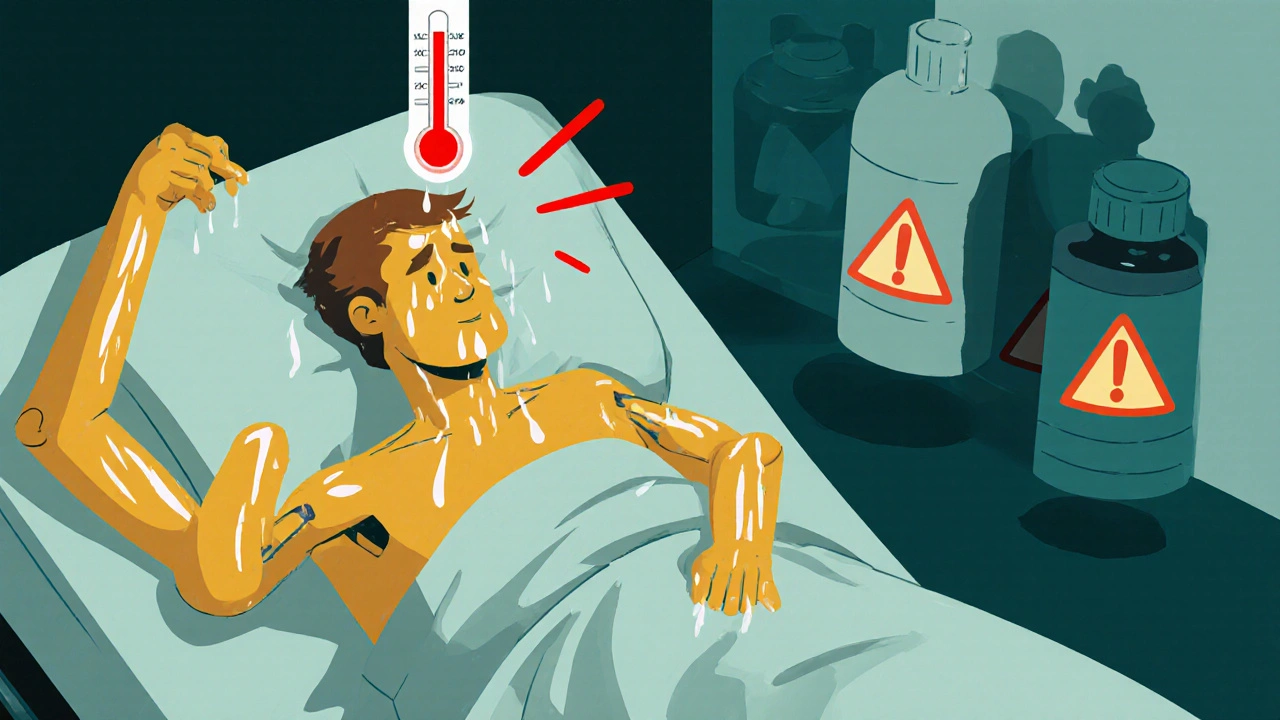
Neuroleptic Malignant Syndrome is not a common illness, but when it happens, it can turn deadly in hours. It doesn’t come with a warning sign. No rash. No cough. Just a slow, creeping collapse - muscles locking up, body temperature soaring, mind going foggy, heart racing out of control. And it’s triggered by medications many people take daily: antipsychotics, anti-nausea drugs, even some Parkinson’s treatments. If you or someone you care for is on these drugs, understanding NMS isn’t optional - it’s life-saving.
What Exactly Is Neuroleptic Malignant Syndrome?
Neuroleptic Malignant Syndrome, or NMS, is a severe reaction to drugs that block dopamine in the brain. Dopamine isn’t just about mood - it’s essential for movement, temperature control, and autonomic functions like heart rate and sweating. When these drugs - mostly antipsychotics - shut down dopamine receptors too hard, the body’s systems go haywire. The result? A dangerous mix of symptoms that look like a mix of infection, stroke, and extreme physical stress.
The classic signs - the four key markers - are hard to miss once you know them:
- Severe muscle rigidity - not just stiffness, but a deep, unyielding tightness called "lead pipe" rigidity. If you try to move someone’s arm, it feels like bending a steel rod.
- High fever - usually above 100.4°F (38°C), often spiking past 104°F (40°C). This isn’t a typical fever from a cold. It’s a runaway internal heat engine.
- Altered mental state - confusion, agitation, mutism, or even coma. People may seem like they’re having a psychotic break, but it’s not the illness - it’s the drug reaction.
- Autonomic instability - wild swings in blood pressure, fast heartbeat (over 90 bpm), rapid breathing, and drenching sweats.
These symptoms usually show up within the first two weeks of starting or increasing a neuroleptic drug. But they can appear as fast as 48 hours after a dose, or even months later. That unpredictability makes NMS so dangerous.
Who’s at Risk?
NMS doesn’t pick favorites, but certain factors raise the odds:
- First-generation antipsychotics - drugs like haloperidol and fluphenazine carry the highest risk. NMS occurred in up to 2% of people taking them before newer drugs came along.
- Rapid dose increases - jumping haloperidol by more than 5 mg per day is a known trigger.
- Parenteral administration - shots or IVs of antipsychotics, especially in emergency settings, spike risk.
- Combining medications - lithium, antidepressants, or even certain anti-nausea drugs like metoclopramide or promethazine can add fuel to the fire.
- Young males with mood disorders - studies show a 2:1 male-to-female ratio, and people with bipolar disorder are more vulnerable than those with schizophrenia.
Even more alarming: about 12% of NMS cases happen in people on "therapeutic" doses with no known risk factors. There’s no foolproof way to predict who will react.
It’s Not Just Antipsychotics
Many assume NMS only happens with psychiatric meds. It doesn’t. About 15% of cases come from drugs not meant for mental health:
- Metoclopramide (Reglan) - used for nausea and acid reflux
- Promethazine (Phenergan) - often given for motion sickness or vomiting
- Domperidone - sometimes used off-label for gastrointestinal issues
And it can even happen after stopping Parkinson’s meds like levodopa. If someone suddenly reduces or stops their dopamine-boosting drugs, NMS can kick in within 24 to 72 hours. That’s why tapering these medications slowly is non-negotiable.
How Is NMS Diagnosed?
There’s no single blood test for NMS. Diagnosis is clinical - meaning doctors put together the puzzle from symptoms, timing, and medication history. But lab tests help confirm it:
- CK levels - creatine kinase, a muscle enzyme, often skyrockets above 1,000 IU/L and can hit 100,000 IU/L. This signals massive muscle breakdown (rhabdomyolysis).
- White blood cell count - frequently over 12,000/µL, mimicking infection.
- Low serum iron - below 60 µg/dL, a subtle but consistent clue.
- Metabolic acidosis - blood becomes too acidic due to muscle breakdown.
- High potassium, liver enzymes, and creatinine - signs of kidney and liver stress from muscle breakdown products.
One of the biggest problems? Misdiagnosis. Up to 12% of NMS cases are initially labeled as worsening psychosis, infection, or heat stroke. In emergency rooms, only 60% of cases are correctly identified on the first try. That delay can be fatal.
NMS vs. Serotonin Syndrome vs. Malignant Hyperthermia
These three conditions look similar - fever, muscle rigidity, confusion - but they’re different beasts:
| Feature | Neuroleptic Malignant Syndrome (NMS) | Serotonin Syndrome | Malignant Hyperthermia |
|---|---|---|---|
| Onset | Days to 2 weeks | Hours | Minutes after anesthesia |
| Muscle rigidity | "Lead pipe" - uniform, constant | Clonus - rhythmic twitching, hyperreflexia | Generalized rigidity, masseter spasm (jaw clenching) |
| Trigger | Dopamine blockers (antipsychotics, metoclopramide) | Serotonin boosters (SSRIs, SNRIs, MDMA) | Volatile anesthetics or succinylcholine |
| Temperature | Often >104°F (40°C) | Usually <104°F | Rapid spike, often >107°F (41.6°C) |
| Key lab finding | CK >1,000 IU/L | Normal or mildly elevated CK | CK very high, high potassium, acidosis |
| Response to dantrolene | Yes | Not typically | Yes - first-line |
Getting this wrong can lead to deadly mistakes. Giving serotonin-blocking drugs to someone with NMS won’t help - and could make things worse. Treating malignant hyperthermia with antipsychotics is equally dangerous.
What Happens If It’s Not Treated?
Untreated NMS kills 10-20% of people. The main threats:
- Acute kidney failure - from myoglobin (a muscle protein) clogging the kidneys. About 30% of severe cases develop this.
- Disseminated intravascular coagulation (DIC) - blood clots and bleeding simultaneously.
- Respiratory failure - from muscle paralysis and high fever.
- Cardiac arrest - from electrolyte imbalances and heart stress.
Survivors often face weeks of recovery. One patient on a mental health forum described being unable to walk for eight weeks after NMS. Muscle damage from prolonged rigidity doesn’t heal overnight.
How Is It Treated?
Time is everything. The clock starts ticking the moment NMS is suspected. Here’s what needs to happen:
- Stop the drug immediately. All antipsychotics, antiemetics, or dopamine blockers must be discontinued. No exceptions.
- Get to the ICU. Continuous monitoring of temperature, heart, kidneys, and breathing is critical.
- Cool the body. Ice packs, cooling blankets, IV fluids - aim to bring temperature below 102°F (38.9°C).
- Hydrate aggressively. At least 1-2 liters of IV fluids upfront, then 100-150 mL/hour to flush out muscle breakdown products and protect kidneys.
- Use dantrolene. This muscle relaxant is given intravenously - 1-2.5 mg/kg, repeated as needed up to 10 mg/kg. It helps break the cycle of muscle rigidity and heat.
- Consider bromocriptine or amantadine. These dopamine agonists help restore brain dopamine activity. Bromocriptine is given orally every 8 hours.
- Monitor CK daily. Levels peak at 72-96 hours. They must drop steadily to avoid kidney damage.
Some hospitals are testing new treatments. A phase II trial using intranasal apomorphine (a dopamine agonist) showed temperature normalization in 70% of patients within 4 hours - compared to 12 hours with standard care. That’s a game-changer.
Can You Get NMS Again?
Yes - but it’s rare. If someone survives NMS, restarting antipsychotics is possible, but risky. Most doctors wait at least 2 weeks after full recovery. They start with a low-dose, second-generation antipsychotic like quetiapine or clozapine - drugs with lower dopamine-blocking power. Monitoring is strict: CK levels checked daily for the first week, temperature watched hourly.
But many survivors refuse to take any antipsychotics again. A 2022 survey found 65% of NMS survivors avoided these medications despite ongoing psychosis or mood instability. That creates a heartbreaking dilemma: mental health vs. physical survival.
What’s Changing in 2025?
Things are getting better - slowly.
- Second-generation antipsychotics (quetiapine, risperidone, olanzapine) have cut NMS rates from 0.5-2% to just 0.01-0.02%.
- The FDA now requires black box warnings on all antipsychotics, reminding doctors that NMS can happen even at "normal" doses.
- AI tools in hospitals are being trained to flag NMS risk 24 hours before symptoms appear, using EHR data like rising CK, fever spikes, and recent dose changes.
- Research into dopamine modulators - drugs that fine-tune dopamine instead of blocking it - could make NMS nearly obsolete within the next decade.
Still, awareness gaps remain. Emergency room staff, nurses, and even some psychiatrists don’t always recognize the early signs. The more people know - patients, families, caregivers - the faster NMS can be caught.
What Should You Do?
If you’re on an antipsychotic or dopamine-blocking drug:
- Know the symptoms. Write them down. Keep them in your phone.
- Tell your family or caregiver what to watch for - especially sudden rigidity or fever.
- Never stop your medication suddenly. Always taper under supervision.
- If you feel unusually stiff, hot, confused, or your heart races for no reason - go to the ER. Say: "I think I might have Neuroleptic Malignant Syndrome. I’m on [drug name]."
- Keep a list of all your medications - including over-the-counter ones like Reglan or Phenergan.
NMS is rare. But when it strikes, it doesn’t care about odds. It only cares about speed. The faster it’s recognized, the better the chance to survive - and recover fully.


Write a comment