
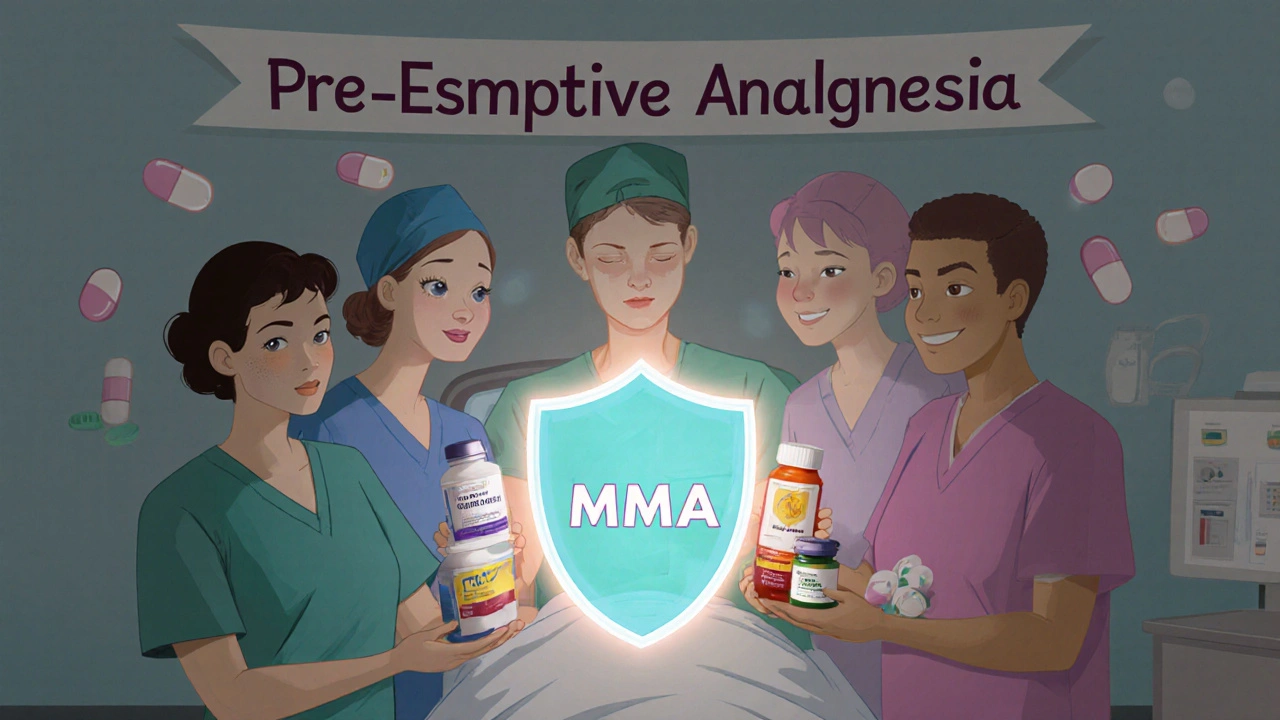
After surgery, pain doesn’t have to mean opioids. For years, patients were sent home with prescriptions for morphine or oxycodone as the default solution. But that approach is changing - fast. Today, the standard isn’t just about controlling pain. It’s about controlling it without relying on opioids. This shift isn’t based on guesswork. It’s backed by data, consensus, and real-world results from hospitals across the country.
Why Opioids Are No Longer the First Choice
Opioids work. That’s not in dispute. But they come with a long list of side effects: nausea, vomiting, constipation, drowsiness, and a real risk of dependence. For many patients, especially those recovering from joint replacements or spine surgery, these side effects slow recovery more than the pain itself. In 2021, 14 major medical societies - including the American Society of Anesthesiologists - came together to say: enough. They published a unified set of seven principles for acute pain management. The first? Use multimodal analgesia as the foundation.What does that mean in practice? Instead of giving a patient one strong opioid, doctors now use a mix of medications that target pain in different ways. This approach doesn’t just reduce opioid use - it often leads to better pain control overall. Studies show patients on multimodal protocols use 32% to 57% fewer opioids than those on traditional opioid-only regimens. And they report similar or even lower pain scores.
What Multimodal Analgesia Actually Looks Like
Multimodal analgesia (MMA) isn’t a single drug. It’s a carefully planned combination of non-opioid medications, regional anesthesia, and sometimes non-drug strategies. Think of it like a team: each member handles a different part of the pain signal.At Rush University Medical Center, the protocol for spine surgery starts before the patient even enters the operating room. They take acetaminophen, gabapentin, and celecoxib the night before and again the morning of surgery. During surgery, they get a low-dose IV ketamine, lidocaine, and dexmedetomidine - all drugs shown to reduce the brain’s sensitivity to pain. After surgery, they continue acetaminophen every six hours, celecoxib twice daily, and gabapentin three times daily. Opioids? Only if pain spikes above a set threshold - and even then, doses are tiny: 1-2 mg of morphine IV, given in 15-minute intervals as needed.
At McGovern Medical School, the trauma pain pathway adds naproxen (a powerful NSAID) to the mix. But they’re careful: naproxen is avoided if kidney function is low. Gabapentin doses are also lowered for patients with kidney issues. These aren’t random choices. They’re tailored to each patient’s body and surgery type.
For high-risk patients - those with chronic pain, opioid tolerance, or who specifically request opioid-free recovery - protocols expand further. Ketamine infusions, lidocaine drips, and dexmedetomidine infusions can be used for 24 to 48 hours. Some centers now use continuous numbing catheters placed near the surgical site, delivering local anesthetics directly to the area for days after surgery.
How Much Opioid Use Are We Actually Cutting?
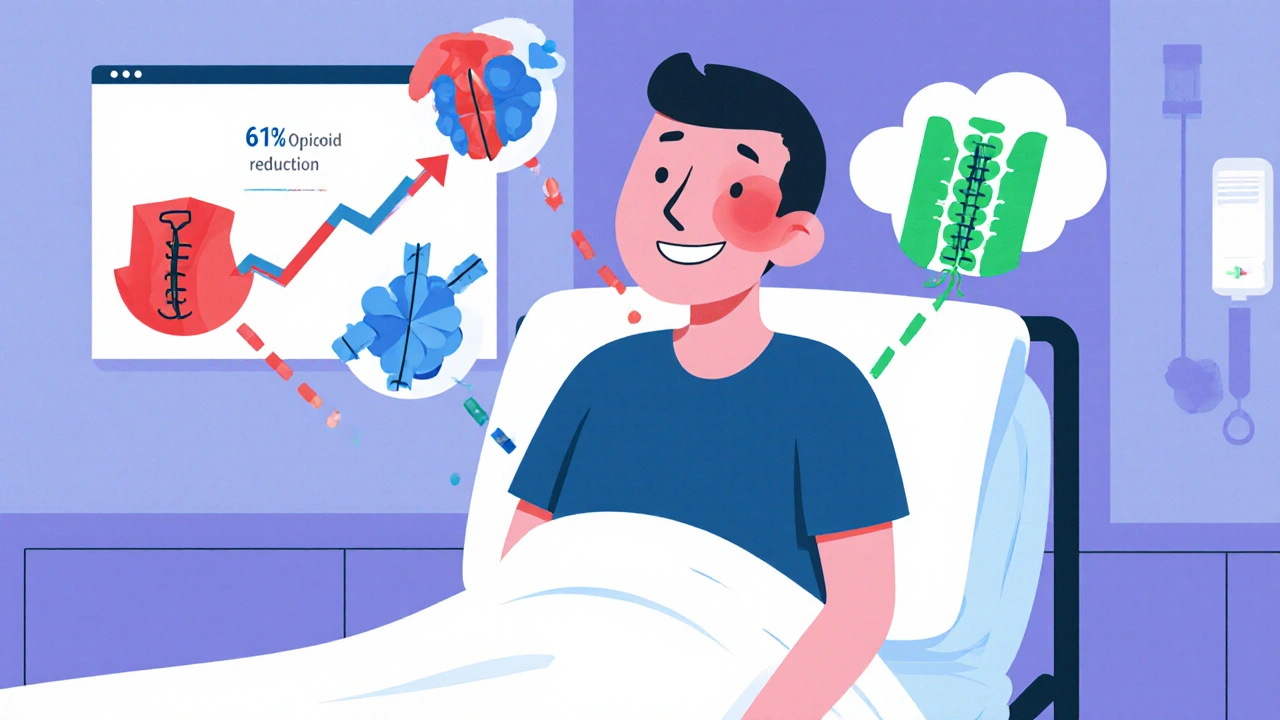
The numbers speak loudly. At Rush University, after implementing their MMA protocol, the average daily opioid dose dropped from 45.2 morphine milligram equivalents (MME) to just 18.7 MME. That’s a 61% reduction. And patients weren’t suffering - their pain scores stayed below 4 out of 10.In orthopedic surgeries like total knee or hip replacements, MMA cuts opioid needs by 50-60%. For minor procedures like arthroscopy, it’s still a 30-40% reduction. Even for non-surgical injuries, multimodal approaches can lower opioid use by 20-30%. And it’s not just about pills. Fewer opioids mean fewer side effects. One study found a 28% drop in postoperative nausea and vomiting compared to patients on IV opioids alone.
It’s not just about comfort - it’s about speed. At McGovern, implementing their trauma pain pathway reduced average hospital stays by 1.8 days. Same-day discharge rates jumped from 12% to 37% for eligible patients. That’s not magic. It’s better pain control leading to earlier mobility, fewer complications, and faster recovery.
It’s Not Just Medication - It’s a System
MMA isn’t a prescription you write and forget. It’s a coordinated system that starts before surgery and continues after discharge.Preoperative planning is critical. Patients need to start non-opioid meds before the incision is made. This isn’t optional - it’s called pre-emptive analgesia. The goal is to calm the nervous system before pain signals even start firing.
Then there’s the team. Anesthesiologists, surgeons, pharmacists, nurses, and pain specialists all need to be on the same page. A nurse might notice a patient’s pain score is rising. A pharmacist checks for drug interactions. A pain specialist decides if a nerve block is needed. If one person drops the ball, the whole system falters.
Documentation matters too. Hospitals now use validated pain scales - like the Numeric Rating Scale - and track pain every two hours for the first 24 hours. That data tells the team what’s working and what needs adjustment. No more guessing. No more giving the same dose regardless of response.
Who Benefits the Most?
MMA works best for procedures with predictable pain patterns: joint replacements, spine surgeries, abdominal operations, and major trauma cases. But it’s not one-size-fits-all.Patients with chronic pain, opioid dependence, or a history of substance use disorder benefit hugely. For them, avoiding opioids during recovery can prevent relapse or escalation. The American Academy of Pain Medicine explicitly advises against opioid monotherapy in these patients - even if they’re already on long-term opioids.
Older adults, people with kidney or liver disease, and those with a history of GI bleeding also benefit. NSAIDs like naproxen are avoided in patients with low kidney function. Gabapentin doses are cut in half. Acetaminophen is dosed carefully in those with liver issues. MMA isn’t just about adding drugs - it’s about removing risks.
Even patients who don’t have high-risk factors gain from this approach. Less nausea means they can eat sooner. Less drowsiness means they can walk and breathe deeply. That reduces the risk of pneumonia and blood clots. It’s not just pain control - it’s recovery optimization.
What’s Next? The Future of Pain Management
By 2025, the American Society of Anesthesiologists predicts 85% of major surgeries will use formal MMA protocols - up from 60% in 2022. That’s not just a trend. It’s becoming the new baseline.Emerging tools include extended-release gabapentinoids prescribed for 5-10 days after discharge to prevent pain from turning chronic. Continuous wound infusion catheters are becoming more common, especially for large incisions. Some centers are testing non-drug methods like acupuncture, mindfulness, and cold therapy as part of the protocol.
One of the biggest challenges? Access. Not every hospital has ultrasound machines for nerve blocks. Not every pharmacy stocks the right combination of meds. Not every nurse is trained to manage infusions. That’s why the consensus statement stresses education and infrastructure. You can’t implement MMA without the right tools and the right team.
The message is clear: opioids should be the last resort, not the first. If non-opioid options don’t control pain, then opioids are added - but only as needed, and only in the smallest effective dose. This isn’t about eliminating opioids entirely. It’s about using them wisely.
What You Can Do as a Patient
If you’re facing surgery, ask your care team: "What’s my pain plan?" Don’t assume opioids are the default. Ask if they use multimodal analgesia. Ask what non-opioid options they offer. Ask if you can start medications before surgery. Ask if they’ll monitor your pain closely after the operation.Many patients fear their pain won’t be taken seriously if they refuse opioids. But the truth is, doctors now want to avoid them. They know the risks. They’ve seen the data. If you express a preference for opioid-free recovery, you’re not being difficult - you’re helping them do their job better.
Recovery isn’t about enduring pain. It’s about moving through it with as little disruption as possible. Multimodal analgesia makes that possible - without the baggage of opioids.


Write a comment