

If you’ve ever looked in the mirror and seen a pink, fleshy wedge growing from the white of your eye toward your pupil, you’re not alone. This is pterygium-often called "Surfer’s Eye"-and it’s more common than most people realize. It doesn’t come out of nowhere. It grows slowly, quietly, and it’s directly tied to something we all can’t avoid: sunlight.
What Exactly Is Pterygium?
Pterygium is a noncancerous growth that starts on the conjunctiva, the clear, thin membrane covering the white part of your eye. Over time, it creeps onto the cornea, the clear front surface of your eye. It looks like a wing-shaped bump-hence the name, from the Greek word pterygion, meaning "little wing." It’s usually pink or red, with visible tiny blood vessels. Most often, it begins on the side of the eye closest to your nose. It’s not a tumor. It won’t spread inside your body. But it can mess with your vision. When it grows far enough across the cornea, it distorts the shape of your eye, causing astigmatism. That means blurry or double vision. It can also make wearing contact lenses painful or impossible. Some people just feel constant grittiness, like sand is stuck in their eye. About 12% of Australian men over 60 have it. In places near the equator, rates jump even higher. Around 60% of people in tropical zones develop it in both eyes. And it’s not just surfers. Farmers, construction workers, fishermen, and anyone who spends hours outside without eye protection are at risk.Why Does Sunlight Cause It?
Ultraviolet (UV) light is the main driver. It’s not just a theory-it’s backed by decades of research. People living within 30 degrees of the equator have 2.3 times the risk of developing pterygium compared to those farther north or south. Why? Because UV radiation hits the eye more directly there. Studies show that if your total UV exposure hits 15,000 joules per square meter over your lifetime, your risk jumps by 78%. That’s the equivalent of roughly 30 minutes of direct sun exposure every day for 30 years. And it adds up. Even on cloudy days, up to 80% of UV rays still get through. The growth happens because UV light triggers inflammation and abnormal cell growth in the conjunctiva. Think of it like sunburn on your skin-but on the eye. Over time, the tissue thickens, stretches, and starts creeping forward. That’s why people who work outdoors, especially in reflective environments like water, snow, or sand, are hit hardest.How Is It Diagnosed?
No blood tests. No scans. Just a simple exam with a slit-lamp-a specialized microscope that magnifies the eye 10 to 40 times. Your eye doctor looks at the shape, color, and how far the growth has moved onto the cornea. If it’s just a small bump on the white of the eye, it’s likely a pinguecula-a similar but less serious bump that doesn’t reach the cornea. Once it crosses that line, it’s pterygium. There’s no standard way to measure how fast it’s growing, which is a problem. One doctor might say, "Watch it," while another might suggest surgery right away. That’s why tracking it over time matters. Take photos during each visit. Note changes in size, redness, or vision. Keep a log. That helps your doctor make smarter decisions.Can You Stop It From Growing?
Yes-if you act early. The best treatment for early-stage pterygium isn’t surgery. It’s prevention. Wear UV-blocking sunglasses every day, even when it’s cloudy. Look for lenses labeled as blocking 99-100% of UVA and UVB rays. ANSI Z80.3-2020 is the standard to check for. Wraparound styles work best-they stop UV from sneaking in from the sides. Pair that with a wide-brimmed hat. That cuts UV exposure to your eyes by another 50%. If you’re outside for more than 20 minutes, especially between 10 a.m. and 4 p.m., protect your eyes like you’d protect your skin. Artificial tears can help with dryness and irritation, but they won’t shrink the growth. Still, keeping your eyes lubricated reduces inflammation and makes daily life easier. In 2023, the FDA approved a new preservative-free lubricant called OcuGel Plus, specifically designed for post-surgery or irritated eyes. Many patients report 32% more comfort than with regular drops. If you catch it early and stick to sun protection, many pterygia stop growing completely. One patient on Reddit, an outdoor photographer, said his growth didn’t change in size over two years after he started wearing UV glasses daily.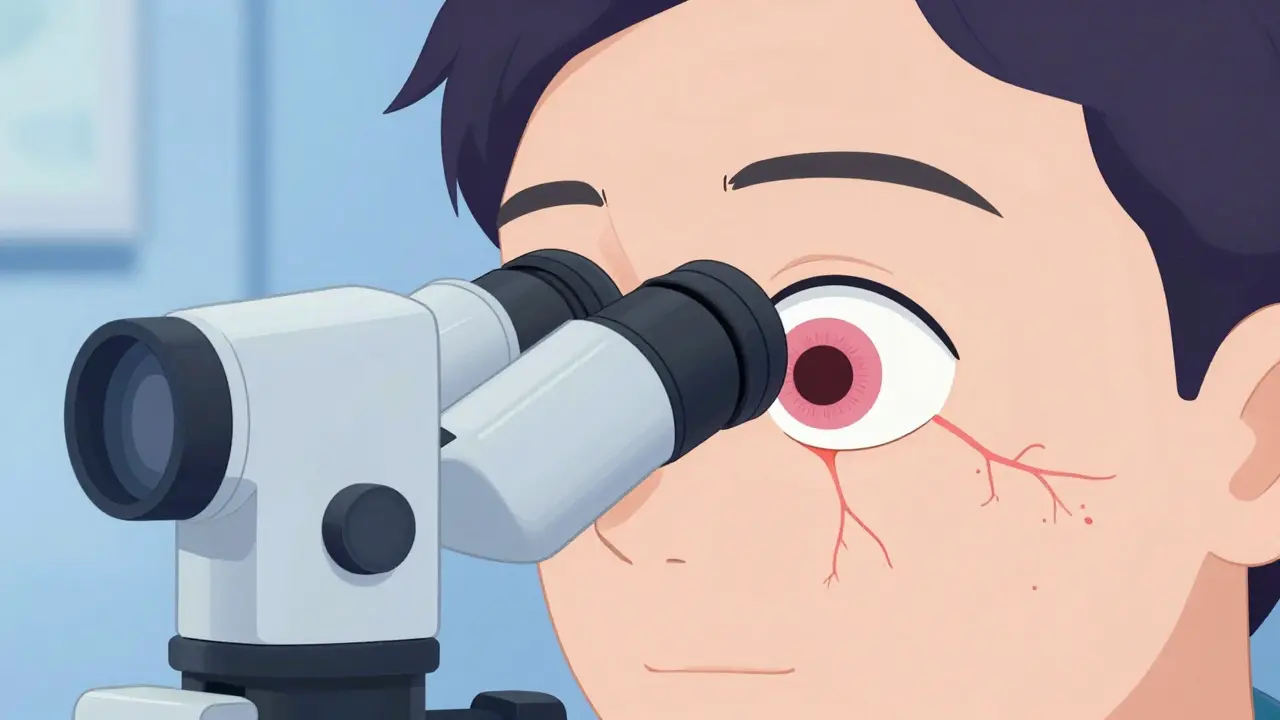
When Is Surgery Necessary?
Surgery isn’t for everyone. Most people never need it. But if your vision is blurry, you can’t wear contacts, or the growth is visibly ugly and bothers you, it’s time to talk to an ophthalmologist. The most common procedure is surgical removal. But here’s the catch: without extra steps, it comes back. In the past, recurrence rates were 30-40%. That’s why modern surgery includes one of two key techniques:- Conjunctival autograft: The surgeon removes the pterygium and replaces it with a tiny piece of healthy conjunctiva taken from another part of your eye (usually under your upper lid). This acts like a bandage and a barrier. Recurrence rate? Just 8.7%.
- Mitomycin C: A drug applied during surgery that kills off the cells that cause regrowth. Used alone or with a graft, it drops recurrence to 5-10%.
What’s Recovery Like?
Recovery isn’t glamorous, but it’s manageable. For the first week, your eye will be red, swollen, and watery. You’ll need steroid eye drops for 4-6 weeks to calm inflammation. Skipping doses? That’s a fast track to recurrence. One patient on RealSelf said, "The drops were harder than the surgery." You’ll feel grittiness for 2-3 weeks. Avoid swimming, dusty places, and rubbing your eye. Most people return to normal activities within 10 days, but full healing takes 6-8 weeks. About 37% of patients complain about lingering redness during healing. That’s normal. It fades over time. But if your vision gets worse, your eye becomes extremely painful, or you see flashes of light, call your doctor right away. Those aren’t typical.Why Do Some People Get It Back?
Recurrence isn’t random. It’s usually tied to two things: not using UV protection after surgery, or not following the drop regimen. A 2022 survey by the National Eye Institute found 32% of surgical patients had regrowth within 18 months. Almost all of them admitted they stopped wearing sunglasses regularly after recovery. Others skipped steroid drops because they felt fine. The truth? Even after surgery, your eye is still vulnerable. The tissue that grew before can grow again if UV exposure continues. That’s why post-op care is just as important as the surgery itself.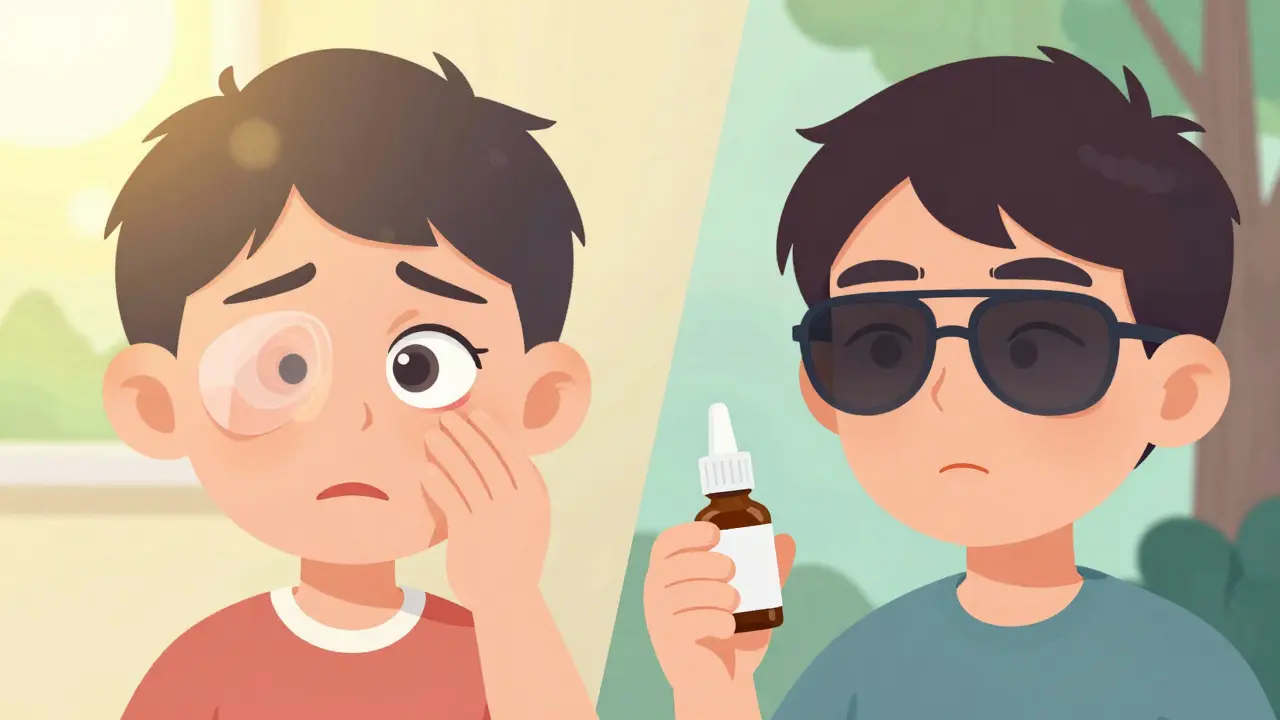
What’s New in Treatment?
The future of pterygium treatment is getting smarter. Researchers are testing topical rapamycin, a drug that blocks cell growth. In early trials, it cut recurrence by 67% compared to placebo. It’s not approved yet, but Phase II trials are ongoing. Laser-assisted removal is coming too. By 2027, 78% of eye surgeons expect to use lasers to precisely remove pterygium with less tissue damage and faster healing. It’s still experimental, but promising. The market for treatments is growing fast. It was worth $1.27 billion in 2023 and could hit $1.89 billion by 2028. That’s because more people are being diagnosed, and better techniques are making surgery safer and more effective.Who’s Most at Risk?
Men are 1.5 times more likely to get pterygium than women. Why? Probably because more men work in outdoor jobs-farming, fishing, construction. The International Labour Organization found that outdoor workers in tropical regions have double the risk of indoor workers. Age matters too. Most cases show up between 30 and 60. But kids aren’t immune. Children in sunny areas who don’t wear sunglasses can develop early signs. And location? Huge factor. Sixty-five percent of all cases happen between 30°N and 30°S latitude. Australia, Brazil, India, and parts of Africa have the highest rates. In Australia, 23% of adults over 40 have it.What If You Live in a Low-Risk Area?
Even if you don’t live near the equator, UV exposure still matters. Snow reflects 80% of UV rays. Water reflects 25%. Even in winter, if you’re skiing, boating, or just walking outside, your eyes are getting hit. The World Health Organization says UV levels above 3.0 require eye protection. That happens more than 200 days a year in most populated areas-even in places like Canada or northern Europe. Don’t wait until you see a growth. Start protecting your eyes now. Sunglasses aren’t fashion. They’re medical equipment.Final Thoughts
Pterygium isn’t dangerous. But it’s preventable. And if it’s left unchecked, it can steal your vision. The good news? You have control. Wear UV-blocking sunglasses and a hat every day. Get your eyes checked yearly, especially if you spend time outdoors. Catch it early, and you might never need surgery. If you do need surgery, know your options. Conjunctival autograft with mitomycin C is the gold standard. Follow your drop schedule. Keep wearing sunglasses-even after surgery. Your eyes don’t heal themselves. But with the right habits, you can stop this growth before it starts-or keep it from coming back.Can pterygium cause blindness?
No, pterygium doesn’t cause total blindness. But if it grows large enough to cover the pupil, it can significantly blur vision by distorting the cornea’s shape. This can make driving, reading, or working difficult. In rare cases, untreated pterygium can lead to permanent vision loss if it causes severe astigmatism or scarring. Early treatment prevents this.
Is pterygium the same as pinguecula?
No. Both are caused by sun damage, but pinguecula stays on the white part of the eye (conjunctiva) and never crosses onto the clear cornea. Pterygium does. Pinguecula is more common-about 70% of outdoor workers in tropical areas have it-but it rarely affects vision. Pterygium is less common but more likely to interfere with sight.
Can pterygium go away on its own?
No. Once it forms, pterygium won’t shrink or disappear without treatment. Some may stop growing if UV exposure is reduced, but they won’t vanish. Surgery is the only way to remove it. Eye drops or ointments can ease symptoms but won’t remove the tissue.
How long does pterygium surgery take?
Most pterygium surgeries take between 30 and 40 minutes. It’s done as an outpatient procedure under local anesthesia. You’ll be awake but won’t feel pain. Recovery starts immediately, but full healing takes 6-8 weeks. Most people return to normal activities within 10 days.
Are there non-surgical treatments for pterygium?
Yes, but only for symptom relief. Lubricating eye drops, anti-inflammatory drops, and UV protection can reduce redness, grittiness, and slow growth. But they don’t remove the tissue. Surgery is the only way to eliminate it. If vision isn’t affected and symptoms are mild, doctors often recommend watching it rather than operating.
Can children get pterygium?
Yes, though it’s less common. Children in sunny climates who don’t wear sunglasses or hats are at risk. Early signs include a small pink patch on the white of the eye. Prevention is key: UV-blocking sunglasses and hats should be worn daily from childhood, especially near water, snow, or sand.
How can I tell if my pterygium is getting worse?
Watch for changes: increased redness, growing size, blurred vision, difficulty wearing contacts, or a feeling that something is always in your eye. If the growth moves closer to your pupil, it’s advancing. Take photos during eye exams to compare. If you notice any of these signs, schedule a check-up. Don’t wait until it hurts.


Write a comment