
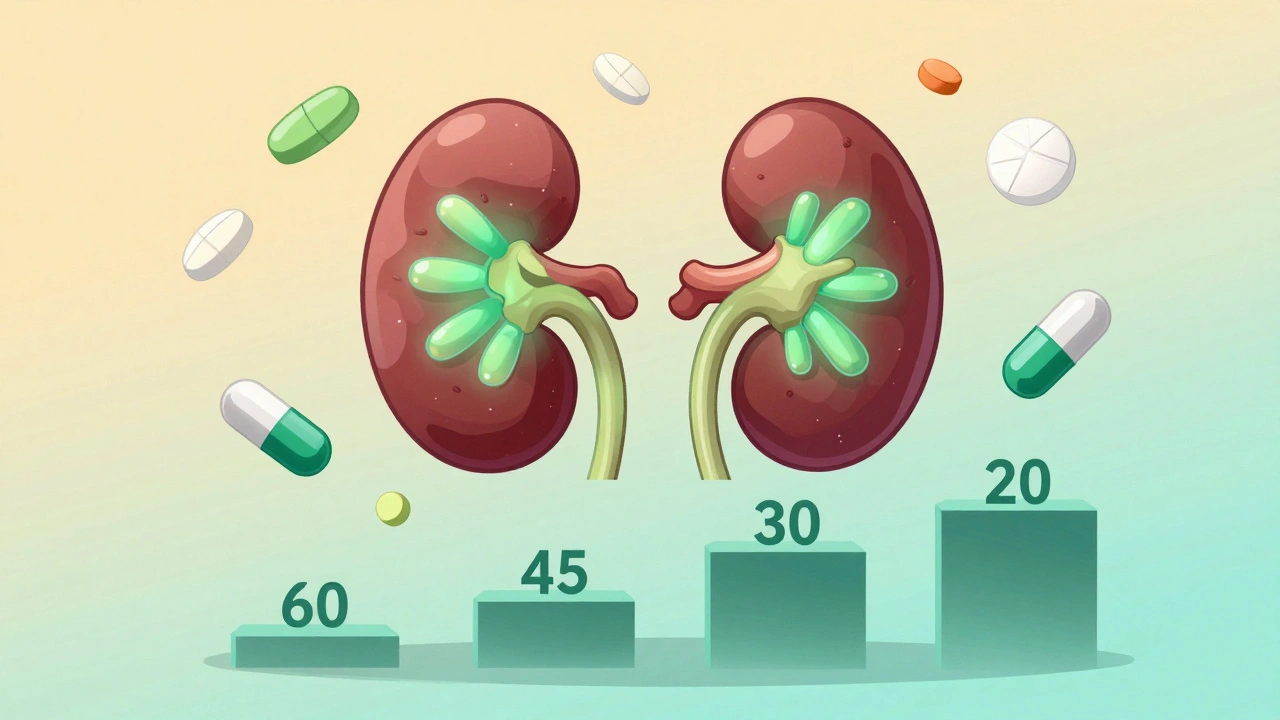
Renal Dosing Calculator for Metformin and SGLT2 Inhibitors
eGFR-Based Dosing Calculator
Enter the patient's eGFR value to receive evidence-based dosing recommendations for metformin and SGLT2 inhibitors.
Metformin
SGLT2 Inhibitors
For people with type 2 diabetes and kidney disease, choosing the right medication isn’t just about lowering blood sugar-it’s about protecting the kidneys while avoiding dangerous side effects. Two of the most commonly used drugs, metformin and SGLT2 inhibitors, have seen major changes in how they’re dosed when kidney function declines. What used to be a hard stop at low eGFR levels is now a nuanced, evidence-based approach. If you’re managing diabetes in someone with chronic kidney disease (CKD), here’s exactly when and how to adjust these drugs-based on the latest guidelines from 2023 and real-world clinical experience.
Understanding eGFR and Why It Matters
eGFR, or estimated glomerular filtration rate, measures how well your kidneys are filtering waste. It’s not a direct test-it’s calculated from your age, sex, race, and serum creatinine level. But it’s the single most important number when deciding whether to keep, reduce, or stop diabetes meds.
For decades, doctors were told to avoid metformin if eGFR fell below 60 mL/min/1.73 m². That changed after a 2016 FDA safety update and later, a flood of data from major trials like CREDENCE, DAPA-CKD, and EMPA-KIDNEY. These studies showed that SGLT2 inhibitors don’t just control blood sugar-they slow kidney decline, reduce heart failure, and lower death risk-even in patients with eGFR as low as 20.
Today, the standard isn’t just about safety. It’s about maximizing benefit. The Kidney Disease: Improving Global Outcomes (KDIGO) 2022 guidelines and the American Diabetes Association (ADA) 2022 Standards of Care now agree: if your eGFR is 20 or above, you should be on an SGLT2 inhibitor, even if you’re already on metformin.
Metformin Dosing by eGFR: What’s Safe Now?
Metformin is still the first-line drug for type 2 diabetes. But its use in CKD has been misunderstood for years. The old rule-stop metformin at eGFR <60-is outdated. Here’s the current, evidence-based dosing:
- eGFR ≥60 mL/min/1.73 m²: Max dose is 2550 mg per day. No restrictions.
- eGFR 45-59 mL/min/1.73 m²: Max dose is 2000 mg per day. Monitor every 3-6 months.
- eGFR 30-44 mL/min/1.73 m²: Max dose is 1000 mg per day. Monitor every 3 months. Avoid in acute illness.
- eGFR <30 mL/min/1.73 m²: Contraindicated. Do not start. Consider discontinuing if already on it.
Some experts, especially in nephrology, will cautiously continue 500 mg daily in stable patients with eGFR 15-29 mL/min/1.73 m²-but this is off-label and requires close supervision. The risk of lactic acidosis is extremely low: about 3.3 cases per 100,000 patient-years, according to a 2014 BMJ study. That’s less than the risk of a car accident on a daily commute.
What’s critical: don’t stop metformin just because eGFR dips slightly after starting an SGLT2 inhibitor. A 2-5 mL/min/1.73 m² drop in the first few weeks is normal-it’s a sign the drug is working, not failing.
SGLT2 Inhibitors: Dosing Rules That Vary by Drug
Not all SGLT2 inhibitors are the same when it comes to kidney dosing. Each has different FDA labeling and guideline recommendations. Here’s the breakdown:
| Drug | eGFR ≥60 | eGFR 45-59 | eGFR 30-44 | eGFR 25-29 | eGFR 20-24 | eGFR <20 |
|---|---|---|---|---|---|---|
| Canagliflozin | 100-300 mg/day | ≤100 mg/day | Contraindicated | Contraindicated | Contraindicated | Do not use |
| Dapagliflozin | 5-10 mg/day | 5-10 mg/day | 5-10 mg/day | 5-10 mg/day | 5-10 mg/day | Contraindicated |
| Empagliflozin | 10-25 mg/day | 10-25 mg/day | ≤10 mg/day | ≤10 mg/day | ≤10 mg/day | Contraindicated |
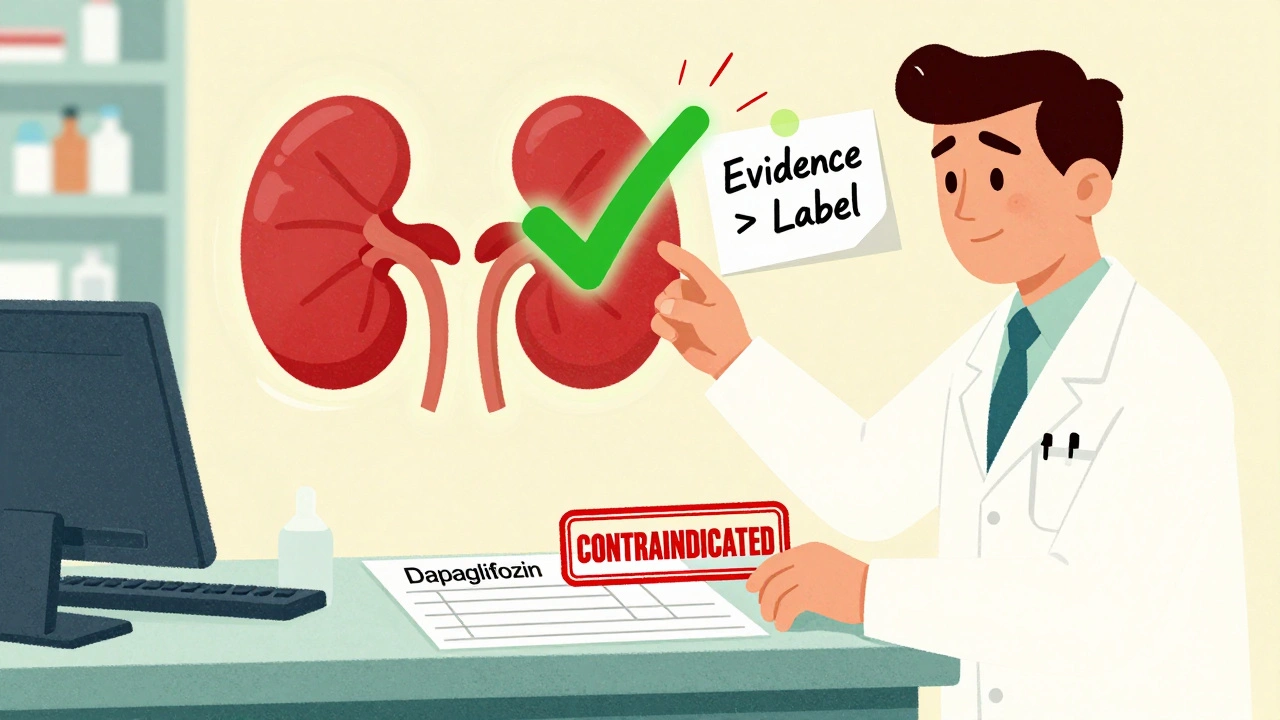
Here’s the catch: KDIGO recommends SGLT2 inhibitors for eGFR ≥20, but the FDA labeling for canagliflozin still says “contraindicated below 45”. That creates real-world problems. A patient might be doing great on dapagliflozin with an eGFR of 22, but their insurance denies the prescription because it’s “off-label” per FDA rules.
Doctors are increasingly choosing to follow guidelines over labels. As Dr. Katherine R. Tuttle, lead author of the KDIGO update, said: “The evidence supporting kidney protection is so compelling, we lowered the threshold to 20.”
The Sweet Spot: Using Both Drugs Together
One of the biggest shifts in diabetes care is the move toward combining metformin and SGLT2 inhibitors early-even in patients with CKD.
For eGFR ≥60: Start both. This combo reduces HbA1c, weight, blood pressure, and slows kidney decline better than either drug alone.
For eGFR 30-44: Keep metformin at ≤1000 mg/day. Add an SGLT2 inhibitor if eGFR is ≥20. Dapagliflozin or empagliflozin are preferred here.
For eGFR 20-29: This is the narrow window where things get tricky. Metformin is no longer recommended-you should stop it. But you can and should start or continue an SGLT2 inhibitor. The KDIGO guidelines explicitly say: “Metformin may be given when eGFR is ≥30; SGLT2 inhibitor therapy should be initiated when eGFR is ≥20.” That means between 20 and 29, you’re on an SGLT2 inhibitor only.
Why does this matter? Because patients with eGFR 20-29 are at the highest risk of progressing to kidney failure. SGLT2 inhibitors reduce that risk by 30-40%. Stopping metformin here isn’t a loss-it’s a necessary step to keep the kidney-protective drug going.
When to Hold or Stop: Sick Days and Acute Risks
Neither metformin nor SGLT2 inhibitors should be used during acute illness. That means:
- Severe infection (pneumonia, sepsis)
- Dehydration from vomiting, diarrhea, or heat
- Major surgery
- Acute kidney injury
For metformin: Hold during these events. Restart only after kidney function returns to baseline and you’re eating normally.
For SGLT2 inhibitors: The same rules apply. In fact, the risk of volume depletion is higher when eGFR is low. Patients on loop diuretics (like furosemide) are especially vulnerable. If someone’s eGFR drops from 35 to 28 after a bout of gastroenteritis, don’t just assume the drug failed. Check volume status, hold the SGLT2 inhibitor for a few days, and retest.
And here’s a key point: if eGFR drops below 20 but the patient is stable and tolerating the drug, don’t automatically stop it. KDIGO says: “It is reasonable to continue an SGLT2 inhibitor even if eGFR falls below 20, unless it’s not tolerated or kidney replacement therapy is initiated.”
Monitoring: How Often to Check Kidney Function
Regular monitoring isn’t optional-it’s life-saving.
- eGFR ≥60: Check every 6-12 months.
- eGFR 45-59: Check every 3-6 months.
- eGFR 30-44: Check every 3 months.
- eGFR 20-29: Check every 1-3 months, especially after starting or adjusting SGLT2 inhibitors.
Also check within 2-4 weeks after starting an SGLT2 inhibitor. The initial dip in eGFR is expected. If it drops more than 10% or doesn’t stabilize by 3 months, reassess for volume depletion or other causes.
Don’t forget to check for signs of dehydration: dry mouth, low blood pressure, dizziness, or reduced urine output. These are red flags for SGLT2 inhibitor-related complications.
Real-World Challenges: Insurance, Labels, and Confusion
Guidelines and reality don’t always match. A 2022 survey by the American Diabetes Association found that 43% of endocrinologists had insurance claims denied for SGLT2 inhibitors when eGFR was between 20-29 mL/min/1.73 m². Why? Because the FDA label says “contraindicated.”
Doctors are caught in the middle. One nephrologist on the American Society of Nephrology forum reported continuing dapagliflozin in patients with eGFR as low as 18-19-no adverse events, clear kidney protection. Another primary care doctor, following FDA labeling, discontinued empagliflozin when eGFR fell from 32 to 27, only to face backlash from the nephrology team.
Insurance companies aren’t wrong to follow FDA labels. But clinicians aren’t wrong to follow evidence. The KDIGO guidelines are clear: “Clinicians should follow evidence-based clinical practice guidelines rather than regulatory labeling when they conflict.”
What you can do: Document your reasoning. Note the KDIGO 2022 recommendation, the patient’s clinical benefit, and the absence of side effects. Appeal denials with this evidence. Many insurers are now updating policies based on real-world outcomes.
What’s Next? The Future of Kidney-Safe Diabetes Care
The FDA approved dapagliflozin in February 2024 for chronic kidney disease-even in people without diabetes. That’s huge. It means the kidney protection of SGLT2 inhibitors is now recognized as a standalone benefit.
By 2025, we’ll likely see updated guidelines from ADA and KDIGO that further clarify use in eGFR 15-19. Early data suggest these drugs still work here. The big question isn’t whether they work-it’s how to manage them safely when kidneys are this impaired.
For now, the message is clear: don’t let outdated dosing rules keep patients from life-saving therapy. If your eGFR is above 20, you’re likely a candidate for an SGLT2 inhibitor. If it’s above 30, you can still take metformin. And if your eGFR drops after starting one of these drugs? Don’t panic. Reassess. Monitor. And don’t stop the therapy unless you have to.
The goal isn’t just to manage blood sugar. It’s to keep people off dialysis, out of the hospital, and alive longer. That’s what modern diabetes care looks like.
Can I still take metformin if my eGFR is 25?
No. According to KDIGO and ADA guidelines, metformin should be stopped when eGFR falls below 30 mL/min/1.73 m². At an eGFR of 25, you’re in the range where SGLT2 inhibitors are recommended, but metformin is no longer considered safe. Switch to an SGLT2 inhibitor like dapagliflozin or empagliflozin, which are still safe and effective at this level.
Why did my eGFR drop after starting dapagliflozin?
It’s normal. SGLT2 inhibitors cause a small, temporary drop in eGFR-usually 2-5 mL/min/1.73 m²-within the first 4-6 weeks. This isn’t kidney damage; it’s a sign the drug is working. The kidneys are adjusting to reduced pressure in the filtering units. Most patients’ eGFR stabilizes or even improves after 3 months. Don’t stop the drug unless the drop is more than 10% or you have signs of dehydration.
Is it safe to take SGLT2 inhibitors if I’m on dialysis?
No. SGLT2 inhibitors are not recommended for patients on dialysis. These drugs work by making the kidneys excrete sugar, and if your kidneys aren’t filtering, the drug can’t do its job. There’s no evidence of benefit, and the risk of dehydration or infection increases. If you’re on dialysis, focus on insulin or other non-renal cleared medications like linagliptin.
Can I restart metformin if my eGFR improves?
Yes. If your eGFR rises back to 30 mL/min/1.73 m² or higher after being low, and you’re otherwise stable, you can restart metformin at a reduced dose (500-1000 mg/day). Monitor kidney function every 3 months after restarting. Don’t jump back to the old high dose-start low and go slow.
What if my insurance denies my SGLT2 inhibitor prescription?
Appeal it. Provide documentation from your doctor citing the KDIGO 2022 guidelines and your clinical need. Include lab results showing your eGFR and evidence of kidney protection (like reduced urine albumin). Many insurers now approve these prescriptions when supported by clinical guidelines, not just FDA labels. If your provider doesn’t help, contact patient advocacy groups like the American Diabetes Association-they have templates for appeals.
Are there any SGLT2 inhibitors that are safer than others for kidney patients?
Dapagliflozin and empagliflozin have the strongest evidence for kidney protection at low eGFR levels. Canagliflozin is less recommended below eGFR 45 due to stricter FDA labeling and less data in advanced CKD. Dapagliflozin is also approved for non-diabetic CKD, making it the most versatile choice for kidney protection across patient groups.


Write a comment