
Antidepressant Sexual Side Effects Calculator
Compare sexual side effects across common antidepressants and find alternatives with fewer sexual side effects
Select Your Antidepressant
Choose the antidepressant you're taking or considering
Your Symptoms
Check the symptoms you're experiencing
How to Use This Tool
This tool shows the likelihood of sexual side effects based on clinical data from the article. Select your antidepressant and any symptoms you're experiencing to get personalized insights.
Why This Matters
Sexual side effects affect 35-80% of people on SSRIs. Many stop taking their medication, risking a relapse of depression. Finding alternatives with fewer sexual side effects can help maintain mental health without sacrificing intimacy.
Your Risk Assessment
Based on your selection, has risk of sexual side effects.
Recommended Alternatives
Bupropion (Wellbutrin)
Bupropion is shown in 4 clinical trials to cause significantly less sexual dysfunction than SSRIs. 68% of patients improved after switching from an SSRI to bupropion.
Mirtazapine (Remeron)
Mirtazapine shows minimal impact on libido and orgasm according to European studies.
Esketamine (Spravato)
Only 3.2% of users reported sexual side effects in trials, but it's expensive and requires clinic visits.
What to Ask Your Doctor
- "Could my sexual problems be from the medication?"
- "What are the lowest-risk antidepressants for libido and orgasm?"
- "Can we try switching to bupropion?"
- "Would adding a low dose of bupropion help?"
- "Can we use the ASEX scale to track sexual function?"
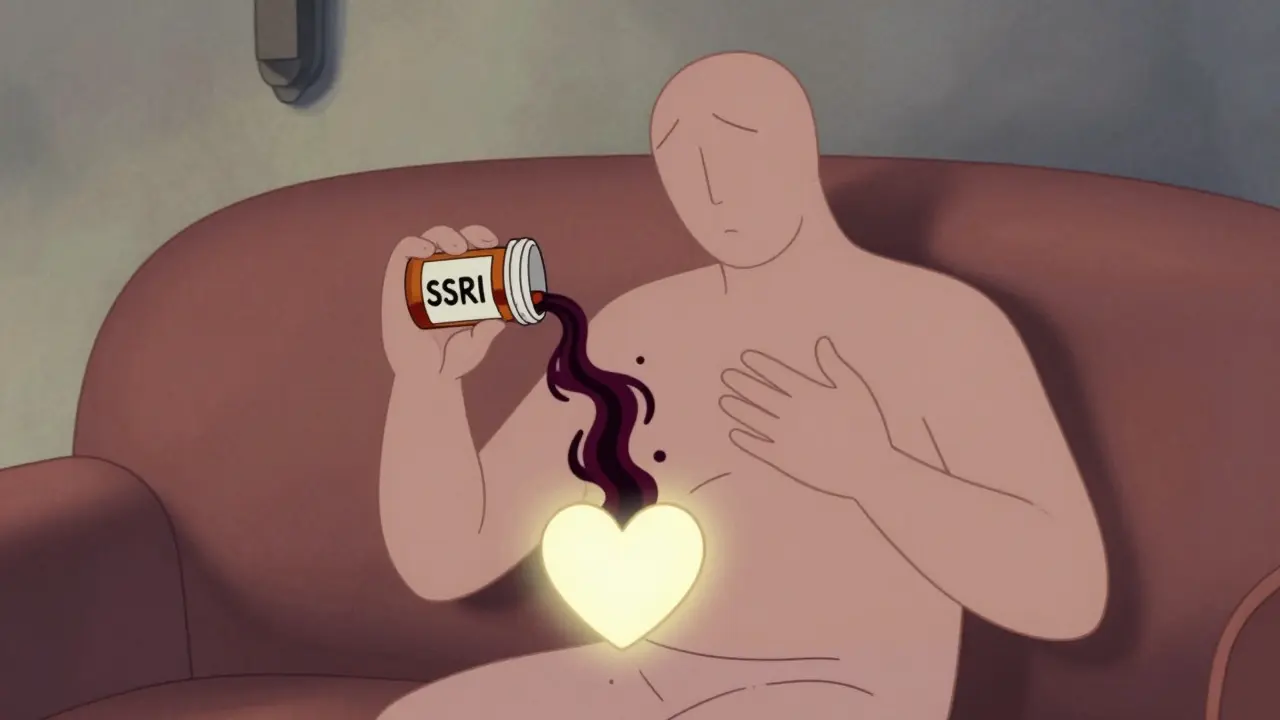
If you're taking an antidepressant and noticing your sex drive has dropped, or you're having trouble getting or keeping an erection, or orgasming feels impossible-you're not alone. And you're not broken. This isn't rare. It's a direct, well-documented side effect of many common antidepressants, especially SSRIs like sertraline, fluoxetine, and paroxetine. Studies show between 35% and 80% of people on these meds experience some form of sexual dysfunction. For many, it’s not just a minor annoyance. It’s a relationship killer, a blow to self-esteem, and sometimes the reason they stop taking their medication altogether-even if it’s helping their depression.
Why Do Antidepressants Kill Libido?
The problem starts in your brain. Antidepressants like SSRIs work by boosting serotonin, which helps stabilize mood. But serotonin doesn’t just affect emotions-it also shuts down the pathways that control sexual response. Dopamine and norepinephrine, two other brain chemicals critical for arousal, desire, and pleasure, get suppressed. Think of it like turning down the volume on your body’s natural sexual signals. It’s not psychological. It’s neurochemical.
This plays out differently depending on your body. Men often report low desire (64%), trouble getting or keeping an erection (58%), and delayed or absent ejaculation (53%). Women commonly experience reduced lubrication (52%), trouble reaching orgasm (49%), and a flatlining libido (61%). These numbers come from pooled data across 25 clinical trials. And here’s the catch: depression itself can cause sexual problems. About 35-50% of people with untreated major depression already have low desire or arousal. So it’s not always the drug-it’s hard to tell which is which without careful tracking.
Not All Antidepressants Are Created Equal
If you’re struggling with sexual side effects, the first question isn’t whether to quit your meds-it’s whether you can switch to one that’s less likely to cause them. The risk varies dramatically across classes.
SSRIs are the worst offenders. Paroxetine (Paxil) tops the list, with the highest rate of sexual side effects. Switching away from it can make a huge difference. Sertraline (Zoloft) and citalopram (Celexa) are also high-risk. Fluoxetine (Prozac) is a bit better, but still problematic for many.
SNRIs like venlafaxine (Effexor XR) are just as bad. Tricyclics like clomipramine? Also high risk.
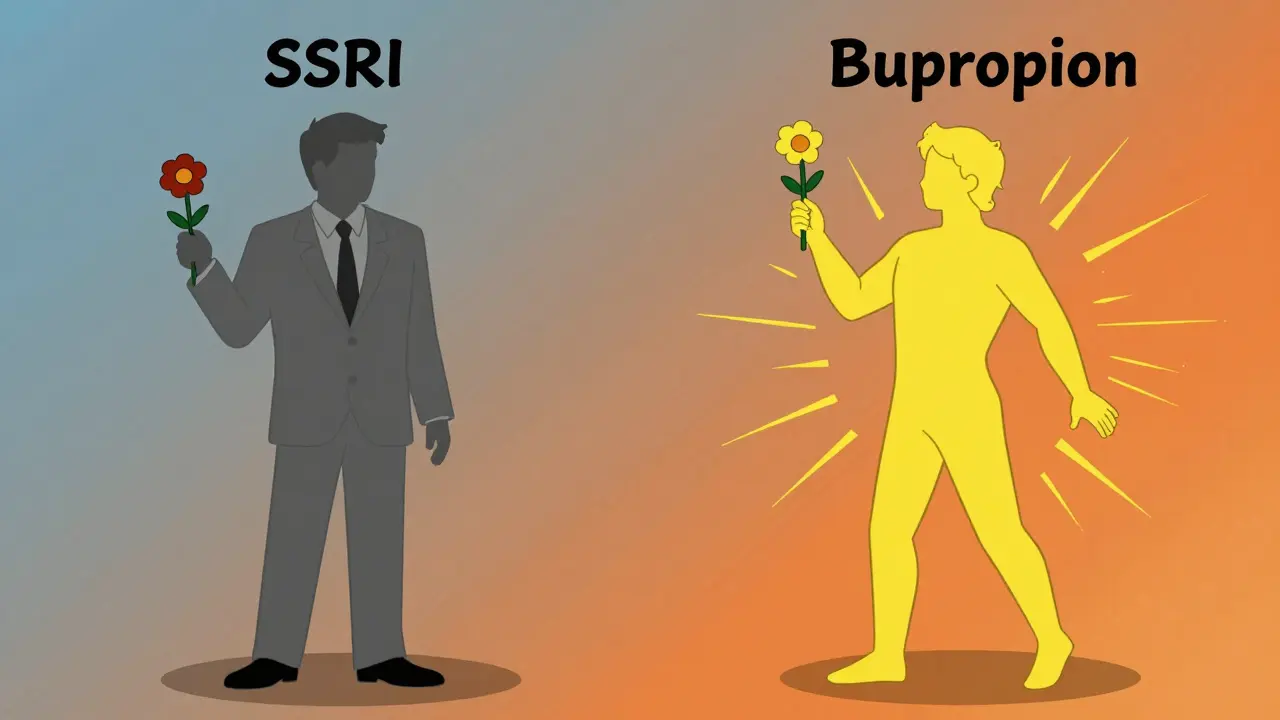
Now, the good news: some antidepressants have far fewer sexual side effects. Bupropion (Wellbutrin) stands out. Four clinical trials show it causes significantly less sexual dysfunction than SSRIs. In fact, one study found 68% of patients improved after switching from an SSRI to bupropion. It doesn’t boost serotonin-it works on dopamine and norepinephrine, which actually help with arousal. That’s why it’s often the first alternative doctors suggest.
Other lower-risk options include mirtazapine (Remeron) and agomelatine (Valdoxan). Both are used widely in Europe and show minimal impact on libido or orgasm. Nefazodone (Serzone) was another good option, but it’s rarely used now due to rare but serious liver risks.
And then there’s esketamine (Spravato), the nasal spray approved for treatment-resistant depression. In trials, only 3.2% of users reported sexual side effects-far lower than SSRIs. But it’s expensive ($880 per dose), requires clinic visits, and isn’t for everyone.
What to Do If You’re Already on an SSRI
Stopping your antidepressant cold turkey is dangerous. Withdrawal can trigger anxiety, dizziness, brain zaps, and even a return of depression. But you don’t have to suffer in silence. Here are your real-world options, backed by evidence.
- Switch to bupropion-This is the most effective strategy. If you’re on sertraline or paroxetine and having sexual issues, ask your doctor about switching to bupropion XL. Generic versions cost around $15.72 a month. Studies show it works just as well for depression in many cases-and with far fewer sexual side effects.
- Add bupropion on top-If you can’t switch, adding a low dose (150mg daily) of bupropion to your current SSRI can help. One 2019 study found this boosted sexual function in 58% of women who were struggling with SSRI-induced anorgasmia.
- Try sildenafil (Viagra)-For men with erectile problems, sildenafil works. In trials, 65-70% of men on SSRIs saw improvement with Viagra, compared to just 25% on placebo. It doesn’t fix low desire, but it helps with performance.
- Use cyproheptadine-This older antihistamine, taken at 4mg nightly, has shown promise for SSRI-induced anorgasmia. A 2021 study found 52% of women improved, versus 18% on placebo. It’s off-label but inexpensive and generally safe.
- Try a drug holiday-Some people take a short break from their SSRI on weekends. This works best with longer-acting drugs like fluoxetine. But with paroxetine (which leaves your system fast), it can cause withdrawal. Only do this under medical supervision.
- Lower your dose-Sometimes, cutting the dose by 25-50% reduces side effects without losing antidepressant benefits. About 20-30% of people see improvement this way. But don’t do it alone-your depression could come back.
The Silent Crisis: Post-SSRI Sexual Dysfunction (PSSD)
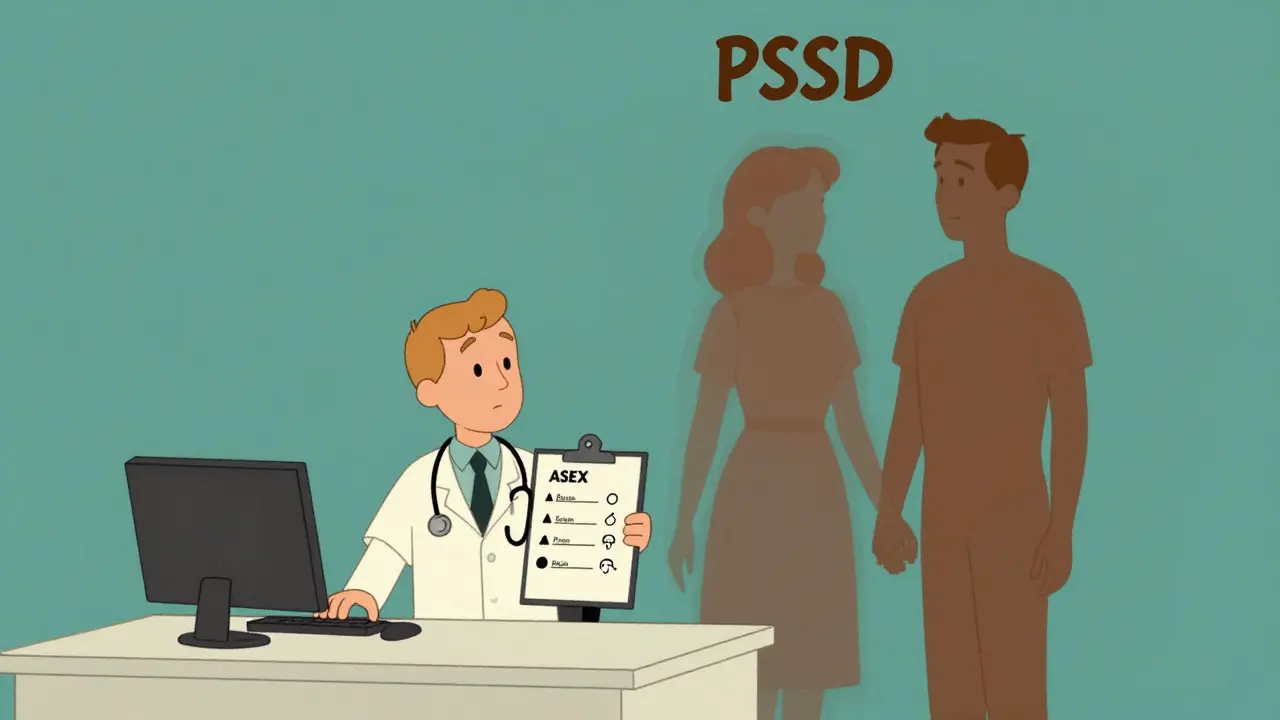
Most people assume that when they stop the drug, their sex life returns to normal. For most, it does. But for a small group-about 0.5% to 1.2% of users-sexual side effects don’t go away. This is called Post-SSRI Sexual Dysfunction, or PSSD.
Symptoms include permanent low libido, genital numbness, and inability to orgasm-even years after stopping the medication. Since 2010, 28 peer-reviewed case reports have documented this. It’s rare, but it’s real. And it’s terrifying for those who experience it. The cause isn’t fully understood, but researchers suspect it may involve long-term changes in serotonin receptors or nerve sensitivity.
If you’ve been off SSRIs for more than six months and still have sexual issues, talk to your doctor. There’s no standard treatment yet, but some patients report partial improvement with cognitive behavioral therapy, low-dose stimulants, or hormonal testing. Don’t assume it’s all in your head.
What Patients Are Really Saying
Behind the statistics are real people. On Reddit’s r/antidepressants, a 2023 analysis of over 1,200 posts found that 78% of people with sexual side effects said it damaged their relationships. 42% admitted quitting their meds without telling their doctor. GoodRx data shows 23% of people stop SSRIs within 90 days because of sexual side effects-and women are 1.7 times more likely to do so than men.
And here’s the disconnect: clinical trials say 30-40% of people improve over six months. But patient reviews on Drugs.com tell a different story. Only 18% of 3,500 users reported improvement after six months. Why? Because trials use structured questionnaires. Real life? People don’t report it unless they’re asked. And when they do, they’re often ignored.
How to Talk to Your Doctor
Many doctors still treat sexual side effects as a footnote. Don’t let that happen to you. Bring data. Bring your experience. Ask these questions:
- “Could my sexual problems be from the medication?”
- “What are the lowest-risk antidepressants for libido and orgasm?”
- “Can we try switching to bupropion?”
- “Would adding a low dose of bupropion help?”
- “Can we use a validated scale like the ASEX to track this?”
The Arizona Sexual Experience Scale (ASEX) is a simple 5-question tool doctors can use to measure sexual function. It’s sensitive, quick, and helps track changes over time. If your doctor doesn’t know it, show them. It’s in the American Psychiatric Association’s 2020 guidelines.
What’s Coming Next
Research is moving fast. A new drug called SEP-227162, currently in Phase II trials, targets serotonin receptors differently-and early data shows 87% fewer sexual side effects than sertraline. Pharmacogenomic testing is also gaining ground. If you’re a CYP2D6 poor metabolizer, your body processes paroxetine too slowly, leading to higher blood levels and worse side effects. Testing for this can help avoid the wrong drug entirely.
Regulators are catching up too. In 2022, the FDA required stronger warnings about sexual side effects on antidepressant labels. New Zealand’s CARM system received over 1,200 reports between 2018 and 2022. This isn’t going away. It’s becoming part of the conversation.
You Don’t Have to Choose Between Mental Health and Sex
There’s a myth that you have to pick: either feel better emotionally, or have a normal sex life. That’s false. You can have both. It just takes the right approach. Switching to bupropion, adding a low-dose helper, or using a targeted medication like sildenafil can restore your sex life without sacrificing your mental health gains.
Don’t suffer quietly. Don’t quit cold turkey. Don’t assume it’s just ‘in your head.’ Sexual side effects from antidepressants are real, measurable, and treatable. The tools are out there. You just need to ask for them.


Write a comment