
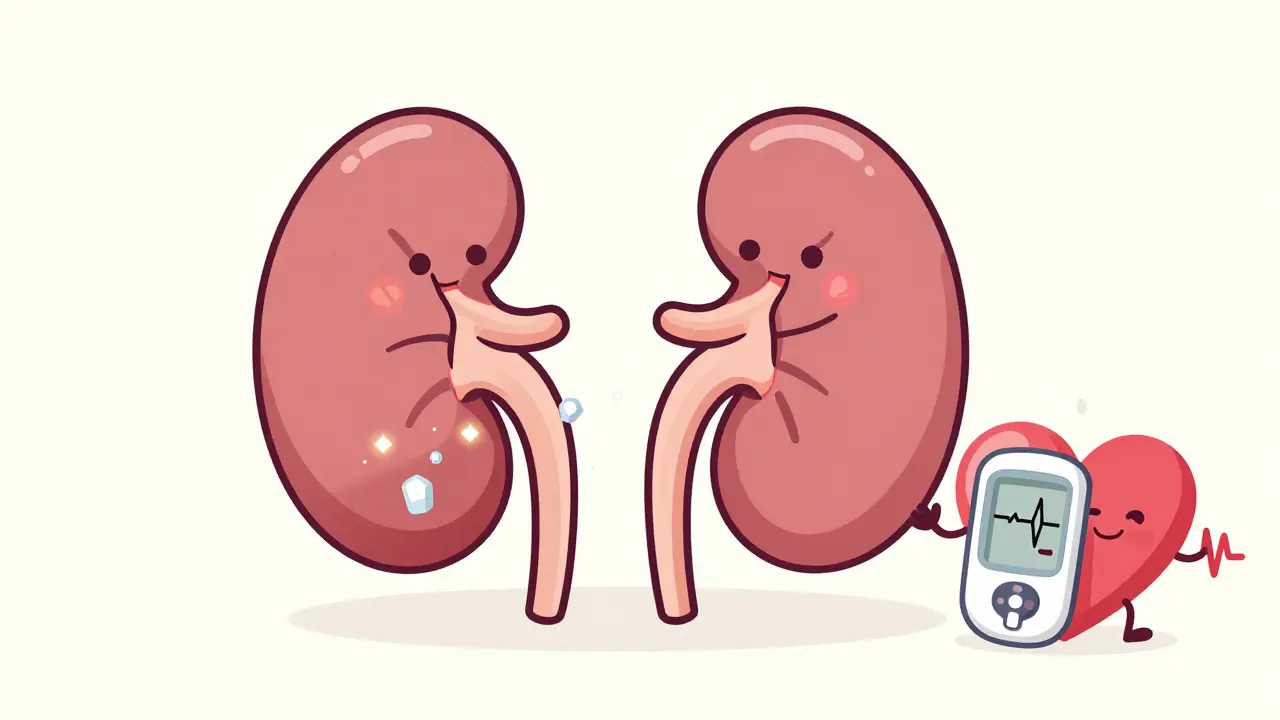
For people with type 2 diabetes, managing blood sugar isn’t just about counting carbs or taking insulin anymore. A new class of pills called SGLT2 inhibitors is changing how doctors treat the disease-not just for blood sugar control, but for protecting the heart and kidneys too. These drugs, including Jardiance, Farxiga, Invokana, and Steglatro, were originally designed to lower glucose. But over the last decade, research has revealed something much bigger: they save lives.
How SGLT2 Inhibitors Actually Work
Unlike most diabetes meds that push insulin or slow digestion, SGLT2 inhibitors work in the kidneys. They block a protein called SGLT2, which normally reabsorbs sugar from urine back into the blood. When it’s blocked, excess glucose gets flushed out through urine-about 40 to 100 grams a day. That’s like dumping 10 teaspoons of sugar into the toilet every day. No extra insulin needed. No crashing blood sugar. Just natural, daily sugar removal.
This mechanism gives them a big advantage: they rarely cause hypoglycemia. That’s a major win for older adults or people on multiple meds. In clinical trials, SGLT2 inhibitors lowered HbA1c by 0.6% to 0.8% on average-solid, but not flashy. The real power isn’t in the number on the glucose meter. It’s in what happens afterward.
The Heart Protection You Didn’t Expect
One of the biggest surprises in modern diabetes care came from the EMPA-REG OUTCOME trial in 2015. Researchers gave empagliflozin to over 7,000 people with type 2 diabetes and known heart disease. After three years, those on the drug had a 14% lower risk of dying from heart problems, having a heart attack, or having a stroke. That was a shock. No other diabetes drug had ever shown that kind of benefit.
Then came the CANVAS and DECLARE-TIMI 58 trials. Canagliflozin and dapagliflozin showed similar results. But the most dramatic finding? A 30-35% drop in hospital stays for heart failure. That’s not just for people with heart failure already-it works even if your heart is still functioning normally. The DAPA-HF and EMPEROR-Preserved trials proved this in people without diabetes too. That’s why the American Heart Association now recommends SGLT2 inhibitors for heart failure, regardless of whether you have diabetes.
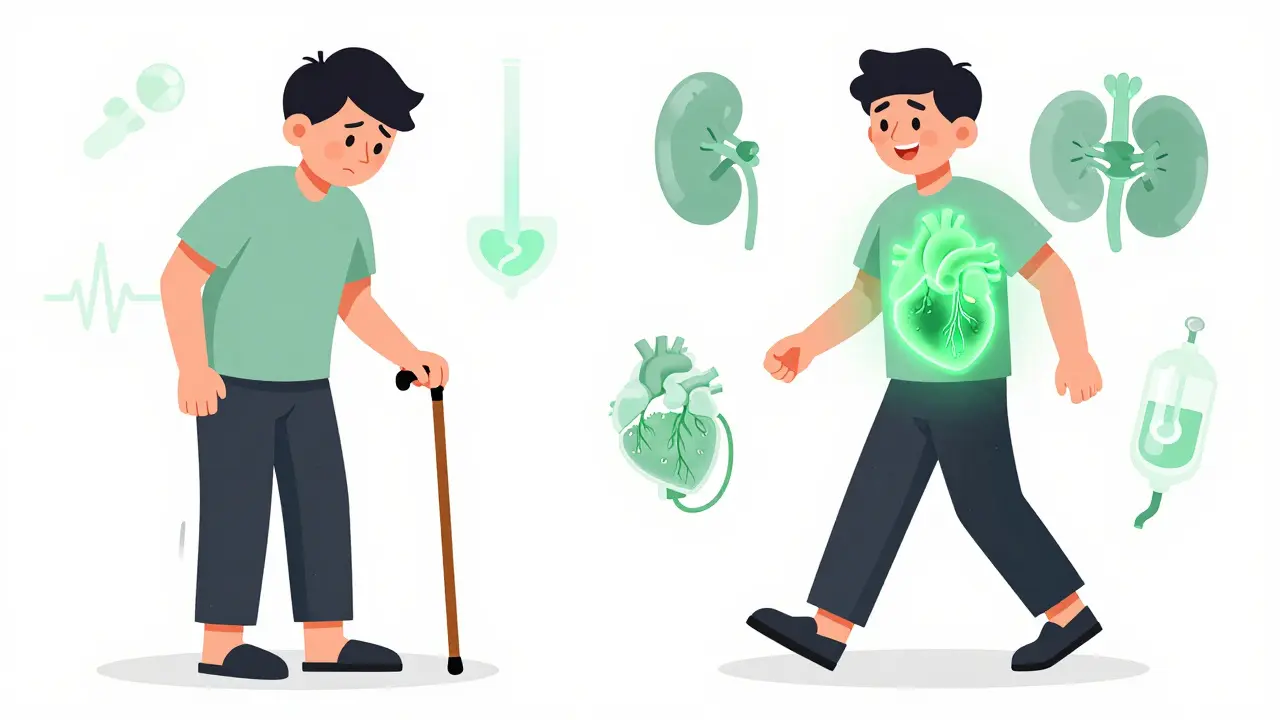
Think of it this way: if you’re 60, have type 2 diabetes, and your heart is starting to weaken, this pill doesn’t just help your sugar. It helps your heart beat stronger and longer.
Kidney Benefits That Can Delay or Prevent Failure
Diabetes is the leading cause of kidney failure. For years, doctors had few tools to slow it down beyond blood pressure control and ACE inhibitors. Then came the CREDENCE trial. Canagliflozin reduced the risk of kidney failure, doubling of creatinine, or kidney-related death by 30% in people with diabetic kidney disease. That’s not a small win-it’s life-changing.
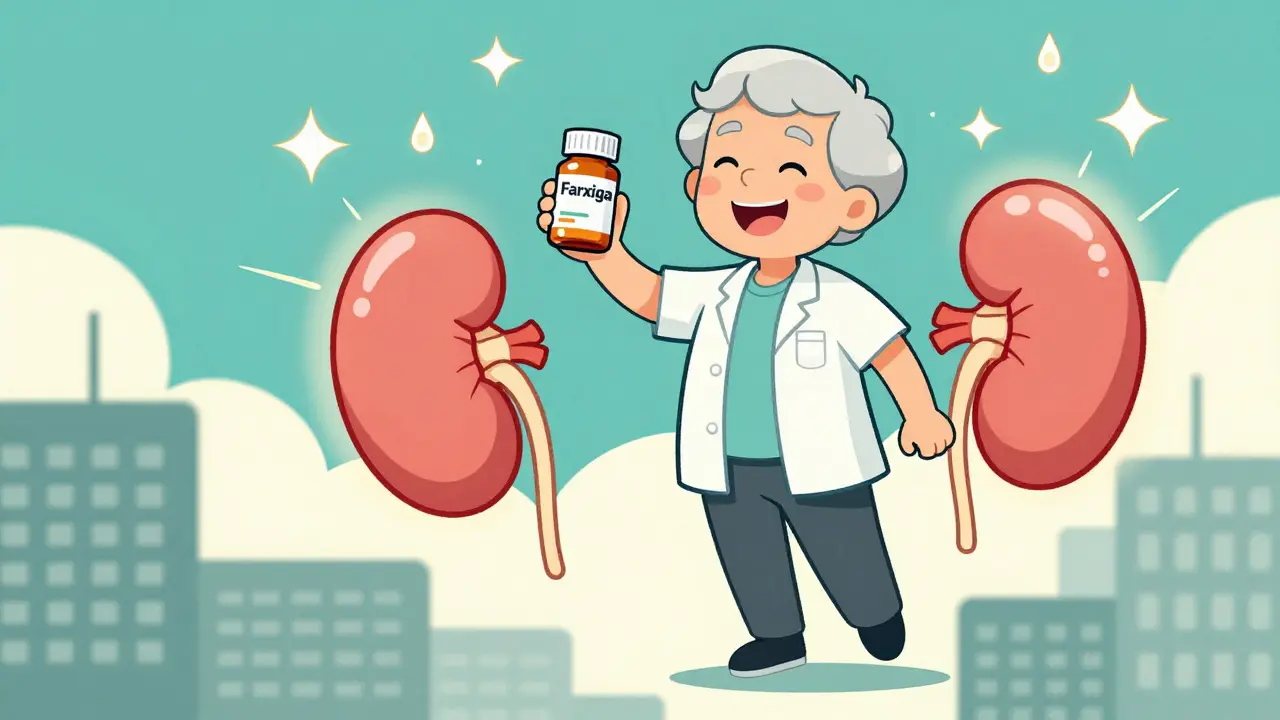
The DAPA-CKD and EMPA-KIDNEY trials expanded this even further. Dapagliflozin and empagliflozin helped people with chronic kidney disease-even those without diabetes. In 2023, the FDA approved dapagliflozin for kidney protection in non-diabetic patients. That’s huge. It means these drugs aren’t just for diabetics anymore. They’re becoming tools for protecting kidney function across the board.
Weight Loss and Lower Blood Pressure-Bonus Effects
Most people on SGLT2 inhibitors lose 2 to 3 kilograms (4-7 pounds) in the first few months. That’s not massive, but it’s consistent. And it’s not from dieting or exercise-it’s from losing sugar and water. For someone struggling with weight, that’s a meaningful boost.
They also lower systolic blood pressure by 3 to 5 mmHg. That’s similar to what you’d get from cutting salt or walking 30 minutes a day. For someone with high blood pressure and diabetes, that’s two problems tackled with one pill.
The Risks You Can’t Ignore
These drugs aren’t risk-free. The most common side effect? Genital yeast infections. About 6-11% of women and 3-5% of men report them. It’s not dangerous, but it’s annoying. Recurrent infections led some people to stop taking the drug. Keeping the area clean and dry helps. If it keeps happening, talk to your doctor.
Urinary tract infections are also slightly more common. Not everyone gets them, but if you have frequent UTIs, this might not be the best fit.
The most serious risk is diabetic ketoacidosis-but not the kind you’d expect. This is called euglycemic DKA. Blood sugar might only be mildly high (150-250 mg/dL), not the 500+ you’d see in classic DKA. That makes it harder to spot. It’s rare-0.1-0.3% of users-but it can be deadly. It often happens during illness, surgery, or heavy alcohol use. If you feel nauseous, tired, or have fruity-smelling breath, get checked immediately.
There’s also a small risk of acute kidney injury, especially in older adults or those already dehydrated. The FDA requires a black box warning for this. If you’re sick, not eating, or not drinking enough water, your doctor may tell you to pause the drug temporarily.
Canagliflozin carries a slightly higher risk of leg or foot amputations, based on the CANVAS trial. The FDA added a warning for this. It’s rare-about 2 in 1,000 people over 2 years-but if you have foot ulcers, nerve damage, or poor circulation, your doctor might avoid it.
Who Should Take SGLT2 Inhibitors?
Based on current guidelines, these drugs are strongly recommended if you have:
- Type 2 diabetes + heart failure (even if your ejection fraction is normal)
- Type 2 diabetes + chronic kidney disease (eGFR ≥30)
- Type 2 diabetes + history of heart attack or stroke
- Heart failure without diabetes (dapagliflozin or empagliflozin)
- Chronic kidney disease without diabetes (dapagliflozin)
If you’re younger, have no heart or kidney issues, and your A1c is just barely above target, the benefits are smaller. The cost may outweigh the benefit. A 2023 study found you’d need to treat 52 people without heart disease for five years to prevent one major heart event. That’s a lot of pills for a small gain.
What About Cost and Access?
These drugs are expensive. In the U.S., a 30-day supply costs $600-650 retail. That’s a barrier for many. But most insurance plans cover them, and patient assistance programs from manufacturers can bring out-of-pocket costs down to $10-25 per month. If you’re uninsured, ask your doctor about generic alternatives-none are available yet, but they’re expected between 2027 and 2029.
Some clinics and health systems now prioritize SGLT2 inhibitors for high-risk patients. Kaiser Permanente, for example, saw a 37% drop in heart failure hospitalizations after making them a first-line choice for eligible patients.
How to Use Them Safely
Before starting:
- Get your eGFR checked. Don’t start if it’s below 30 mL/min/1.73m².
- Discuss your history of yeast infections, UTIs, or foot problems.
- Make sure you understand the signs of ketoacidosis.
While taking them:
- Stay hydrated, especially in hot weather or when sick.
- Pause the drug if you’re fasting, having surgery, or vomiting.
- Check your eGFR every 3-6 months.
- Don’t stop suddenly without talking to your doctor.
These aren’t magic pills. But for the right person, they’re one of the most powerful tools we have to not just manage diabetes-but to protect your heart, kidneys, and future.
How They Compare to Other Diabetes Drugs
Compared to metformin, SGLT2 inhibitors don’t help as much with blood sugar, but they offer heart and kidney benefits metformin doesn’t. Compared to DPP-4 inhibitors, they’re better for heart failure and weight loss. Compared to GLP-1 agonists like semaglutide, they’re less effective at lowering A1c and less likely to cause nausea, but they’re easier to take (pill vs. injection) and have stronger heart failure benefits.
There’s no one-size-fits-all. But if your goal is to avoid hospital stays, protect your kidneys, and live longer, SGLT2 inhibitors are now among the top choices.
Do SGLT2 inhibitors cause low blood sugar?
Not usually. SGLT2 inhibitors work independently of insulin, so they rarely cause hypoglycemia on their own. But if you’re also taking insulin or sulfonylureas, your risk goes up. Always talk to your doctor about adjusting other meds if you start an SGLT2 inhibitor.
Can I take SGLT2 inhibitors if I have kidney disease?
Yes-but only if your eGFR is above 30. Most SGLT2 inhibitors need dose adjustments if your kidney function is between 30 and 60. If your eGFR drops below 45, your doctor may reduce your dose or stop the drug. They’re actually one of the few diabetes meds that can slow kidney disease progression, even in advanced cases.
Are there generic versions of SGLT2 inhibitors yet?
No, not yet. All four major SGLT2 inhibitors-Jardiance, Farxiga, Invokana, and Steglatro-are still under patent protection. Generic versions are expected between 2027 and 2029. Until then, patient assistance programs and insurance coverage are your best options for lowering costs.
Why do I need to stop SGLT2 inhibitors before surgery?
Because fasting and stress from surgery can trigger euglycemic diabetic ketoacidosis, even if your blood sugar looks normal. Doctors usually advise stopping the drug 3-4 days before surgery and restarting only after you’re eating normally again. Always follow your surgical team’s instructions.
Can SGLT2 inhibitors help me lose weight permanently?
They help you lose 2-3 kg in the first few months, mostly from water and sugar loss. But weight loss tends to plateau after 6-12 months. For lasting results, you still need to eat well and move regularly. Think of the drug as a helper-not a replacement for healthy habits.
What should I do if I get a yeast infection while on this drug?
Treat it like any other yeast infection-with over-the-counter antifungal creams or oral fluconazole. Keep the area clean and dry. If infections keep coming back, talk to your doctor. You might need to switch to another class of medication. Don’t ignore recurring infections-they’re a sign your body isn’t tolerating the drug well.
Are SGLT2 inhibitors safe for older adults?
Yes, but with caution. Older adults are more prone to dehydration and kidney issues. Make sure they drink enough fluids, especially in hot weather. Monitor kidney function closely. Many seniors benefit greatly from reduced heart failure hospitalizations, but the risk of volume depletion means regular check-ins with their doctor are essential.
If you have type 2 diabetes and heart or kidney concerns, SGLT2 inhibitors are no longer a last-resort option. They’re a frontline defense. But like any medicine, they work best when used wisely-with awareness, monitoring, and honest conversations with your care team.


Write a comment