
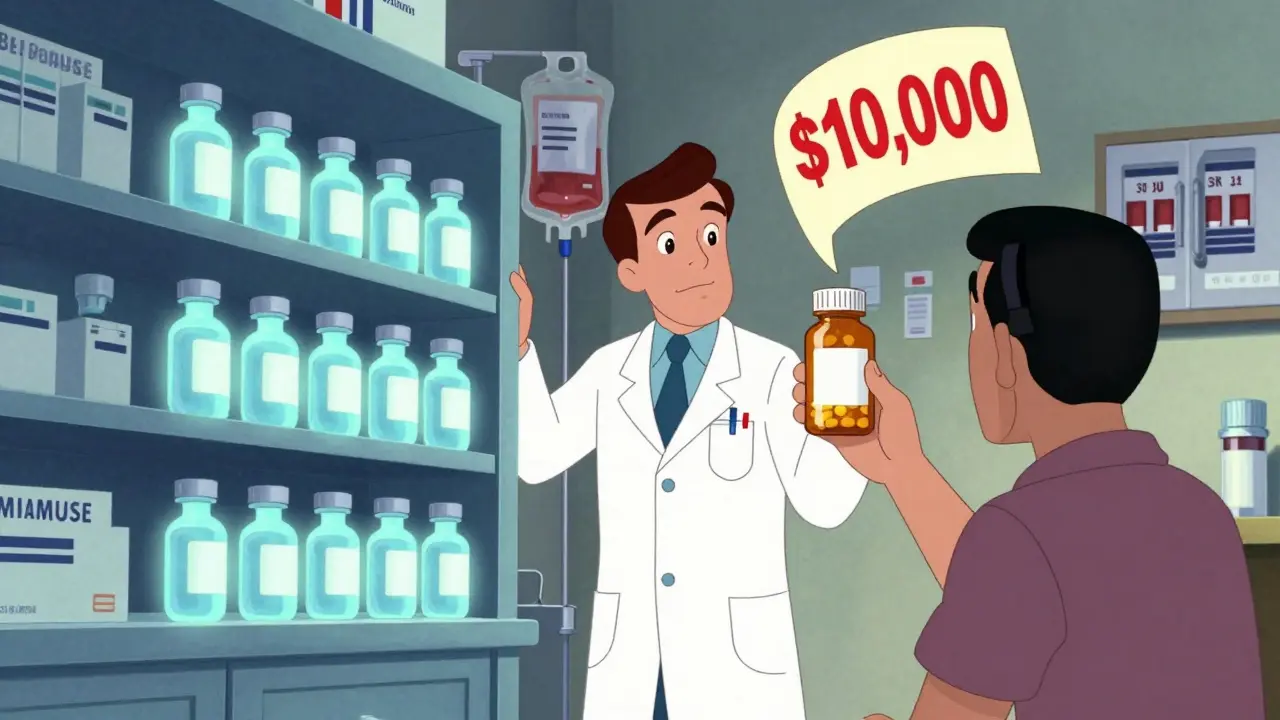
Specialty pharmacy isn’t just another corner of the pharmacy world-it’s a high-stakes, high-complexity space where a single medication can cost more than a car, and a tiny change in formulation can trigger a patient’s entire treatment plan to unravel. Unlike your local drugstore, where 90% of prescriptions are filled with generics, specialty pharmacies deal with drugs that demand refrigeration, IV infusions, weekly blood tests, and constant patient follow-up. And now, as generics and biosimilars start creeping into this space, pharmacists are facing a whole new set of challenges-ones that don’t show up in textbooks.
What Makes Specialty Drugs Different?
Specialty medications aren’t just expensive-they’re complicated. Think cancer drugs like Keytruda, multiple sclerosis treatments like Ocrevus, or hepatitis C therapies like Harvoni. These aren’t pills you pick up and swallow with a glass of water. Many are biologics, made from living cells, requiring cold storage (2-8°C), special handling, and precise administration. Patients often need nurse-led training just to inject themselves. And the cost? It’s not uncommon for a single month’s supply to hit $10,000 or more.
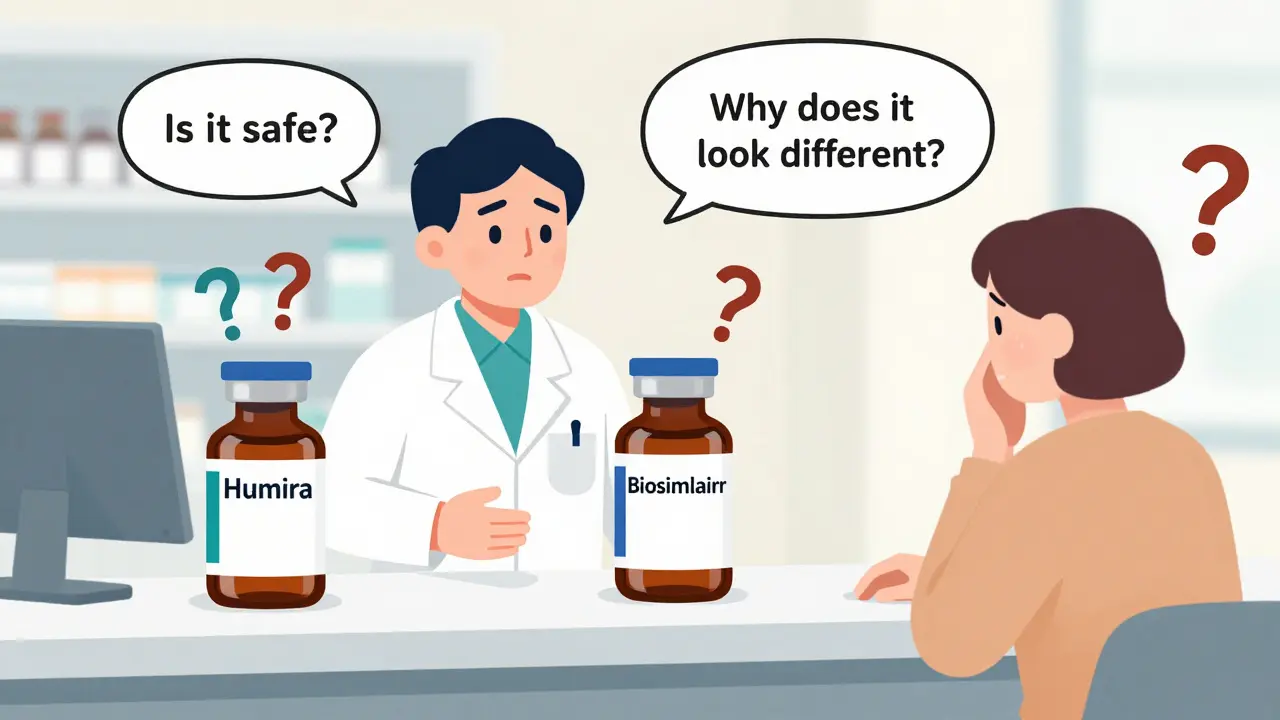
That’s where the system gets messy. While traditional pharmacies fill 90%+ generics, specialty pharmacies often have no generic alternatives. Until recently, almost every specialty drug was branded. But that’s changing. Patents are expiring. Biosimilars-generic-like versions of biologics-are entering the market. And with them comes a flood of new questions: Can you switch a patient from Humira to its biosimilar? What if they’ve been stable for two years? What if the new version looks different? What if the patient’s insurance won’t cover it unless they try the cheaper version first?
Generics in Specialty Pharmacy: The Cost vs. Control Dilemma
Generics are supposed to be cheaper, safer, and just as effective. And for most drugs, they are. The FDA requires them to prove bioequivalence-meaning they deliver the same amount of active ingredient into the bloodstream at the same rate as the brand. That’s solid science. But specialty drugs? The rules get fuzzy.
Take glatiramer acetate, used for multiple sclerosis. The brand version, Copaxone, cost about $78,000 a year. The generic? Around $45,000. That’s a huge saving. But here’s the catch: patients on this drug are often stabilized on a specific formulation. Switch them to a different generic manufacturer, and even though the active ingredient is identical, the inactive ingredients (fillers, preservatives, stabilizers) change. Some patients report new side effects-fatigue, flushing, injection site reactions-even though the FDA says it’s “the same.”
And it’s not just anecdotal. A 2022 survey of specialty pharmacy staff found that 78% said managing patient concerns about generic switches was a major workflow headache. Patients see a different color pill, a new shape, or a different label and panic. They think it’s a mistake. Or worse-they think it’s a lower-quality drug. Pharmacists end up spending hours reassuring, educating, and documenting.
The Narrow Therapeutic Index Problem
Some drugs live on a razor’s edge. These are called narrow therapeutic index (NTI) drugs. A tiny change in blood levels-just 5%-can mean the difference between treatment success and dangerous toxicity. Levothyroxine, used for hypothyroidism, is a classic example. It’s not a specialty drug by definition, but it’s a perfect case study.
Patients stabilized on one brand of levothyroxine often do poorly when switched to a different generic, even if both are FDA-approved. Studies show thyroid-stimulating hormone (TSH) levels can fluctuate after a switch. Some patients feel worse. Others have heart palpitations. In specialty pharmacy, where patients are already on complex regimens, adding an NTI drug switch can destabilize everything.
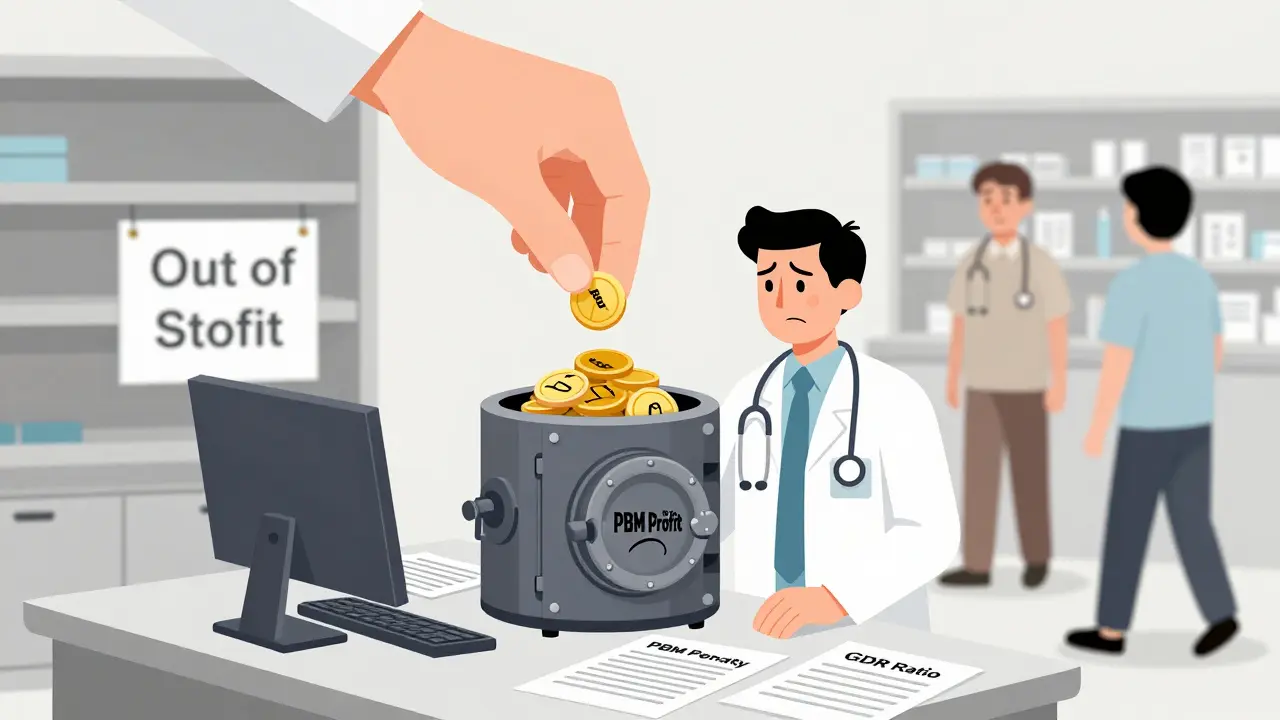
Many experts recommend avoiding switches for NTI drugs unless absolutely necessary. And if you do switch? Monitor closely. Check labs. Talk to the patient. Document everything. But here’s the problem: Pharmacy Benefit Managers (PBMs) don’t care. They care about the Generic Dispensing Ratio (GDR)-a metric that measures how often a pharmacy dispenses generics. If your GDR is too low, they penalize you. Even if you’re dispensing a specialty drug with no generic available.
How PBMs Are Making Things Harder
PBMs are the middlemen between insurers, pharmacies, and drug manufacturers. They negotiate rebates, set formularies, and decide which drugs get covered and at what cost. In traditional pharmacy, they push generics because they make money off the savings. In specialty pharmacy? It’s a mess.
Many PBMs force specialty pharmacies to use specific generic manufacturers-even if those manufacturers have inconsistent supply or poor quality control. One pharmacy might get a batch from Company A, the next from Company B. The drugs are technically the same, but the excipients differ. Patients notice. Pharmacists scramble to track which manufacturer supplied which batch.
And reimbursement? It’s broken. Some PBMs reimburse specialty pharmacies below the actual cost of the drug. That’s not a typo. They pay less than what the pharmacy paid to buy it. Why? Because the manufacturer gives the PBM a rebate, and the PBM keeps it. The pharmacy gets stuck with the loss. This forces some specialty pharmacies to cut staff, reduce services, or even shut down.
Biosimilars: The New Frontier
Biosimilars are the specialty pharmacy equivalent of generics-but for biologics. They’re not exact copies. Biologics are too complex for that. Instead, they’re highly similar, with no clinically meaningful differences in safety or effectiveness. The FDA has approved 35 biosimilars as of December 2023, with more coming fast. Humira biosimilars launched in the U.S. in 2023 after years of legal battles. That’s a $20 billion market opening up.
But adoption is slow. Why? Because PBMs still favor the original brand. Many have rebate deals that make the brand cheaper for the insurer than the biosimilar. Patients end up paying more out-of-pocket for the cheaper drug. Pharmacists are caught in the middle: they know the biosimilar is safe, but the system doesn’t make it easy to use.
And patient education? Critical. Many patients think “biosimilar” means “inferior.” Pharmacists have to explain that it’s not a cheaper knockoff-it’s a scientifically validated alternative. One study found that when patients received clear, personalized counseling about biosimilars, adherence improved by 30%.
What Specialty Pharmacies Can Do
There’s no one-size-fits-all solution. But here’s what works:
- Start with your top therapies. Focus on the 5-10 drugs that make up 80% of your volume. Identify which have generics or biosimilars. Align them with clinical guidelines.
- Standardize everything. Pick one generic manufacturer per drug. Stick with them. Don’t juggle five suppliers-it creates chaos.
- Track patient-specific risks. Document allergies to excipients. Note if a patient has had issues with previous switches. Flag NTI drugs for extra monitoring.
- Build a substitution protocol. When can you switch? When can’t you? Who approves it? Who notifies the prescriber? Write it down. Train your staff.
- Measure outcomes, not just cost. Track adherence, hospitalizations, lab results after a switch. Show your data to insurers. Prove that stability matters more than a 20% discount.
McKesson’s advice is simple: “Use a dedicated distributor for generics.” Why? Because sourcing from multiple suppliers creates administrative nightmares, inventory errors, and patient confusion. One source. One standard. One story to tell your patients.
The Bottom Line
Specialty pharmacy isn’t about filling prescriptions. It’s about managing lives. These drugs don’t just treat disease-they keep people alive. And when you introduce generics or biosimilars into that mix, you’re not just changing a label. You’re changing a patient’s routine, their trust, their sense of security.
The cost savings are real. The science supports it. But the human side? That’s where the real work begins. Pharmacists in specialty pharmacy aren’t just dispensers. They’re educators, advocates, and stability keepers. And in a world where every dollar counts, the most valuable thing you can give a patient isn’t a cheaper pill-it’s confidence that their treatment won’t fall apart because of a switch they didn’t ask for.
Can I switch a patient from a brand-name specialty drug to a generic without consulting the prescriber?
No-not without careful review. While state laws allow pharmacists to substitute generics in many cases, specialty drugs often have unique risks. For biologics, biosimilars may require prescriber authorization. For narrow therapeutic index drugs, switching without clinical oversight can lead to adverse outcomes. Always check state regulations, payer rules, and patient history before making a substitution.
Why do some patients report side effects after switching to a generic specialty drug?
Even though generics must have the same active ingredient, their inactive ingredients (fillers, dyes, preservatives) can differ between manufacturers. Some patients are sensitive to these excipients. For example, a patient on a generic version of glatiramer acetate might develop new injection-site reactions because the new formulation contains a different stabilizer. These aren’t “allergies” in the classic sense, but they’re real and can impact adherence.
Are biosimilars as safe as the original biologic drugs?
Yes, according to the FDA and multiple clinical studies. Biosimilars undergo rigorous testing to prove they have no clinically meaningful differences in safety, purity, or potency compared to the reference product. Over 35 biosimilars have been approved in the U.S., with millions of doses administered. Real-world data from Europe, where biosimilars have been used longer, confirms similar outcomes. The main barrier isn’t safety-it’s patient and provider perception.
Why do some specialty pharmacies get penalized for not dispensing enough generics?
Pharmacy Benefit Managers (PBMs) use a metric called the Generic Dispensing Ratio (GDR) to measure how often pharmacies dispense generics. But many specialty drugs simply don’t have generic versions-especially biologics. PBMs still penalize pharmacies for low GDRs, even when no generic exists. This creates a financial and ethical conflict: pharmacies are punished for doing the right thing-avoiding unnecessary switches.
How can specialty pharmacies improve patient acceptance of generics and biosimilars?
Education is key. Use clear, simple language: “This is not a cheaper version-it’s a scientifically proven alternative.” Provide written materials. Offer one-on-one counseling. Show patients data on safety and cost savings. Involve them in the decision. When patients understand why the switch is being made and feel heard, acceptance rates jump significantly.


Write a comment