
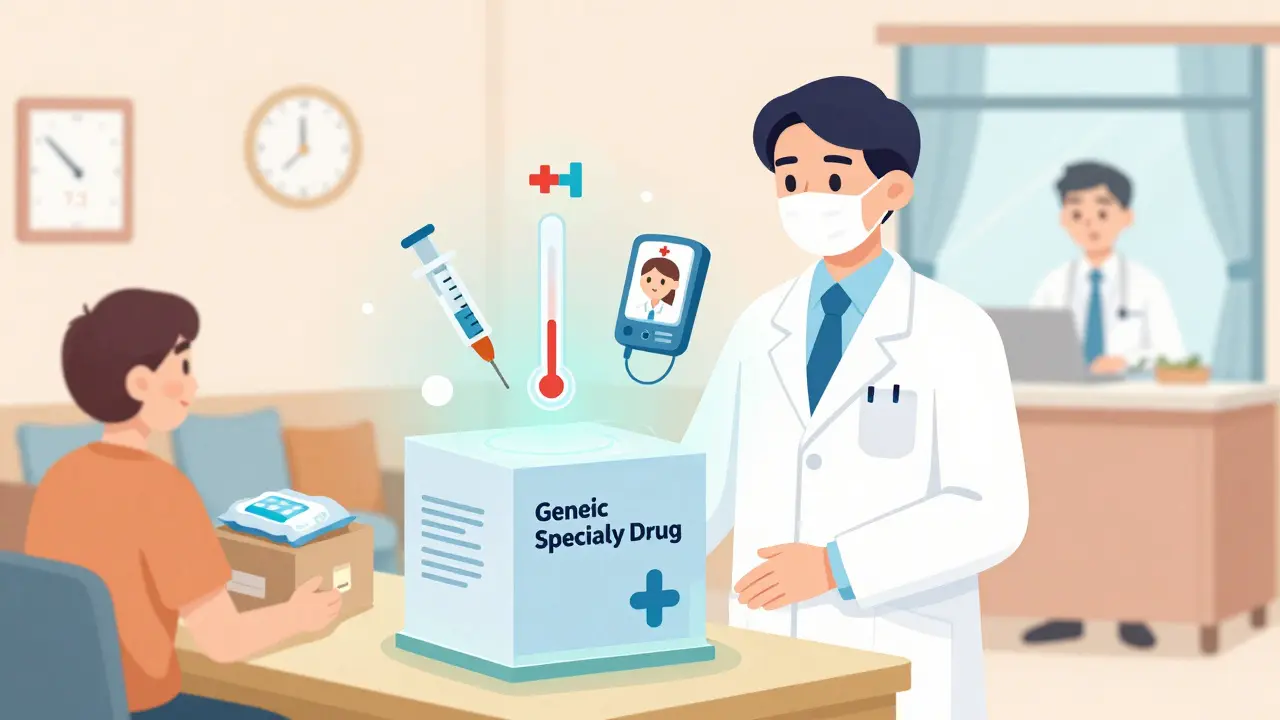
When a patient switches from a brand-name specialty drug to a generic version, many assume the process becomes simpler-cheaper, faster, easier. But in specialty pharmacy, that’s rarely true. Even when the drug is no longer branded, the specialty pharmacy still handles it the same way: with complex logistics, clinical oversight, and patient support that goes far beyond handing over a bottle of pills.
What Makes a Drug a ‘Specialty’ Drug?
Not all expensive drugs are specialty drugs. And not all specialty drugs are biologics. The definition is about complexity, not cost. According to the American Society of Health-System Pharmacists (ASHP), specialty drugs are those that require special handling, administration, or monitoring. That includes injectables, infusions, drugs needing refrigeration, or medications with strict safety protocols like REMS (Risk Evaluation and Mitigation Strategies). These are often used for conditions like rheumatoid arthritis, multiple sclerosis, cancer, or hepatitis C. Even when a generic version exists-especially for small-molecule drugs like methotrexate or oral oncology agents-the manufacturer can still require it to be dispensed only through a specialty pharmacy. This isn’t about protecting profits. It’s about control. If a drug needs patient education, home delivery, lab monitoring, or nurse follow-ups, the manufacturer locks distribution to specialty channels to ensure those services are delivered.Why Providers Can’t Just Fill It at the Corner Pharmacy
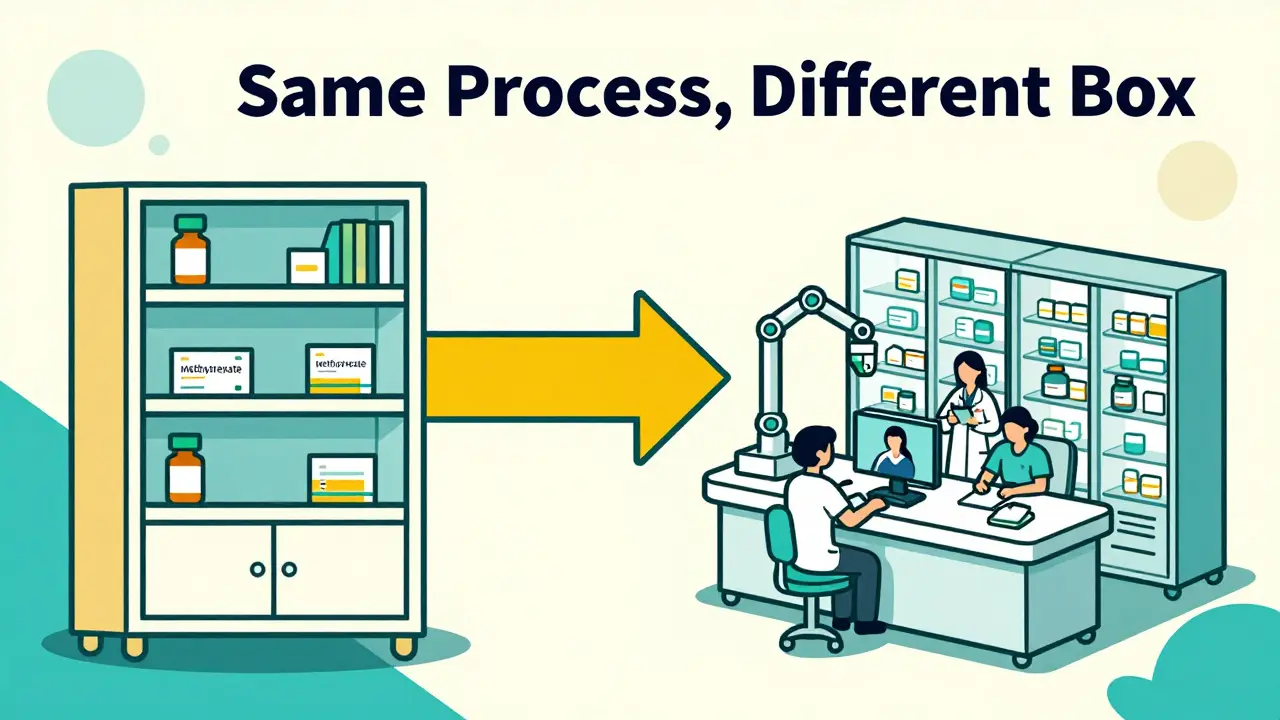
You might wonder: if it’s a generic, why can’t my local pharmacy fill it? The answer lies in distribution agreements. Many manufacturers, even for generics, sign exclusive contracts with specialty pharmacies. These agreements aren’t about brand loyalty-they’re about compliance. If a drug requires specific training for patients on how to self-inject, or if it needs to be tracked through a REMS program, the manufacturer can legally restrict distribution to pharmacies that meet those standards. A 2023 study in PMC found that 92% of specialty drugs-brand or generic-are dispensed through specialty pharmacies because of these mandatory distribution rules. Even if the generic version costs 70% less, the pharmacy channel doesn’t change. That’s why a patient switching from Enbrel to its biosimilar might still get the same box, same delivery schedule, same nurse calling to check in. The drug changed. The process didn’t.The Specialty Pharmacy Workflow: It’s Not Just Dispensing
Specialty pharmacies don’t just fill prescriptions. They manage entire care pathways. Here’s how it works, whether the drug is brand or generic:- Prescription intake and verification - The pharmacy receives the prescription electronically, checks insurance coverage, and confirms the prescriber’s authorization.
- Prior authorization - This step can take days or weeks. Even for generics, insurers often require proof of trial failure on other drugs or documentation of disease severity.
- Financial assistance coordination - Specialty drugs, even generics, can still cost hundreds per month. Pharmacies help patients apply for manufacturer copay cards or foundation grants.
- Patient education and counseling - A pharmacist or care coordinator walks the patient through dosing, storage, side effects, and what to do in an emergency. For injectables, this might include video training or in-home nurse visits.
- Specialty packaging and delivery - Medications are shipped in temperature-controlled packaging. Some need ice packs; others require dry ice. Delivery is tracked, and patients are notified when it’s on the way.
- Follow-up and monitoring - Pharmacists call patients at 7, 14, and 30 days to check for side effects, adherence, and lab results. They coordinate with doctors to adjust doses or order blood work.
Biosimilars: The New ‘Generic’ in Specialty Pharmacy
True generics-identical copies of small-molecule drugs-are rare in the specialty space. Instead, we have biosimilars: highly similar versions of biologic drugs like Humira or Enbrel. They’re not exact copies because biologics are made from living cells, not chemicals. But they’re approved as therapeutically equivalent by the FDA. Biosimilars now make up a growing share of specialty pharmacy dispensing. In 2023, they accounted for 18% of all specialty drug volume, and that number is expected to hit 35% by 2026. The 2024 CMS rule requiring Medicare Part D to cover all FDA-approved biosimilars will push even more into specialty channels. Here’s the twist: biosimilars often go through the exact same pharmacy workflow as their brand-name counterparts. A patient switching from Remicade to its biosimilar Inflectra gets the same nurse, same delivery system, same follow-up calls. The drug name changes. The service doesn’t.What Patients Really Think
Patient feedback on specialty pharmacy services is mixed. On Trustpilot, specialty pharmacies average 3.8 out of 5 stars. High marks go to clinical support (4.2/5), but delivery speed scores only 3.1/5. Some patients appreciate the continuity. One Reddit user wrote: “My generic version of Xeljanz still comes through the same specialty pharmacy with the same nurse follow-ups, which I actually appreciate because she knows my case history.” That’s the value: consistency in care. Others are frustrated. Another user shared: “Went from $15 copay for generic methotrexate at Walgreens to $75 copay through specialty pharmacy with 2-week delivery delays.” The issue isn’t always the drug-it’s the system. Insurance plans sometimes force patients into specialty channels even when a retail pharmacy could safely dispense the drug. A January 2024 MyHealthTeams survey found 68% of patients preferred staying with the same specialty pharmacy when switching to a generic. Why? Because trust matters. When a nurse remembers your side effects from last month, or your pharmacist knows your lab results by heart, it’s not just service-it’s care.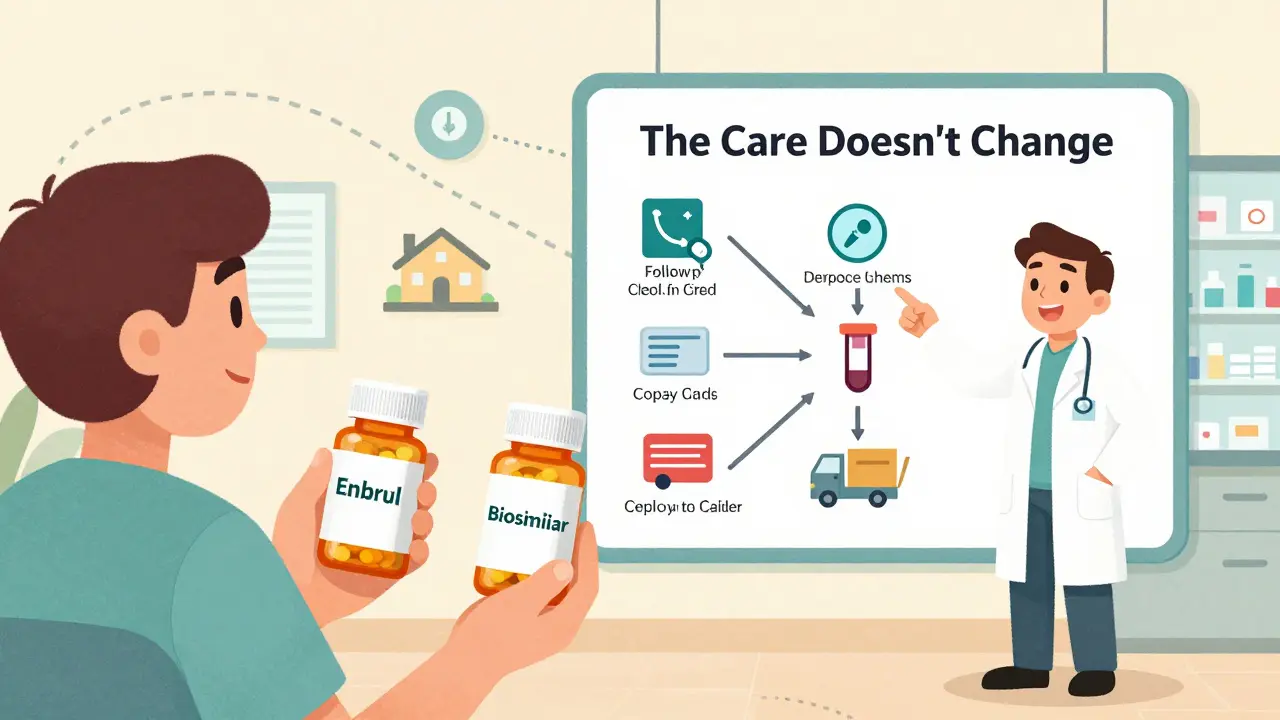


Write a comment