
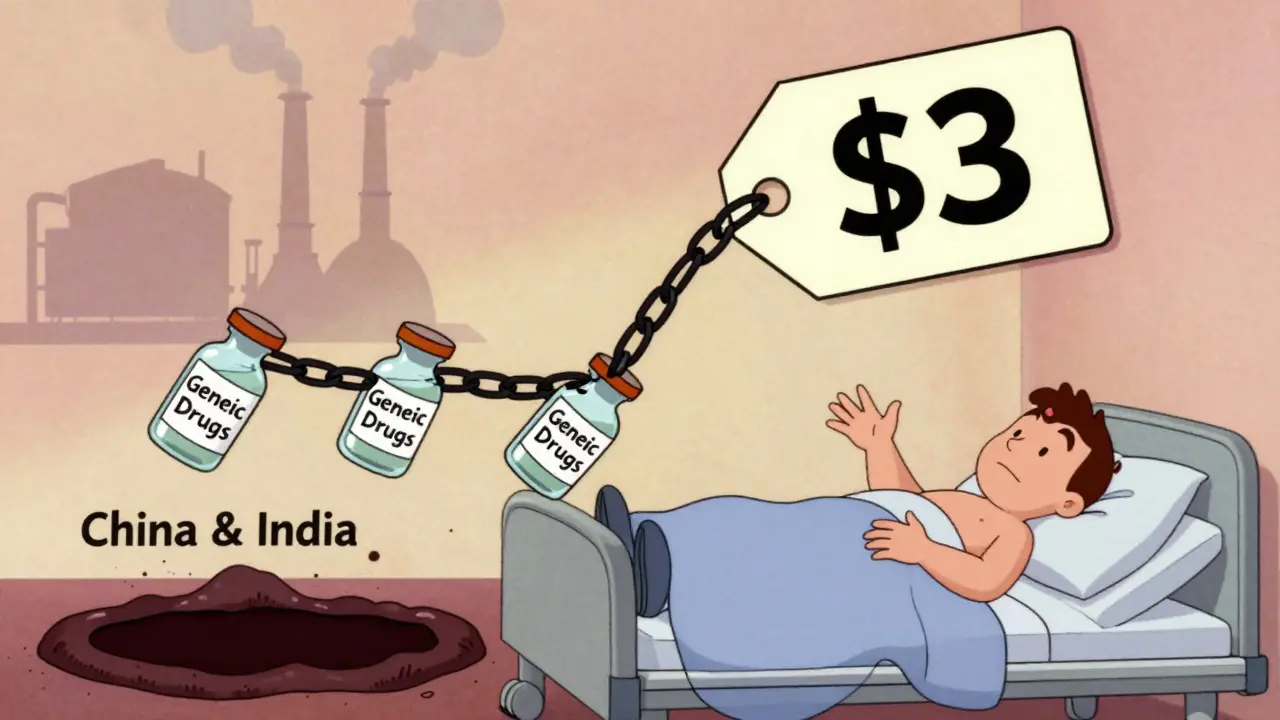
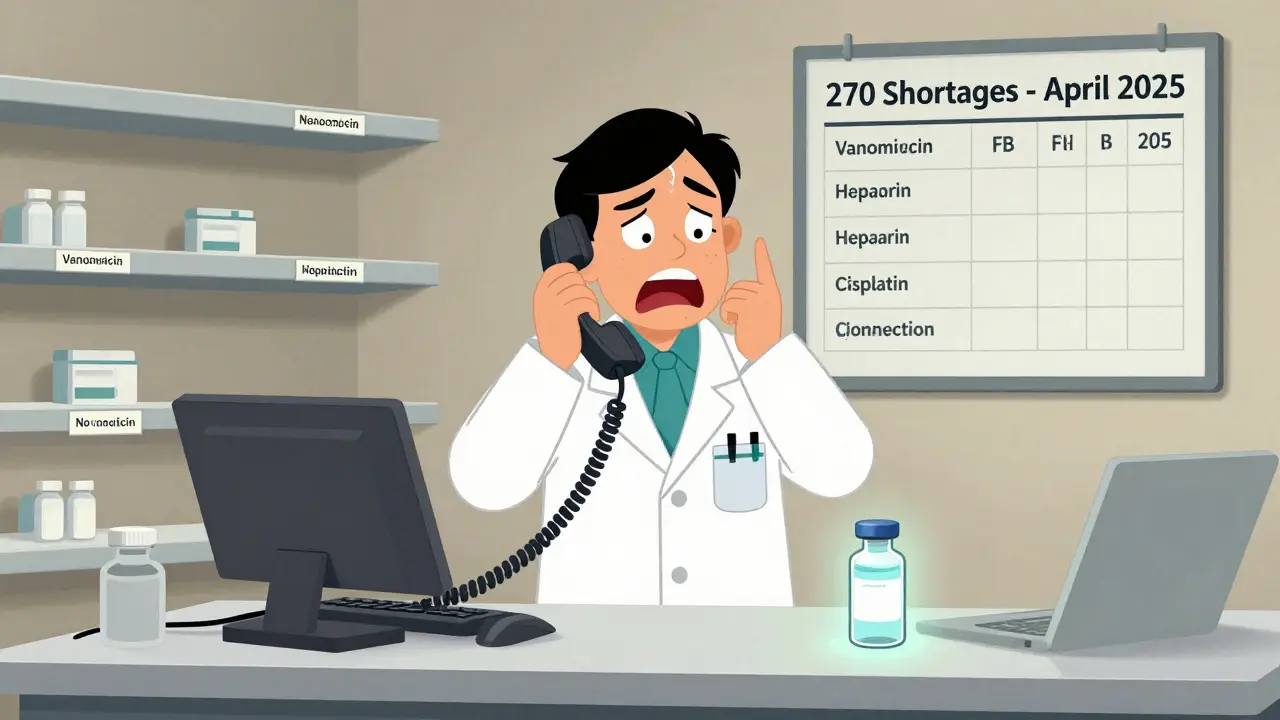
When you or a loved one needs a generic drug - say, a generic version of insulin, antibiotics, or chemotherapy - you expect it to be there. But right now, generic drug shortages are more common than ever. In April 2025, there were 270 active drug shortages in the U.S., according to the American Society of Health-System Pharmacists. That’s not a glitch. It’s a system failure. And it’s hitting the most vulnerable medications hardest: the cheap, life-saving ones that millions rely on every day.
Why Generic Drugs Are the Weakest Link
Generic drugs make up 90% of all prescriptions filled in the U.S. But they account for just 13.1% of total drug spending. That mismatch isn’t an accident - it’s the core of the problem. Because these drugs are cheap, manufacturers operate on razor-thin margins. A single vial of generic epinephrine might cost $3. A bag of IV saline? Less than $2. When production costs rise - even slightly - companies have two choices: raise prices and lose market share, or keep prices low and cut corners. Most choose the latter. And when corners get cut, quality suffers.The result? Manufacturers walk away. If a company can’t make money on a drug, they stop making it. That’s why, for many older generics, production has shrunk to just one or two factories. One plant shuts down - due to a tornado, a fire, or an FDA inspection failure - and the entire country runs out. In 2023, a tornado destroyed a Pfizer facility, halting production of 15 essential medications. In India, quality issues shut down cisplatin production, a key chemotherapy drug. No backup. No buffer. Just silence.
The Global Web of Risk
Almost 40% of the active ingredients in U.S. drugs come from China. India supplies much of the finished product. That’s not a secret - it’s business as usual. But this setup creates a fragile chain. One geopolitical shock - a trade war, a port strike, a regulatory crackdown - and entire drug lines vanish overnight.The FDA has flagged a long-standing issue: many Chinese manufacturers don’t submit proper documentation for their production facilities. Why? Because past inspections revealed unreliable practices. But even with those red flags, U.S. hospitals still rely on them. Why? Because there’s no alternative. The cost difference between manufacturing in China and the U.S. can be 10 times higher. No company can survive that gap in the generic market.
And it’s not just raw ingredients. Sterile injectables - the IV fluids, antibiotics, and cancer drugs that go directly into the bloodstream - are the most vulnerable. Why? Because they require clean rooms, specialized equipment, and months of testing. Only a handful of factories in the world can make them. When one fails, the entire system stumbles.
Brand-Name vs. Generic: A Tale of Two Supply Chains
Brand-name drugmakers don’t face the same risks. Why? They have money. They have backup factories. They keep stockpiles. When a supplier in Europe has an issue, they shift production to a plant in Canada or the U.S. They can afford to pay more for quality. They can wait out a delay.Generic manufacturers can’t. They’re locked into price contracts with pharmacies and insurers. Their profit margin? Sometimes less than 5%. That’s not enough to invest in redundancy. It’s not enough to hire extra inspectors. It’s not enough to build a second production line. So when something breaks - and it will - there’s no Plan B.
Who Pays the Price?
The real cost of these shortages isn’t on a balance sheet. It’s in hospitals. In clinics. In patient rooms.Hospital pharmacists spend 20 to 30% of their workweek just trying to find replacements. They scramble to source alternatives, compound drugs from scratch, or ration doses. One pharmacist told Pharmacy Times they once had to stretch a single vial of heparin across three patients - a dangerous compromise that could lead to blood clots or bleeding.
Patients are the ones who suffer. Cancer treatments are delayed. Antibiotics are replaced with less effective ones. Surgeries are canceled because there’s no IV fluid to keep patients stable. In 2024, drug shortages hit a record high of 323 products - the worst since tracking began. Internal medicine doctors say they’re now making decisions based on what’s available, not what’s best. That’s not care. That’s triage.
Why Solutions Keep Failing
You’ve heard the proposals: “Bring manufacturing back to the U.S.” “Build a national stockpile.” “Impose tariffs on foreign drugs.”Here’s the truth: none of them fix the root problem.
Onshoring everything? It would take 5 to 7 years and $20 to $30 billion. Who pays for that? Who trains the workers? Who builds the clean rooms? No company will do it alone - and no government has stepped up with the funding.
Stockpiles sound smart. But what if you need 100 different drugs, each with a 6-month shelf life? Storing them costs millions. Rotating them? Expensive. And if a shortage lasts longer than expected - say, a year - you’re back to square one.
And tariffs? They sound like a way to protect U.S. jobs. But they’d raise prices on the very drugs millions depend on. A 50% tariff on Chinese APIs? That could push the cost of a generic antibiotic from $1 to $1.50. Sounds small. But multiply that by millions of doses - and suddenly, insurers refuse to cover it. Hospitals stop stocking it. Patients go without.
What Actually Works
Real solutions aren’t flashy. They’re quiet. They’re systemic.First: require manufacturers to hold at least six months of inventory for critical drugs. That’s not a luxury - it’s basic insurance. The American Hospital Association supports this idea. It’s in S.2062. But it hasn’t passed. Why? Because it costs money. And no one wants to pay.
Second: increase transparency. Patients and doctors deserve to know where a drug’s ingredients come from. If a drug is made with API from China, that should be labeled - not hidden. This isn’t about fear. It’s about awareness. It lets hospitals plan better.
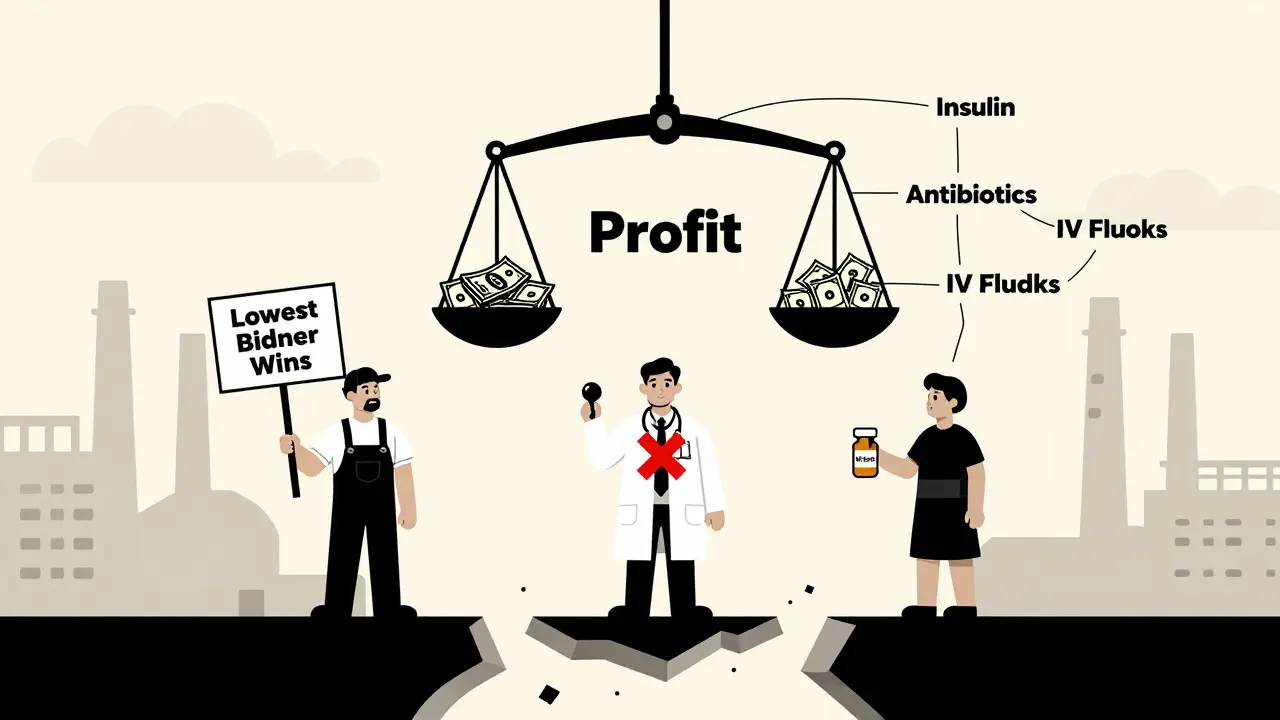
Third: reward quality, not just low price. Right now, the lowest bidder wins. That’s insane. If a manufacturer consistently delivers high-quality, reliable drugs, they should get a guaranteed contract - even if their price is 10% higher. That’s how you build stability.
And fourth: stop cutting funding for the FDA. The agency has fewer inspectors than it did in 2010. Meanwhile, overseas factories are under more scrutiny than ever. That imbalance means dangerous drugs slip through.
The Road Ahead
The crisis won’t be solved by one law. Not by one factory. Not by one country.It needs coordination. It needs investment. It needs a shift in how we value medicine. We treat generic drugs like commodities. But they’re not. They’re lifelines.
For now, the system keeps working - barely. But every shortage, every delay, every substituted drug is a warning. The next one might not be a shortage of insulin. It might be a shortage of antibiotics during a pandemic. Or a shortage of sedatives during a mass casualty event.
We’ve been warned. The data is clear. The human cost is real. The question isn’t whether we’ll fix this. The question is: how many more patients will suffer before we do?
Why are generic drug shortages getting worse?
Generic drug shortages are worsening because manufacturing has concentrated in just a few overseas facilities, profit margins are extremely thin, and there’s no financial incentive for companies to build backup production lines. When one factory fails - due to quality issues, natural disasters, or regulatory shutdowns - there’s often no alternative supplier. This is especially true for sterile injectables, which require complex, expensive facilities to produce.
Which drugs are most at risk of shortage?
Sterile injectables are the most vulnerable, including IV fluids, antibiotics like vancomycin, chemotherapy drugs like cisplatin, and emergency medications like epinephrine and heparin. These drugs are often priced under $5 per unit and require specialized aseptic manufacturing. Oral generics are less affected because they’re easier and cheaper to produce.
How do drug shortages affect patient care?
Shortages force clinicians to use substitute drugs that may be less effective, more toxic, or harder to administer. Patients face delayed cancer treatments, canceled surgeries, and increased risk of infection. Pharmacists spend 20-30% of their time managing shortages instead of focusing on patient safety. In some cases, hospitals have had to ration medications, putting lives at risk.
Can the U.S. produce all its generic drugs domestically?
Not in the near term. Rebuilding domestic manufacturing for critical generics would require $20-30 billion and 5-7 years. It would also need a trained workforce, new facilities, and regulatory support. Even then, it’s unlikely to be economically viable for low-margin drugs. The goal shouldn’t be total onshoring - it should be strategic diversification with reliable inventory buffers.
Do tariffs on foreign drugs help solve shortages?
No - they make it worse. Tariffs raise the cost of active ingredients from China and India, which would force manufacturers to raise prices or stop producing drugs altogether. This would shrink supply further, increase patient risk, and push more drugs onto the shortage list. Experts from CSIS and Gateway Health Partners warn tariffs could destabilize an already fragile system.
What’s being done to fix this?
Some federal efforts are underway, including proposals for public-private partnerships to support high-risk generic production and mandatory six-month stockpiles for critical drugs. The FDA is increasing inspections of foreign facilities, but domestic inspection capacity has declined. The Association of Accessible Medicines is pushing for policy changes that reward quality over price. However, without major funding and legislative action, progress remains slow.


Write a comment