
INR Elevation Calculator
INR Elevation Risk Calculator
This tool estimates potential INR increase when taking trimethoprim-sulfamethoxazole (Bactrim/Septra) while on warfarin therapy. Remember: this is for educational purposes only and should not replace professional medical advice.
When you’re on warfarin, even a simple antibiotic can throw your blood thinning off balance-sometimes dangerously so. One of the most dangerous combinations doctors warn about is trimethoprim-sulfamethoxazole (often sold as Bactrim or Septra) and warfarin. Together, they can cause your INR to spike overnight, putting you at risk for internal bleeding, stroke, or even death. This isn’t a rare edge case. It happens often enough that hospitals have protocols just for this interaction.
Why This Interaction Is So Dangerous
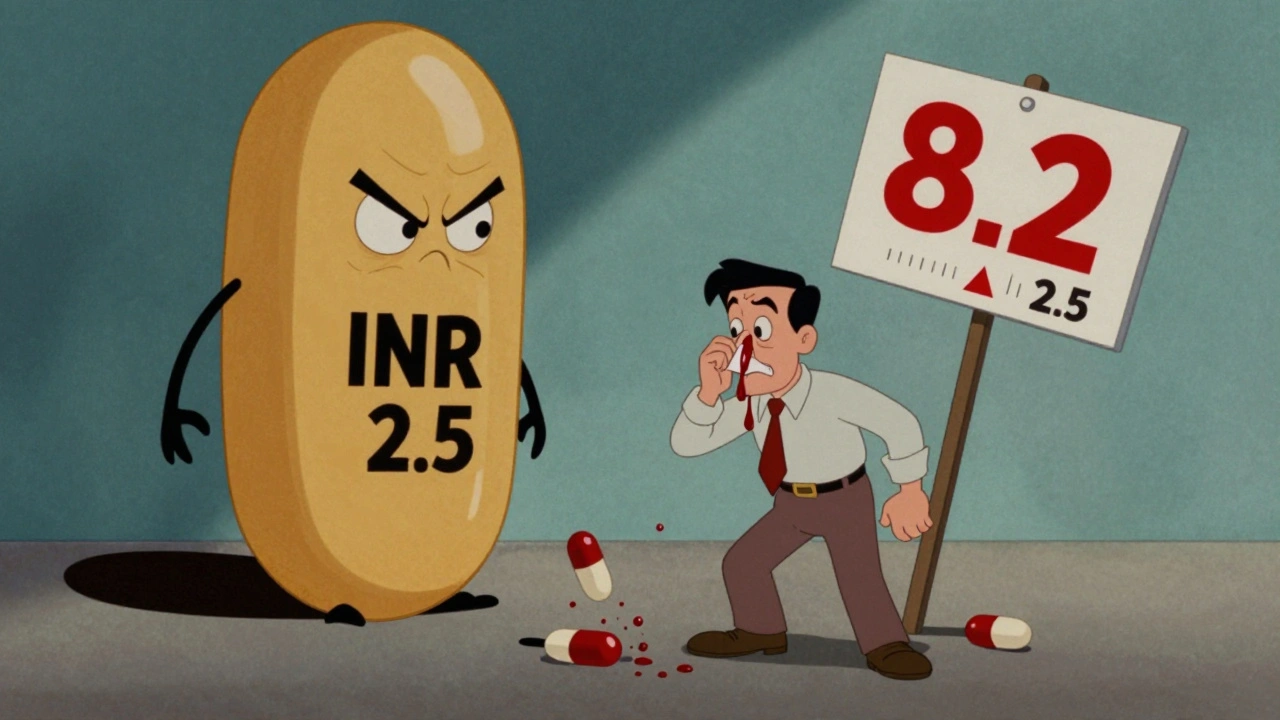
Warfarin works by blocking vitamin K, which your body needs to make clotting factors. It’s a tightrope walk: too little, and you risk clots; too much, and you bleed. Your INR (International Normalized Ratio) tells you where you stand. A normal range for most people on warfarin is 2.0 to 3.0. If it jumps above 4.0, your bleeding risk starts climbing. Above 5.0? That’s a red zone. Trimethoprim-sulfamethoxazole doesn’t just nudge your INR up-it can slam it. Studies show this combo raises INR by an average of 1.8 points. For someone with an INR of 2.5, that means hitting 4.3 in just a few days. That’s not a fluke. It’s predictable. And it’s deadly. The problem isn’t just one thing. It’s three things happening at once:- Drug competition: Both warfarin and sulfamethoxazole cling tightly to albumin in your blood. When sulfamethoxazole shows up, it kicks warfarin off its binding sites, flooding your system with free, active warfarin.
- Metabolism slowdown: Trimethoprim blocks CYP2C9, the liver enzyme that breaks down the stronger form of warfarin (S-warfarin). That means warfarin hangs around longer, building up in your body.
- Gut flora disruption: Antibiotics kill off bacteria in your intestines that make vitamin K. Less vitamin K means warfarin works even harder than usual.
How Fast Does It Happen?
This isn’t a slow burn. INR starts rising within 36 to 72 hours after you take your first dose of TMP-SMX. That’s why many patients don’t realize what’s happening until they’re already in trouble. One patient I read about went to the ER with a nosebleed that wouldn’t stop. His INR had jumped from 2.7 to 8.2 in four days after starting Bactrim for a urinary tract infection. He had a mechanical heart valve. One more day, and he might not have made it.Some Antibiotics Are Safer-Here’s the Difference
Not all antibiotics are created equal when you’re on warfarin. Here’s how TMP-SMX stacks up against others:| Antibiotic | Average INR Increase | Risk Level |
|---|---|---|
| Trimethoprim-Sulfamethoxazole (Bactrim) | 1.8 units | High |
| Ciprofloxacin | 0.9 units | Moderate |
| Amoxicillin | 0.4 units | Low |
| Nitrofurantoin | 0.2 units | Very Low |
Who’s Most at Risk?
Not everyone reacts the same way. Some people take Bactrim and their INR stays steady. Others crash. Why?- Age: People over 75 are at higher risk. Their livers clear drugs slower, and they often have less muscle mass, which changes how drugs distribute in the body.
- Gender: Men are 9% more likely than women to have a dangerous INR spike, according to a study of over 70,000 patients.
- Health conditions: If you have heart failure, liver disease, or poor nutrition, your body handles warfarin differently-and you’re more vulnerable.
- Genetics: Some people have a CYP2C9 gene variant that makes them extra sensitive to warfarin. Even small doses can push them into danger.

What Should You Do If You Need an Antibiotic?
If you’re on warfarin and your doctor suggests TMP-SMX, ask: Is there another option? If the answer is no, here’s what you need to do:- Check your INR before starting. Know your baseline.
- Get your INR checked again 48 to 72 hours after starting the antibiotic. Don’t wait. This is non-negotiable.
- Reduce your warfarin dose by 20-30% preemptively. Especially if you’re over 70 or have other risk factors.
- Watch for signs of bleeding: Unusual bruising, nosebleeds, blood in urine or stool, headaches, dizziness, or weakness. If you see any, call your doctor immediately.
What If Your INR Spikes?
If your INR goes above 4.0 but you’re not bleeding:- Hold off on your next 1-2 warfarin doses.
- Resume at a lower dose once your INR drops.
- Take 1 to 2.5 mg of oral vitamin K.
- Get IV vitamin K (5-10 mg).
- Receive 4-factor prothrombin complex concentrate (PCC) to reverse the effect fast.
Real Stories, Real Consequences
On a patient forum, a nurse shared that she’d seen six elderly patients with atrial fibrillation go from stable INRs to emergency rooms after starting Bactrim. One man, 82, had a brain bleed. He survived but lost his ability to speak. Another Reddit user described how his 78-year-old father, with a mechanical aortic valve, had an INR of 8.2 after three days of TMP-SMX. He needed vitamin K and fresh frozen plasma. He was in the hospital for five days. But here’s the twist: some people take Bactrim with no change in INR. A pharmacist on the same thread said he’s seen patients on warfarin for years take Bactrim for pneumonia with no issues. That variability is why blanket rules don’t always work-but it doesn’t mean you can gamble.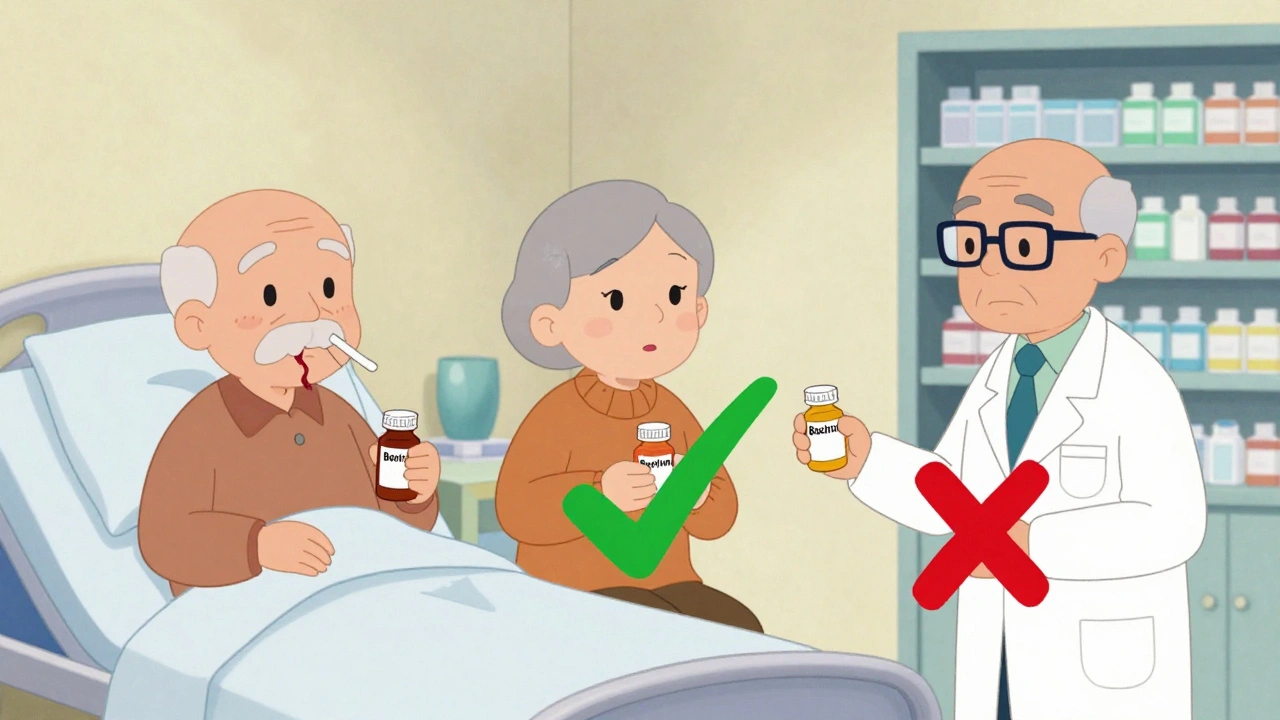
What About Newer Blood Thinners?
Direct oral anticoagulants (DOACs) like apixaban and rivaroxaban don’t interact with TMP-SMX the same way. That’s why many doctors now prefer them. But here’s the catch: about 2.6 million Americans are still on warfarin. Why? Because DOACs aren’t right for everyone. People with mechanical heart valves, severe kidney disease, or certain types of clotting disorders still need warfarin. And for them, this interaction remains a daily threat.How to Protect Yourself
- Always tell every doctor and pharmacist you’re on warfarin. Even for a simple sinus infection.
- Keep a list of all your meds and update it every time something changes.
- Ask before taking any new drug-even over-the-counter painkillers or herbal supplements.
- Get your INR checked regularly even when you feel fine.
- Know the warning signs of bleeding and act fast.
A 2022 study found that patients who got specific counseling about antibiotic interactions had 37% fewer emergency visits for bleeding. Knowledge isn’t just power-it’s a lifesaver.


Write a comment