
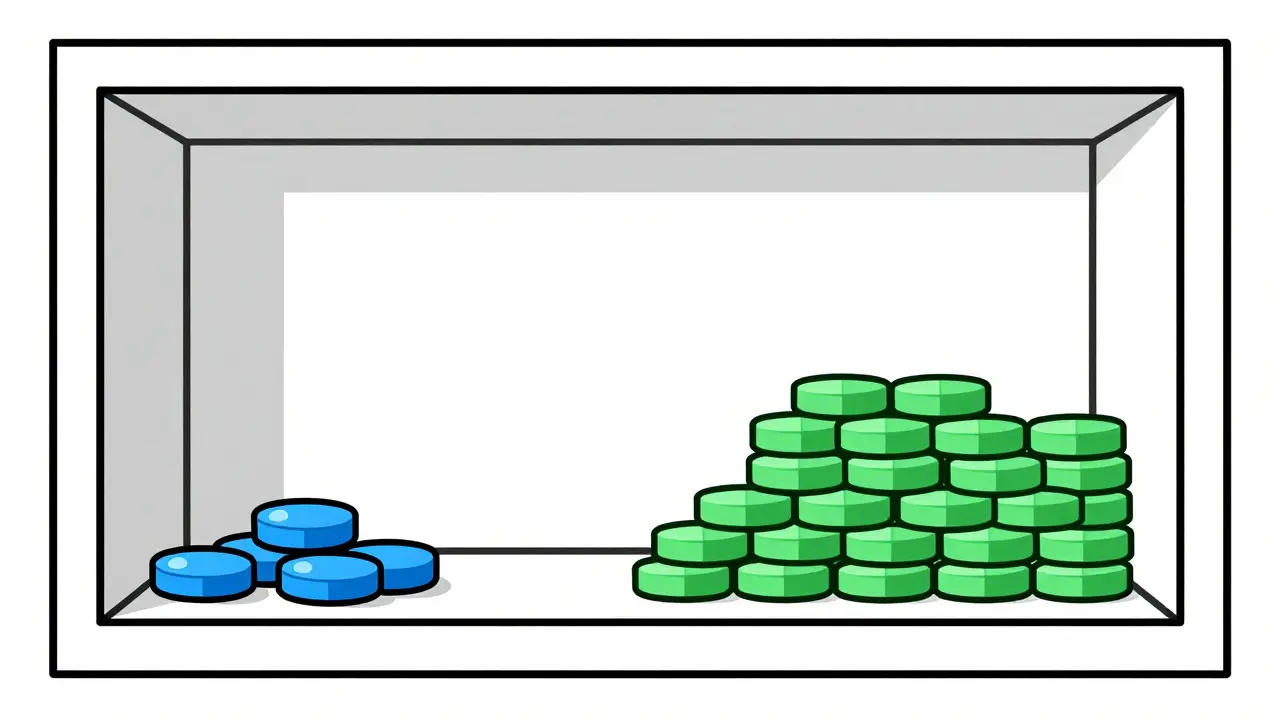
Only 6% of generic drug approvals between 2018 and 2022 were for NTI generics, even though these drugs make up 14% of all small molecule medications. Why? Because ensuring their safety and efficacy requires specialized bridging studies that are far more complex than standard generic drug testing. For patients taking medications like warfarin or levothyroxine, even tiny changes in drug levels can mean the difference between life-saving treatment and dangerous side effects. This is where bridging studies for Narrow Therapeutic Index (NTI) generics come in-they’re the critical step that keeps patients safe while expanding access to affordable generic options.
What makes NTI drugs so tricky?
Narrow Therapeutic Index (NTI) drugs are medications where the difference between a safe dose and a toxic dose is razor-thin. For example, warfarin (a blood thinner) needs precise dosing: too little won’t prevent clots, but too much can cause life-threatening bleeding. Phenytoin (used for seizures), digoxin (for heart conditions), and levothyroxine (for thyroid issues) follow the same pattern. These drugs have a therapeutic index of ≤3, meaning the effective dose is within a 2-fold range of the toxic dose. Doctors often monitor blood levels closely for these medications because small variations can have big consequences.
The FDA defines NTI drugs using five specific criteria: a maximum 2-fold difference between minimum effective and toxic doses, requirement for routine blood monitoring, low within-subject variability (≤30%), and doses adjusted in small increments (<20%). This tight margin is why generic versions can’t just copy the brand-name drug-they must match the original’s performance exactly.
How bridging studies for NTI generics work
Standard generic drugs only need simple bioequivalence studies showing they’re absorbed similarly to the brand-name version. But for NTI generics, regulators require much stricter testing. The FDA’s 2017 guidance on warfarin sets the standard: a single-dose, fully replicated 4-way crossover study design using reference-scaled average bioequivalence (RSABE). Here’s what that means in practice:
- Participants take the generic and brand-name drugs in four different sequences (e.g., generic, brand, brand, generic) over several weeks
- Blood samples are taken frequently to measure drug levels
- Statistical analysis compares the generic’s performance against the brand
Unlike standard generics (which accept 80%-125% similarity for drug absorption), NTI generics must stay within 90.00%-111.11% for both peak blood concentration (Cmax) and total absorption (AUC). Quality control standards are also tighter-active ingredients must be 95%-105% precise versus 90%-110% for regular generics. This extra rigor ensures that even minor differences won’t push patients into unsafe territory.
Why these studies cost more and take longer
Developing an NTI generic isn’t just harder-it’s significantly more expensive and time-consuming. Bioequivalence studies for NTI drugs typically cost $2.5-$3.5 million versus $1.5-$2.5 million for standard generics. The 4-way crossover design requires twice as many participants and takes 12-18 months to complete, compared to 6-9 months for regular generics. According to Teva Pharmaceuticals’ regulatory experts, this design increases study duration by 40-50% and doubles the number of subjects needed.
Between 2018 and 2022, 37% of rejected NTI generic applications cited inadequate bridging study design as the main issue, compared to just 12% for non-NTI drugs. Only 18 NTI generics were approved during this period, while 1,042 standard generics cleared the FDA. This gap exists because most generic manufacturers lack the specialized expertise required. The FDA estimates only 35% of companies have in-house staff trained in RSABE statistical methods for NTI drugs.
Regulatory differences between standard and NTI generics
The European Medicines Agency (EMA) and FDA agree that NTI drugs need unique handling. While standard generics can sometimes skip bridging studies for minor formulation changes, NTI generics require full testing for any modification. The FDA’s 2023 draft guidance expanded the list of drugs requiring stringent testing from 12 to 27 products, including newer medications like tacrolimus (an immunosuppressant). Meanwhile, the EMA’s 2022 position paper states: "NTI drugs require specific bioequivalence study designs that cannot be waived based on product similarity alone."
For example, when switching from brand-name warfarin to a generic version, regulators demand proof that every batch maintains blood levels within 90%-111% of the original. This is why warfarin generics are often more expensive than other generics-their development costs are 30-50% higher. Despite this, generic warfarin still saves patients $1,000-$2,000 annually compared to the brand name.
Current challenges and future directions
Companies developing NTI generics face recruitment hurdles: finding enough healthy volunteers willing to undergo multiple blood draws over weeks is tough. Dropout rates in these studies average 15-20%, compared to 5-10% for standard bioequivalence trials. The FDA has introduced a pilot program for complex generics that cuts review times by 25% for applicants who participate. Early results show promise: 82% of companies report these meetings reduce development costs and delays.
Emerging technologies might ease some burdens. Physiologically-based pharmacokinetic (PBPK) modeling uses computer simulations to predict how drugs behave in the body. In a 2022 FDA pilot study, PBPK modeling accurately predicted warfarin generic performance without full clinical trials. However, FDA officials emphasize that "robust clinical data will remain essential for NTI drug approval for the foreseeable future." The ICH is working on new guidelines to harmonize NTI drug testing across countries, targeting implementation by 2025.
Why this matters for patients
Without rigorous bridging studies, patients could face serious risks. A 2021 study found that 12% of hospitalizations involving warfarin were linked to generic switching issues. Conversely, properly tested NTI generics make life-saving medications more affordable. For example, generic levothyroxine costs 80% less than brand-name versions while maintaining the same safety profile. The global NTI drug market is worth $78.5 billion, with generic versions representing a $32.8 billion opportunity by 2025.
Regulators are walking a tightrope: ensuring safety while expanding access. The FDA’s Office of Generic Drugs reports that NTI generics achieve only 42% market share compared to 85% for non-NTI generics. This gap exists because developing these drugs is so complex. But with better tools and clearer guidelines, more manufacturers may enter the space-ultimately saving patients money without compromising safety.
What is a Narrow Therapeutic Index (NTI) drug?
An NTI drug has a very small margin between its effective dose and toxic dose. For example, warfarin (blood thinner) must be dosed precisely-too little won’t prevent clots, but too much can cause dangerous bleeding. Other examples include phenytoin (seizure medication), digoxin (heart drug), and levothyroxine (thyroid hormone).
Why can’t standard bioequivalence studies be used for NTI generics?
Standard tests allow 80%-125% similarity in drug absorption, but NTI drugs require tighter control (90%-111%). Even small differences in how the body processes these drugs can lead to treatment failure or serious side effects. The FDA’s 2017 guidance on warfarin specifically requires more rigorous testing to ensure patient safety.
How do bridging studies for NTI drugs differ from regular generics?
Standard generics use a simple two-way crossover study with 20-30 participants. NTI generics need a four-way crossover design with 40-60 participants, multiple blood draws over weeks, and advanced statistical analysis (RSABE). The acceptance criteria are also much stricter-90%-111% for drug levels versus 80%-125% for regular generics.
What are the main challenges in developing NTI generics?
High costs ($2.5-$3.5 million per study), longer timelines (12-18 months vs. 6-9 months), difficulty recruiting participants, and complex statistical analysis. Only 35% of generic manufacturers have in-house expertise for these studies. Between 2018-2022, 37% of NTI generic applications were rejected due to inadequate bridging study design.
Why are only 18 NTI generics approved each year?
The FDA approved 1,042 standard generics but only 18 NTI generics between 2018-2022. This gap exists because NTI drug development is significantly more complex and expensive. Many manufacturers avoid this space due to the high failure rate, specialized expertise needed, and regulatory hurdles. However, the market potential is large-generic NTI drugs could save patients billions annually while maintaining safety.


Write a comment