

Respiratory Medication Interaction Checker
Disclaimer: This tool is for educational purposes only. It is not a substitute for professional medical advice. Always consult your doctor or pharmacist before changing or starting any medication.
Your Current Medication
Select your medications on the left to check for potential respiratory interactions.
Managing a chronic lung condition isn't just about taking your inhaler; it's about understanding how that inhaler plays with everything else in your medicine cabinet. For millions of people dealing with respiratory issues, the real danger often isn't the disease itself, but the hidden chemistry between different prescriptions. When you're juggling multiple drugs, you might be inadvertently creating a cocktail that makes it harder to breathe, even if you're taking the "right" medication for your lungs.
The Core Toolkit: How Respiratory Meds Work
Before looking at what goes wrong, we need to understand what's supposed to happen. Most people with these conditions rely on Bronchodilators is a class of medications that relax the muscles around your airways to make breathing easier . These generally fall into two main buckets: those that mimic adrenaline to open the lungs and those that block the signals telling the lungs to tighten.
You've likely used Short-acting beta-agonists (SABAs) like Albuterol (also known as salbutamol) for those "emergency" moments when you can't catch your breath. For daily maintenance, doctors use Long-acting beta-agonists (LABAs) like salmeterol. Then there are the LAMAs (Long-acting muscarinic antagonists), such as Tiotropium, which work on a different pathway to keep the airways open over a longer period.
To get a better grip on these, let's look at how they differ in a quick breakdown:
| Medication Class | Example Drug | Primary Goal | Typical Use |
|---|---|---|---|
| SABA | Albuterol | Rapid airway opening | Rescue/Acute relief |
| LABA | Salmeterol | Long-term airway stability | Maintenance |
| LAMA | Tiotropium | Blocking muscle constriction | Maintenance (especially COPD) |
| Corticosteroids | Fluticasone | Reducing inflammation | Long-term prevention |
The Red Flags: Dangerous Non-Respiratory Interactions
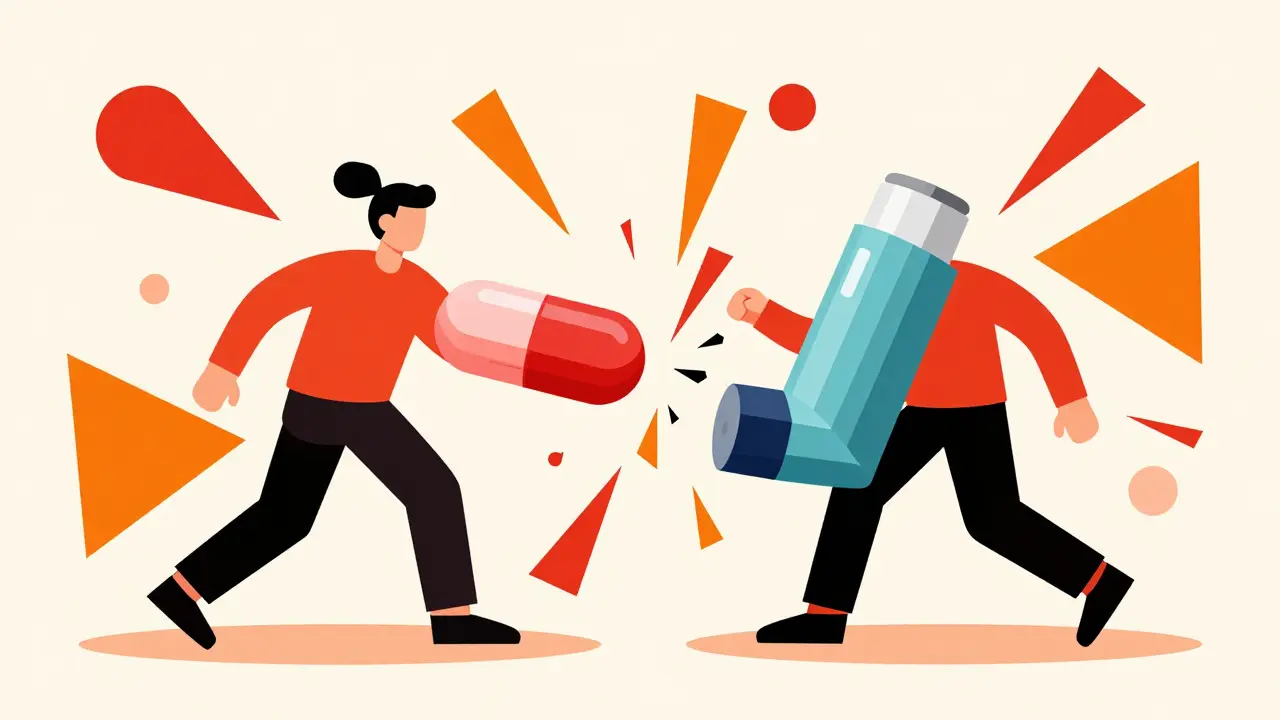
The most surprising part of respiratory safety is that the most dangerous interactions often come from drugs that have nothing to do with your lungs. For someone with COPD, Opioids are a major risk. These pain relievers can cause respiratory depression-basically telling your brain to forget to breathe-which is life-threatening when your lung capacity is already low. If you mix opioids with benzodiazepines (anti-anxiety meds), the risk of severe respiratory failure can jump by as much as 300%.
If you have asthma, keep a very close eye on your blood pressure medications. Nonselective beta-blockers, such as Propranolol, are notorious for triggering severe bronchospasms. They essentially "lock" the receptors in your lungs that your rescue inhaler needs to open. While cardioselective blockers like Metoprolol are usually safer, a nonselective one can drop your lung function (FEV1) by up to 25% in some people.
Then there's the "aspirin trigger." About 10% of adults with asthma-especially those with nasal polyps-suffer from NSAID-exacerbated respiratory disease. Taking aspirin or ibuprofen can cause a sudden, severe asthma attack within an hour of ingestion. It's a scary experience that often happens to people who didn't know they were sensitive until they took a common over-the-counter painkiller for a headache.
The "Additive Effect": When Meds Double Up
Sometimes the interaction isn't a violent reaction, but an accumulation of side effects. This is common with LAMA inhalers. Because they are anticholinergics, they block certain nerve signals. If you're also taking meds for an overactive bladder (like oxybutynin), certain antihistamines (like diphenhydramine), or some antidepressants (like amitriptyline), you're doubling up on the same effect.
This "anticholinergic load" can lead to a frustrating set of symptoms: extreme dry mouth, constipation, and in men, a significant risk of acute urinary retention. In fact, combining a LAMA with bladder medication can increase the risk of urinary retention by nearly 30%.
Even common cold remedies can be sneaky. Some contain alpha-agonists that can mask a racing heart (tachycardia), making it hard for you or your doctor to realize you're overusing your beta-agonist inhalers, which can lead to cardiovascular strain.
Real-World Risks and Patient Pitfalls
Hearing from patients reveals a gap in how this information is shared. Many people only discuss their lung meds with their pulmonologist and their heart meds with their cardiologist, leaving the two doctors in the dark about the overlap. There are documented cases of patients ending up in the ER after combining a prescribed opioid for pain with a simple over-the-counter sleep aid, causing their oxygen levels to plummet.
A staggering number of people-roughly 68% in some surveys-report breathing difficulties triggered by medications they didn't even know affected the lungs. This includes certain antibiotics like clarithromycin or antifungals like ketoconazole, which can change how your liver processes other respiratory drugs, either making them less effective or dangerously potent.
How to Protect Yourself: A Safety Strategy
To avoid asthma and COPD medications mishaps, you need to be your own best advocate. You can't rely on a computer system to catch everything, although electronic health record alerts have helped reduce dangerous combinations by nearly 30% in some clinics.
Here is a practical game plan for your next appointment:
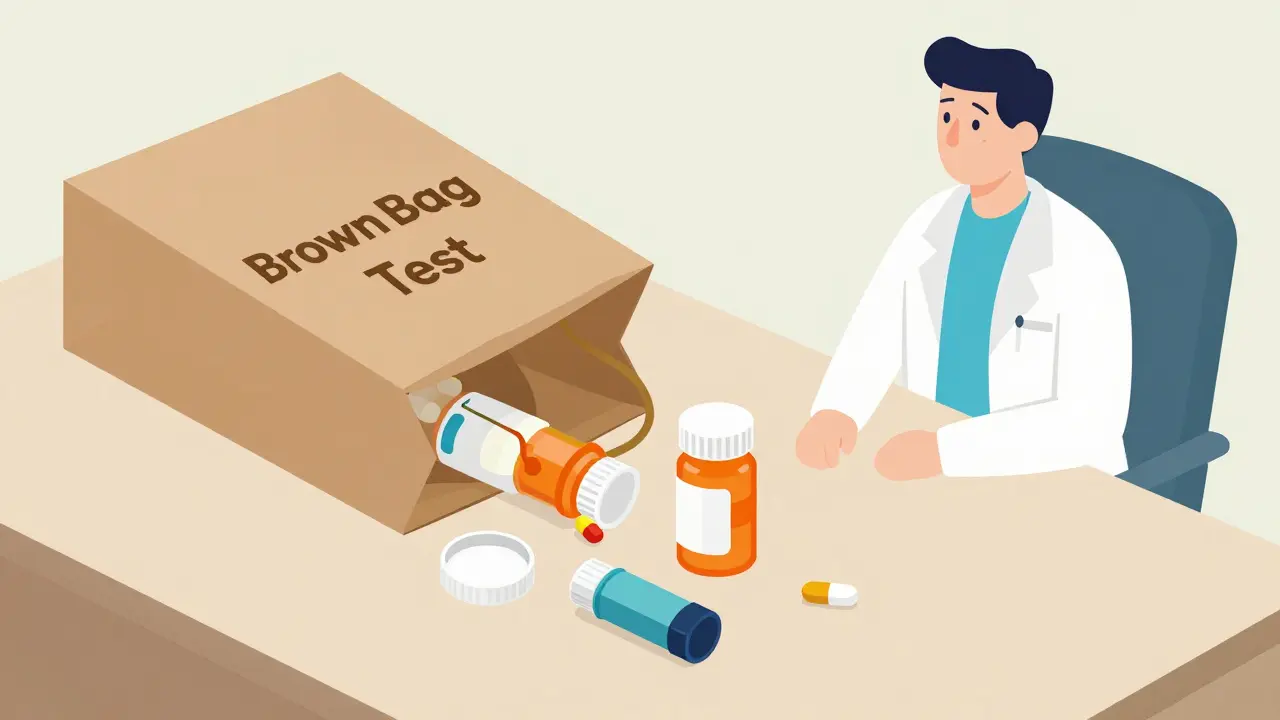
- The Brown Bag Test: Don't just bring a list. Put every single bottle-prescription, over-the-counter, and herbal supplement-into a bag and bring it to your doctor. This prevents "memory gaps" where you forget to mention that one daily vitamin or sleep aid.
- The Master List: Keep a digital or paper list that includes the drug name, the dose, why you take it, and who prescribed it.
- Pharmacist Check-in: Your pharmacist is often the last line of defense. Ask them specifically: "Do any of these medications interfere with my lung function or my inhalers?"
- Symptom Tracking: Note if you feel more short of breath or shaky after starting a new non-respiratory medication.
Looking Forward: Personalized Safety
The future of respiratory care is moving toward personalized risk assessment. Instead of general guidelines, doctors are starting to use a patient's specific characteristics to predict interactions. We're also seeing the rise of specialized tools, like the COPD Medication Safety App, which allows patients to check interactions in real-time for the vast majority of common drugs.
New research into dual inhibitors, like ensifentrine, shows that the type of combination matters. For instance, combining certain new drugs with LAMAs provides a massive boost in breathing ability, but the same combination with LABAs does nothing. This proves that the "mix and match" approach to respiratory medicine is a science, and the wrong match can be a wasted effort or a dangerous risk.
Can I take ibuprofen if I have asthma?
It depends. While many people with asthma can take NSAIDs like ibuprofen safely, about 10% develop a severe reaction called NSAID-exacerbated respiratory disease. If you have a history of nasal polyps or chronic sinusitis, you are at a higher risk. Always check with your doctor before using these for the first time.
Why are beta-blockers a concern for lung patients?
Nonselective beta-blockers can block the beta-2 receptors in your lungs, which are the exact receptors your rescue inhalers target to open your airways. This can lead to severe bronchospasms. Cardioselective beta-blockers are usually preferred because they target the heart more than the lungs.
Is it dangerous to combine a LAMA inhaler with other meds?
The primary risk is the "additive effect" of anticholinergics. If you take a LAMA along with other drugs that dry you out (like certain antidepressants, antihistamines, or bladder control meds), you may experience severe dry mouth, constipation, or urinary retention.
What should I do if I need pain medication but have COPD?
Be extremely cautious with opioids, as they can suppress your breathing. Discuss alternatives with your doctor and avoid mixing opioids with benzodiazepines or sedating antihistamines, as this combination significantly increases the risk of respiratory failure.
Can antibiotics affect how my asthma medications work?
Yes, certain antibiotics like clarithromycin can inhibit the enzymes (specifically CYP3A4) your liver uses to break down other medications. This can lead to higher levels of some drugs in your bloodstream, potentially increasing side effects or toxicity.