
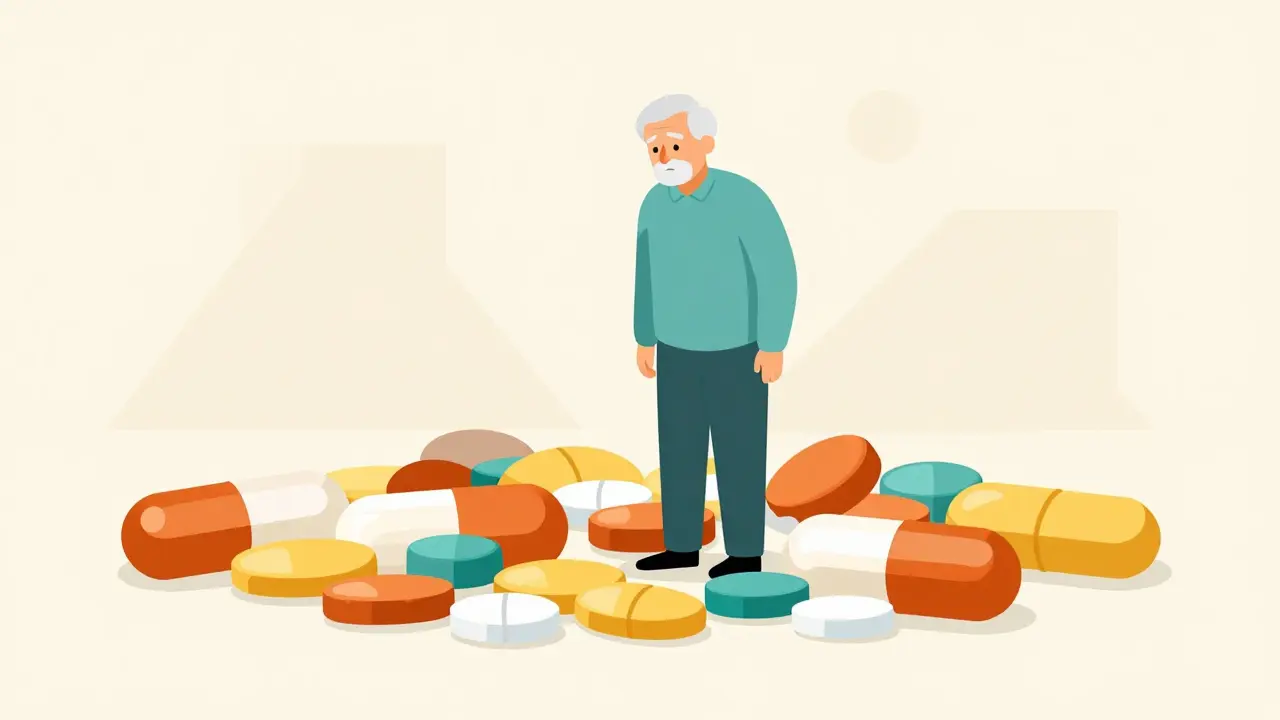
Imagine a 75-year-old who takes eight different pills a day. Now imagine that one of those medications, meant to help them sleep, actually increases their risk of a hip-fracturing fall or makes them suddenly confused. This is the reality for millions of seniors dealing with polypharmacy, where the treatment for one condition accidentally triggers a new problem. This isn't usually due to doctor error, but rather the fact that the human body changes as it ages. Your kidneys don't filter drugs as quickly, and your brain becomes more sensitive to certain chemicals. This is where the Beers Criteria is an evidence-based set of guidelines that helps healthcare providers identify medications that are likely to cause more harm than good in people aged 65 and older.
| Feature | Details |
|---|---|
| Primary Goal | Reduce adverse drug events (ADEs) in adults 65+ |
| Main Authority | American Geriatrics Society (AGS) |
| Latest Update | 2023 Edition |
| Key Focus | Potentially Inappropriate Medications (PIMs) |
Why Aging Changes How You React to Medicine
When you're 30, your body processes a pill like a well-oiled machine. By 70, the machinery slows down. Pharmacokinetics refers to how your body absorbs, distributes, and gets rid of a drug. In older adults, renal function-the way your kidneys clear waste-often declines. If a drug stays in your system too long because your kidneys can't flush it out, it can build up to toxic levels, even at a "normal" dose.
Then there is Pharmacodynamics, which is how the drug actually affects your body. For example, the aging brain is often much more sensitive to sedatives. A dose of a sleeping pill that might barely affect a young adult could leave an older person dizzy, confused, or unable to wake up, significantly increasing the risk of a fall. The Beers Criteria act as a safety net to catch these risks before they lead to a hospital trip.
Breaking Down the 2023 Guidelines
The most recent update from the American Geriatrics Society (AGS) isn't just one long list. It's a structured system designed to help doctors spot red flags. They've divided the criteria into five specific buckets to make the information usable in a busy clinic.
- General Avoidance: These are drugs that are risky for almost every older adult, regardless of their other health issues. Think of these as "high-alert" medications.
- Disease-Specific Risks: Some drugs are fine for most people but dangerous if you have a specific condition. For instance, a medication that's safe for a healthy 70-year-old might be dangerous for someone with dementia or heart failure.
- Cautionary Use: These aren't strictly "forbidden," but they require a very careful risk-benefit analysis. The doctor might prescribe them, but they'll monitor you much more closely.
- Renal Impairment Focus: Since kidney function varies wildly in seniors, this section highlights drugs that must be adjusted based on your specific kidney health data.
- Drug-Drug Interactions: This identifies "toxic pairs"-two medications that might be safe on their own but cause a severe reaction when taken together.
Common "Red Flag" Medications to Discuss With Your Doctor
While you should never stop a prescribed medication without talking to your provider, it's helpful to know which categories the Beers Criteria often flag. For example, Benzodiazepines-often used for anxiety or sleep-are frequently highlighted. Because they linger in the system and cause drowsiness, they are strongly linked to cognitive impairment and falls.
Another area of concern involves antipsychotics. The 2023 guidelines provide even stronger warnings about using these for patients with dementia, as they can increase the risk of stroke and death. Similarly, certain over-the-counter antihistamines (like diphenhydramine) can cause severe dry mouth, urinary retention, and confusion in older adults, making them a poor choice for a nighttime sleep aid.

Beers Criteria vs. STOPP-START: What's the Difference?
If you're researching medication safety, you'll likely run into the STOPP-START Criteria. While both aim to protect older adults, they have different philosophies. The Beers Criteria are primarily about stopping the bad stuff-identifying inappropriate prescriptions. They are a narrow, precise tool for identifying risk.
The STOPP-START system is broader. "STOPP" identifies what to stop, but "START" identifies medications that should be prescribed but aren't. For example, if a patient has a condition that requires a specific protective medication but isn't getting it, START catches that omission. Beers is a warning light; STOPP-START is more like a full-system diagnostic check.
The "Warning Light" Philosophy: Why These Aren't Absolute Rules
It is easy to look at a list of "medications to avoid" and assume that any doctor prescribing them is making a mistake. However, medicine is rarely black and white. A clinical pharmacist might describe the Beers Criteria as a "warning light." When a warning light comes on in your car, it doesn't mean the car must stop immediately; it means you need to investigate why the light is on.
There are cases where the benefit of a "potentially inappropriate" drug outweighs the risk. For a patient with end-stage cancer experiencing severe distress, a sedative that the Beers Criteria suggests avoiding might be the only way to provide quality of life. The goal is shared decision-making. The doctor, the patient, and the caregiver should weigh the specific risks against the desired outcome. The criteria are meant to spark a conversation, not to act as a legal mandate or a way to deny insurance coverage.

Practical Steps for a Safer Medication Review
Getting your medications reviewed isn't as simple as handing over a list. To make the most of a clinic visit, you can follow a structured approach often suggested by geriatric specialists. Start by creating a "Master List" that includes everything: prescriptions, over-the-counter vitamins, and herbal supplements. Many people forget that a "natural" supplement can interact with a prescription drug just as badly as another pharmaceutical.
During the appointment, ask your provider directly: "Are any of these medications on the Beers Criteria list?" or "Is there a safer alternative for my age?" If a doctor decides to keep you on a flagged medication, ask what the specific monitoring plan is. For instance, if you're on a drug that affects balance, you might agree to a quarterly balance assessment to ensure you aren't becoming a high fall risk.
Are the Beers Criteria rules that doctors must follow?
No. They are evidence-based guidelines, not laws. The American Geriatrics Society explicitly states they should not be used to punish clinicians or justify restricting health coverage. They serve as a tool to prompt a risk-benefit discussion between the doctor and the patient.
Who is the primary audience for the Beers Criteria?
While designed for physicians, pharmacists, and nurses, the guidelines are also useful for caregivers and patients. Using the criteria helps families ask the right questions during medication reviews to ensure the safety of their loved ones.
Can I just stop taking a medication if it's on the Beers list?
Absolutely not. Stopping certain medications abruptly-especially blood pressure meds, antidepressants, or sedatives-can cause dangerous withdrawal symptoms or a "rebound" effect where the original condition returns more severely. Always consult your doctor before changing your dose.
How often are the Beers Criteria updated?
The American Geriatrics Society updates them periodically as new scientific evidence emerges. The most recent major update was in 2023, which reviewed over 1,500 scientific articles to refine the medication lists.
What is a PIM?
PIM stands for "Potentially Inappropriate Medication." This means the drug is more likely to cause harm than benefit for an older adult, given their physiological changes, compared to the benefit it might provide.
Next Steps for Patients and Caregivers
If you are managing medications for yourself or a parent, the best move is to request a formal "Medication Therapy Management" (MTM) session. This is often a dedicated appointment where a pharmacist or geriatrician goes through every single pill, checks it against the latest Beers Criteria, and looks for overlaps. If you notice new symptoms like sudden confusion, dizziness, or a change in sleep patterns after starting a new drug, document the exact time and dose and bring that log to your next visit. This real-world data is often more valuable to a doctor than a general guideline.