
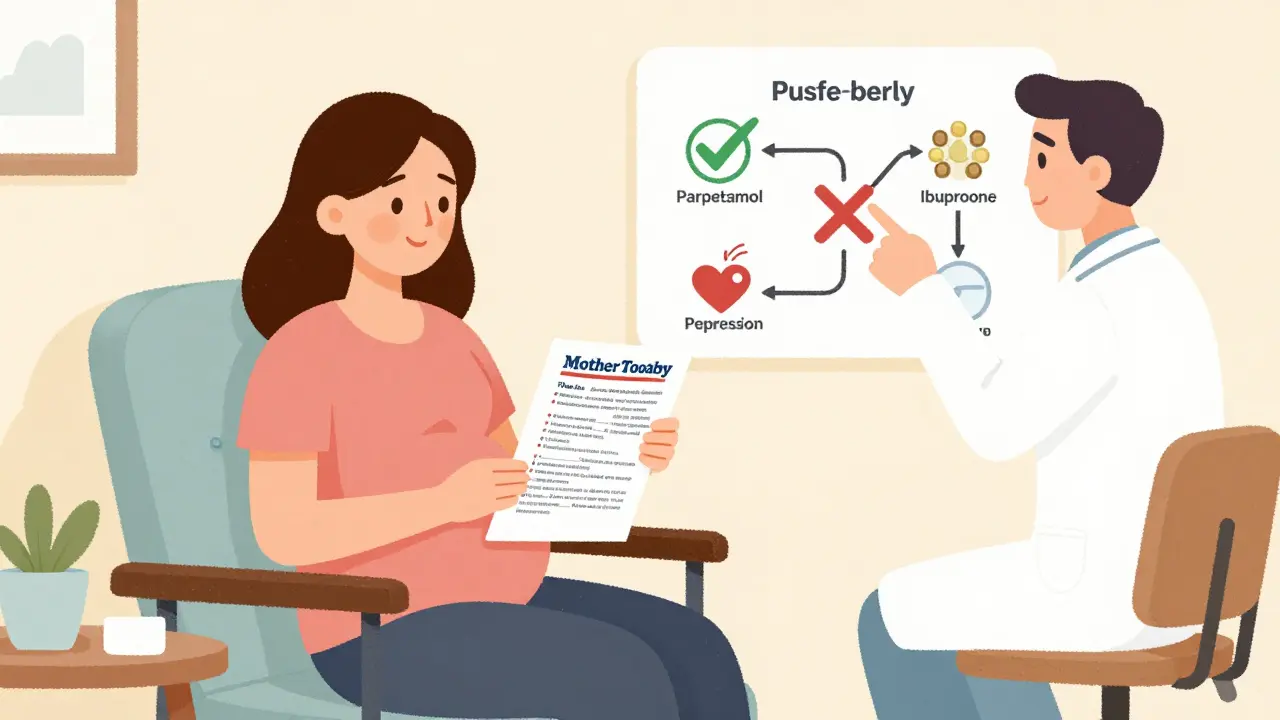
When you’re pregnant or planning to breastfeed, your body isn’t just carrying a baby-it’s managing two sets of needs. One is yours: managing chronic conditions like depression, asthma, or high blood pressure. The other is your baby’s: staying safe from drugs that might cross the placenta or enter breast milk. But here’s the hard truth: medication safety conversations don’t happen often enough, and when they do, they’re often too vague to be useful.
Most people assume their doctor will just tell them what’s safe. But studies show 68% of pregnant individuals report inadequate discussions about medications during prenatal visits. Some get told to "avoid everything"-which leads to dangerous decisions. One woman stopped her antidepressant because her OB said "it might hurt the baby," without explaining the risk of untreated depression. She ended up in the ER after a panic attack. Another kept taking ibuprofen past 20 weeks because no one told her it could cause kidney problems in the fetus. These aren’t rare cases. They’re the norm in clinics without structured protocols.
When to Talk About Medications-Not Just When You Find Out You’re Pregnant
Too many providers wait until pregnancy is confirmed to bring up meds. That’s too late. The best time to start this conversation is before conception. If you’re on chronic meds-like lithium for bipolar disorder, methotrexate for rheumatoid arthritis, or even daily aspirin for heart health-you need to know if switching is possible. Some drugs are fine. Others aren’t. And some have safer alternatives.
Here’s when you need to talk about meds:
- Preconception: If you’re trying to get pregnant, schedule a medication review with your provider. This isn’t optional-it’s essential. A 2023 study found that women who had preconception counseling were 40% less likely to take a teratogenic drug in early pregnancy.
- First prenatal visit: Even if you didn’t plan ahead, this is your next chance. Bring a full list: prescriptions, OTCs, supplements, herbal teas. Don’t assume your doctor knows what you’re taking.
- Every time your meds change: Whether it’s a new prescription, a dose increase, or a pharmacy refill, each change needs a safety check. Medication changes during pregnancy are common-and risky if unmonitored.
- Postpartum, before breastfeeding starts: Just because a drug was safe during pregnancy doesn’t mean it’s safe in breast milk. LactMed, a free database from the National Library of Medicine, has data on over 7,000 drugs and their presence in breast milk. Ask your provider to check it.
What a Good Medication Safety Conversation Looks Like
A good conversation doesn’t say "This is dangerous." It says: "Here’s what we know, here’s what we don’t, and here’s what matters most to you."
Effective discussions follow four steps:
- Assess your current meds. Don’t just list them-explain why you take them. If you’re on fluoxetine for anxiety, say: "I’ve had panic attacks since I was 18. I can’t function without it." That context changes everything.
- Use evidence, not fear. Avoid vague terms like "rare risk." Say: "Based on 15,000 pregnancies studied, the chance of a birth defect from this drug is about 1 in 1,000. The risk of untreated depression is 1 in 5 for preterm birth or low birth weight."
- Offer alternatives. If a drug isn’t ideal, what’s the backup? For pain, paracetamol (acetaminophen) is the only recommended analgesic across all trimesters, per the FDA’s 2023 safety update. For anxiety, cognitive behavioral therapy (CBT) has strong data supporting its use during pregnancy. For hypertension, labetalol or nifedipine are preferred over ACE inhibitors.
- Give you something to take home. Print a MotherToBaby fact sheet. Email a link to LactMed. Hand them a one-pager with the drug name, risk level, and next steps. People remember what they can touch.
One provider I spoke with in Wellington started printing these sheets after a patient told her, "I Googled it and got five different answers." Now, 92% of her patients say they felt "clearer" about their meds. That’s not luck-it’s system design.
The Tools That Actually Work
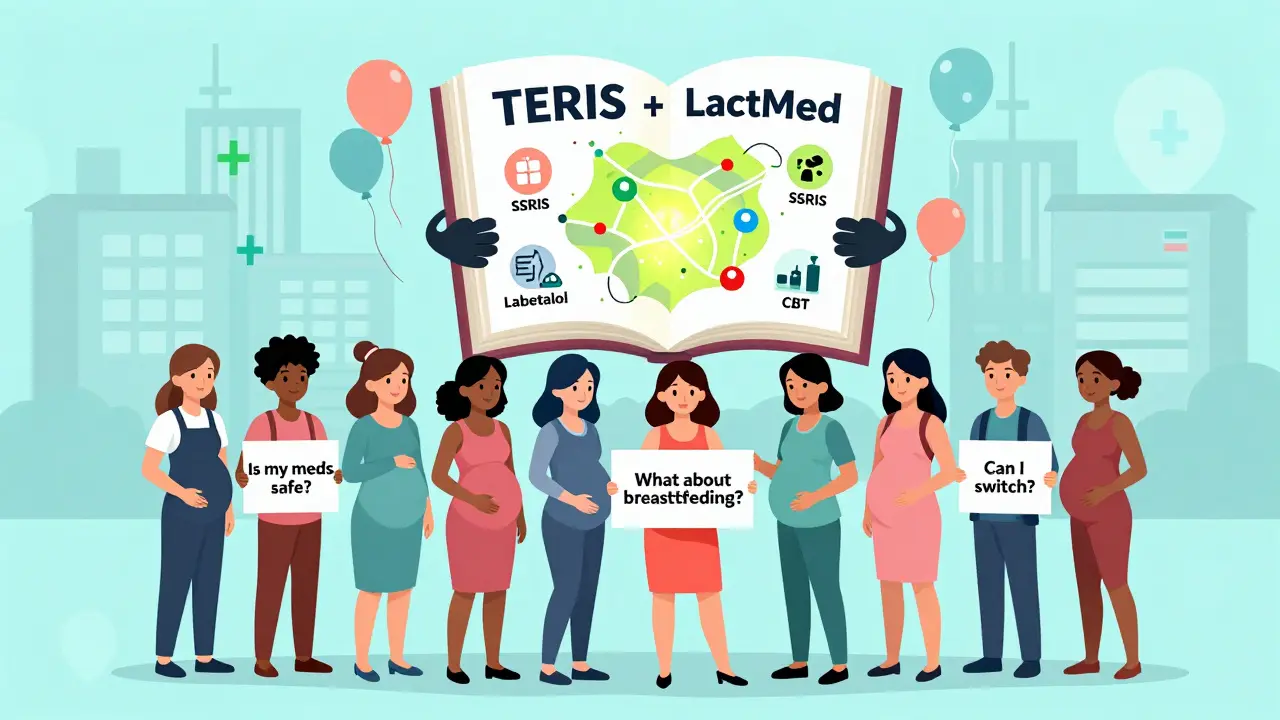
There’s a flood of misinformation online. A 2022 study found only 43% of top Google search results on pregnancy meds matched expert guidelines. MotherToBaby? 98% accuracy. LactMed? Updated weekly, free, and accessible on your phone. TERIS? A global database with risk assessments for over 1,800 drugs.
These aren’t luxury tools-they’re standard in top clinics. Epic and Cerner, the two most common electronic health record systems in the U.S., now integrate these databases directly into prescribing workflows. If your provider doesn’t use them, ask why.
And don’t forget the iPLEDGE program. It’s not just for isotretinoin (Accutane). It’s a model: mandatory counseling, signed consent, pregnancy testing, and follow-up. Why shouldn’t every high-risk drug have this level of oversight?
Why This Matters More Than You Think
Medication-related birth defects make up 3% of all cases-and nearly all of them are preventable. The CDC estimates 90% of pregnant people take at least one medication. 70% take prescriptions. That’s not a few outliers. That’s most of us.
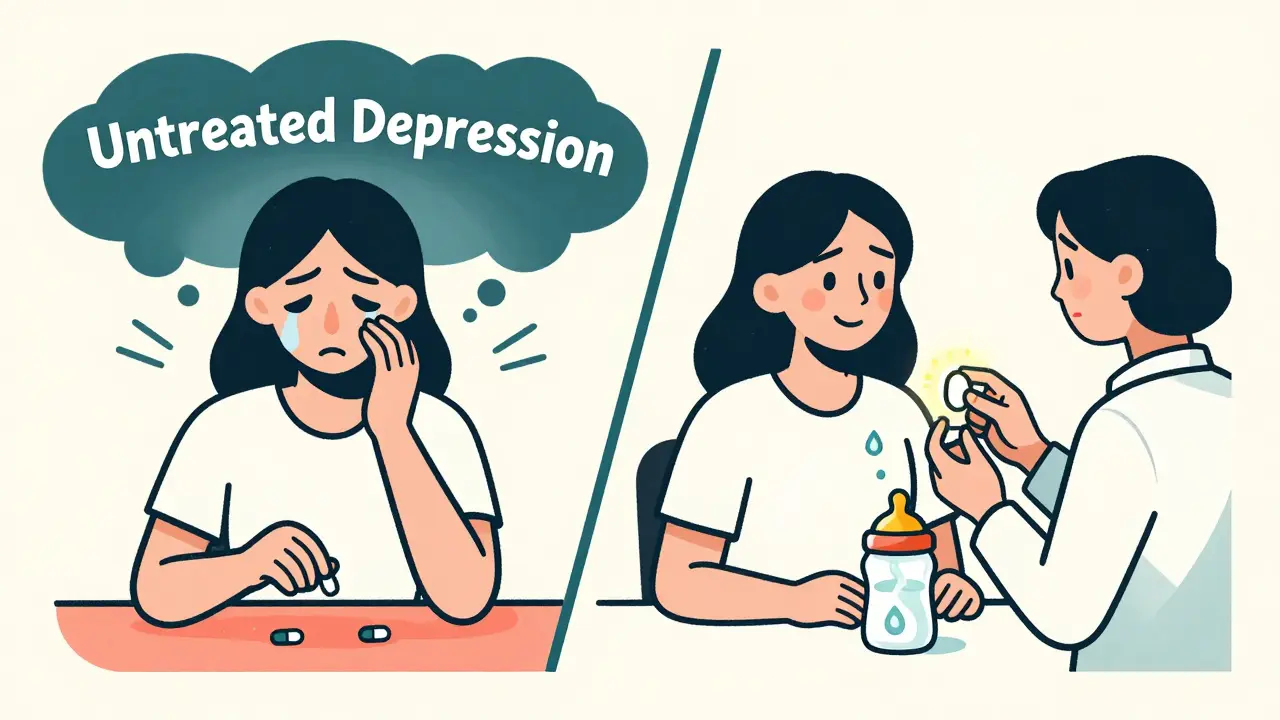
And the risks go beyond birth defects. Untreated maternal illness causes more harm than most drugs. A 2021 study found 40% of pregnant patients stop necessary meds without talking to a provider-because they were scared, not informed. That’s not safety. That’s silence.
Consider this: paracetamol is the only recommended painkiller during pregnancy. Yet, 61% of pregnant women in rural clinics report being offered ibuprofen or naproxen after 20 weeks. Why? Because no one checked their pregnancy status. No one asked. No one documented.
What to Do If Your Provider Doesn’t Bring It Up
You don’t need permission to ask. You need clarity.
Here’s what to say:
- "I’m on [medication]. Can we review if it’s safe for pregnancy and breastfeeding?"
- "Can we get a printed fact sheet from MotherToBaby or LactMed?"
- "Is there a safer alternative? What happens if I stop this drug?"
- "Can we schedule a dedicated 15-minute appointment just for meds?"
If they brush you off, ask for a pharmacist. Pharmacists are trained in maternal drug safety and often have more up-to-date data than even OB/GYNs. In top-performing clinics, pharmacists lead medication reviews during prenatal visits-and they reduce errors by over 50%.
What’s Changing-and What’s Still Broken
Progress is real. In 2015, only 47% of U.S. obstetric practices had structured medication safety protocols. Now, it’s 82%. Academic centers? 94%. But private practices? Only 68%. Rural clinics? Barely 35% have access to teratology specialists.
And disparities are stark. Only 22% of Medicaid patients get documented medication reviews. Compare that to 78% of privately insured patients. That’s not a gap. That’s a chasm.
Meanwhile, the FDA is pushing for clearer labeling on all new drugs. The European Medicines Agency estimates that full implementation of standardized communication could prevent 15,000-20,000 adverse outcomes per year across the EU.
But here’s the real test: Are you getting a clear, personalized, evidence-based conversation? Or are you being handed a pamphlet and told to "do your own research"?
Final Checklist: Did Your Conversation Cover This?
- ✅ Did they ask about ALL medications you take-even vitamins and herbal teas?
- ✅ Did they explain risks in numbers, not just "it’s risky"?
- ✅ Did they offer alternatives if the drug isn’t ideal?
- ✅ Did they give you a written resource (print or digital)?
- ✅ Did they check if you’re planning to breastfeed-and how that changes things?
If you answered "no" to any of these, you didn’t get a full safety discussion. You got a risk warning. Big difference.
Medication safety isn’t about avoiding drugs. It’s about using them wisely. You’re not a risk. You’re a person. And your health matters-both now, and for the life growing inside you.
Can I keep taking my antidepressant while pregnant?
Yes, many antidepressants are considered safe during pregnancy. SSRIs like sertraline and citalopram have the most data supporting their use. Stopping them without medical guidance increases the risk of relapse, which can lead to poor nutrition, preterm birth, or low birth weight. The key is to work with your provider to choose the lowest effective dose and monitor for side effects. Never stop abruptly.
Is ibuprofen safe during pregnancy?
No, ibuprofen and other NSAIDs are not recommended after 20 weeks of pregnancy. They can cause kidney problems in the fetus and reduce amniotic fluid levels. Before 20 weeks, occasional use may be okay under medical supervision, but paracetamol (acetaminophen) is always the safer first choice for pain or fever.
What if my doctor says "everything is dangerous"?
That’s not evidence-based advice. No medication is universally dangerous. The real question is: What’s the risk of the drug versus the risk of not treating your condition? If your provider can’t explain the balance, ask for a second opinion or a referral to a maternal-fetal medicine specialist. You deserve a thoughtful, personalized plan-not fear.
Are herbal supplements safe during pregnancy?
Many are not. Unlike prescription drugs, supplements aren’t tested for safety in pregnancy. Ginger is generally safe for nausea, but others like black cohosh, goldenseal, or high-dose vitamin A can be harmful. Always disclose everything you’re taking-even if you think it’s "natural."
Can I breastfeed if I’m on medication?
Yes, most medications are safe while breastfeeding. The amount that passes into breast milk is usually tiny. LactMed, a free database from the National Library of Medicine, has data on over 7,000 drugs. If your provider says "avoid all meds," ask them to check LactMed. Many antidepressants, blood pressure drugs, and even some antibiotics are compatible with breastfeeding.
How do I know if my provider is qualified to discuss this?
Ask if they use MotherToBaby, LactMed, or TERIS. Ask if they’ve completed the CDC’s Medication Safety in Pregnancy training. If they say "I’ve been doing this for 20 years," that’s not enough. Medication safety science has changed dramatically since 2015. Providers who use updated tools and resources are more likely to give you accurate, current advice.


Write a comment