
INR Elevation: What It Means and How Medications Cause It
When your INR elevation, a measure of how long it takes your blood to clot, rises above the normal range, it means your body is slower to form clots. This isn’t always a problem—but when it’s too high, it raises your risk of serious bleeding, even from minor injuries. INR stands for International Normalized Ratio, and it’s the standard way doctors track how well blood thinners like warfarin are working. A normal INR is around 1.0, but for people on anticoagulants, the target is usually between 2.0 and 3.0. Anything above 4.0 is considered dangerous and needs quick attention.
Anticoagulants, medications designed to prevent dangerous blood clots like warfarin, are the most common cause of INR elevation. But it’s not just the drug itself—many other things can push your INR up. Certain antibiotics, antifungals, and even some herbal supplements like garlic or ginseng can interfere with how your body breaks down warfarin. Foods high in vitamin K, like kale or spinach, can lower your INR, but if you suddenly eat less of them, your INR can spike. Liver problems, thyroid issues, or even a sudden illness can also throw your INR out of balance. It’s not just about taking the pill—it’s about how your whole body reacts.
INR monitoring, regular blood tests to track clotting time, is critical for anyone on long-term anticoagulant therapy. Skipping these tests is one of the biggest reasons people end up in the ER with internal bleeding. Many people don’t realize that even small changes—like starting a new medication, changing your diet, or drinking more alcohol—can affect your INR. That’s why doctors stress consistency: same time of day, same diet, same medications. If your INR climbs too high, your doctor might pause your anticoagulant, give you vitamin K, or adjust your dose. The goal isn’t to keep your INR low—it’s to keep it in the safe zone.
What you’ll find in the posts below are real-world stories and science-backed details about how drugs like warfarin, heparin, and newer anticoagulants interact with your body, what causes dangerous spikes in INR, and how to avoid life-threatening complications. You’ll see how kidney disease, chemotherapy, and even opioid use can indirectly affect your clotting levels. These aren’t just theory—they’re the kinds of insights that help people stay out of the hospital and live safely on blood thinners.
Trimethoprim-Sulfamethoxazole and Warfarin: What You Need to Know About INR Elevation
Posted by Ellison Greystone on Dec, 7 2025
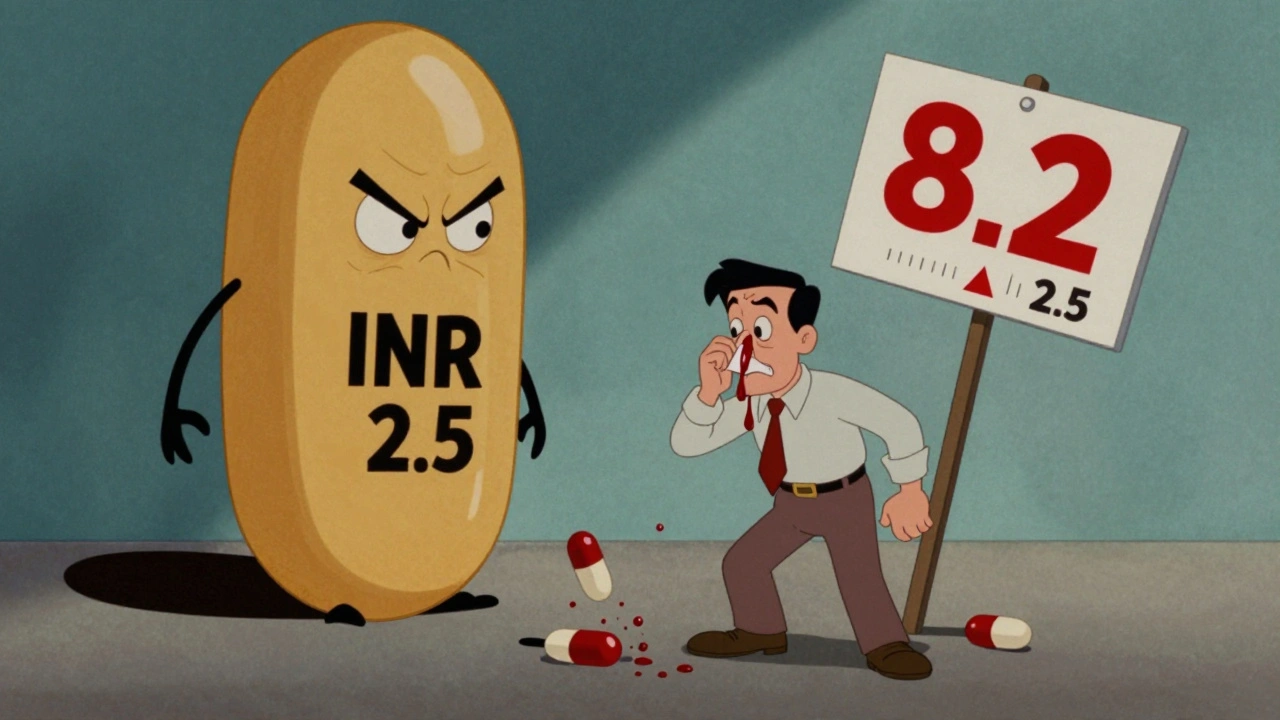
Trimethoprim-sulfamethoxazole can cause dangerous INR spikes in people taking warfarin, increasing bleeding risk. Learn how this interaction works, who's most at risk, and what to do if you need an antibiotic.